


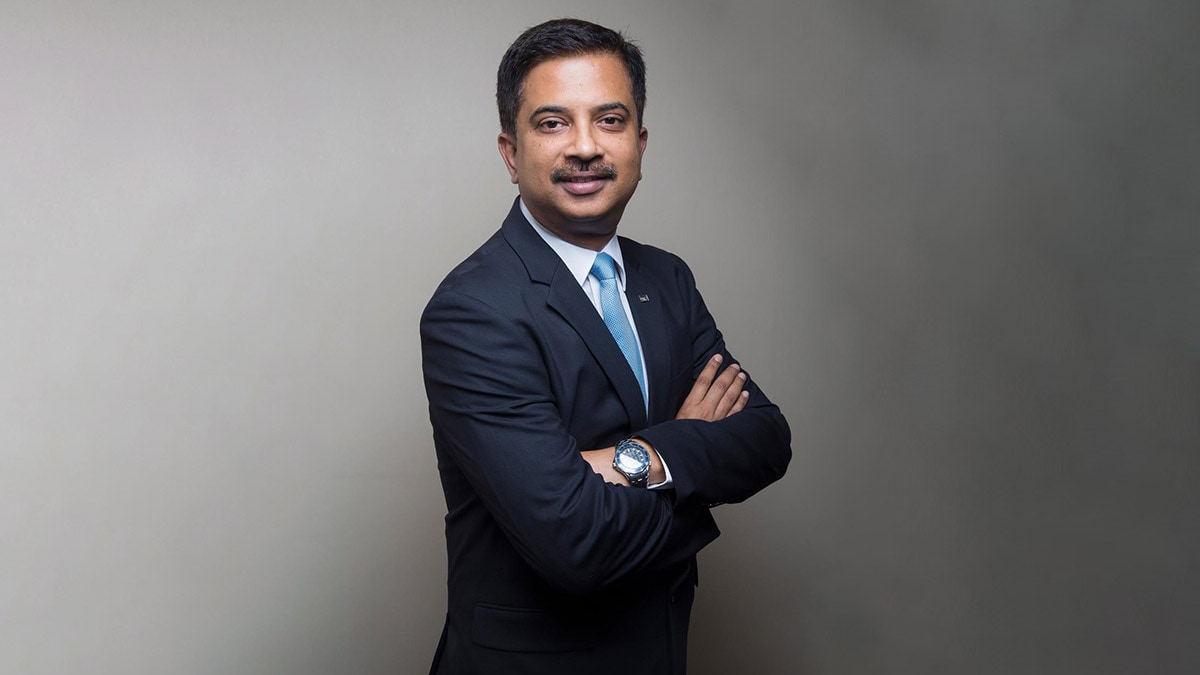
Interview/ Swarup Mohanty, vice chairman & CEO, Mirae Asset Investment Managers (India)
Q/ You recently said that the classic 50-60 per cent automated allocation to large-caps might be outdated. What does a modern asset allocation look like?
The 50-60 per cent large-cap allocation was built for an India with a thin, concentrated market. That India no longer exists. The Nifty 500 now represents the Indian equity universe. A surge in IPOs across hospitals, AMCs, chemicals and textiles has widened what is genuinely investable. Many of India’s future large-caps are today’s mid- and small-caps. Anchoring mechanically to large-caps means choosing to miss that part of the story.
Beyond equity, modern allocation must make structural room for gold; not as a cultural holdover, but as a portfolio tool. And international diversification deserves a place in most portfolios today. The replacement for rigid rules is a framework built around time horizon, liquidity needs, and risk tolerance reviewed periodically, not set once and forgotten.
Q/ To cash in on the massive broadening of the market through mid- and small-cap segments, how should retail investors approach it without exposing themselves to volatility?
In volatility lies the opportunity. They are two sides of the same coin. The thesis here is not about timing; it is about where India’s growth story actually plays out over 7 to 10 years. A systematic, modest allocation appropriate to your actual risk capacity is the practical answer. Investors should also diversify into emerging themes such as semiconductor, AI, electric vehicles and space technology.
Q/ Historically, Indian households have viewed gold as an emergency hedge or a traditional asset. How should an investor calculate gold’s weight in a portfolio when central banks are shifting sovereign reserves toward gold?
Gold in the locker does not serve the portfolio. The investment case today is structural, not sentimental. Dollar volatility is real. Geopolitical uncertainty is not a passing phase, it is the operating environment. ETFs or fund of funds give you the exposure without the friction, making charges or locker fees. Gold/metal allocation in portfolio should be 10-15 per cent.
Q/ India is facing a quiet retirement crisis driven by longer life expectancies and rising lifestyle costs. What advice do you have for building a sustainable retirement income?
AI-driven simulations on my own portfolio were sobering. My assumed 6 per cent annual withdrawal rate was not sustainable over 25-30 years. Longevity risk is the most underestimated variable in Indian retirement planning. Equity cannot be abandoned at retirement, if your retirement lasts three decades, abandoning growth assets too early means your corpus erodes against inflation while you are still alive and spending. Medical costs are the other dramatically underestimated variable. Insurance is not optional today as it protects the corpus from large, sudden draws.
Q/ Online platforms have made entry into mutual fund markets seamless. Does this ease of access mask a lack of financial literacy?
Access and literacy are not the same thing. Before Covid, India had 2.3 crore mutual fund investors. That number has crossed 5.3 crore. The rise is not just evidence of financial understanding rather evidence of a smooth onboarding process. The risk with frictionless entry is frictionless exit. When markets correct, investors who do not understand what they own will leave at the wrong time and lose not just money, but trust in the system entirely. The shift that matters most is not from no investment to some investment. It is from return-chasing to goal-orientation. Until that happens, ease of entry is a feature that carries its own risk.
