



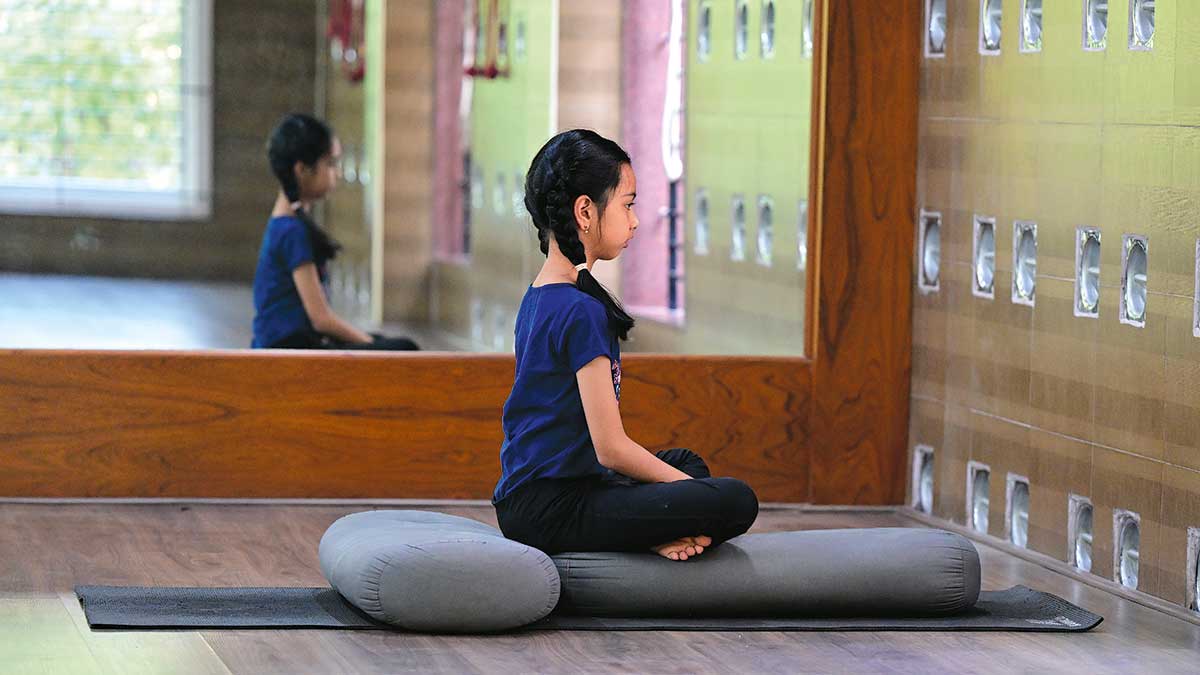
These postures lengthen the spine, help in the alignment of the pelvis, and ease the spine and hip muscles. As the practitioner transitions from sitting to a reclined position, the thoracic cage opens, breathing mechanics improve, and muscular tension in the neck, the back and the pelvis gradually eases.

This will help reduce physical and mental fatigue, improve postural awareness, calm the nervous system and promote deep relaxation. It is particularly beneficial for children, professionals and those with prolonged sitting or mild postural strain.
METHOD
* Place one bolster lengthwise on the mat and a second bolster horizontally near its upper end to form a supportive “T” shape.
* Sit comfortably on the lengthwise bolster in a cross-legged position—keeping the spine erect and the shoulders relaxed.
* Rest the hands gently on the thighs and take a few slow and natural breaths.
* Slowly uncross the legs and extend them forward along the lengthwise bolster, supporting the torso with the hands placed beside the hips.
* Lengthen the spine, broaden the chest and continue breathing calmly and evenly.
* Gradually recline so that the horizontal bolster supports the upper back and chest, while the pelvis and legs remain supported by the lengthwise bolster.
* Allow the shoulders and head to rest comfortably on the mat.
* Relax the arms by the sides with the palms facing upwards.
* Close the eyes, breathe naturally and remain in this supported restorative position for around five minutes.
* Gently bend the knees if needed, roll on to one side and slowly return to a seated position.
