



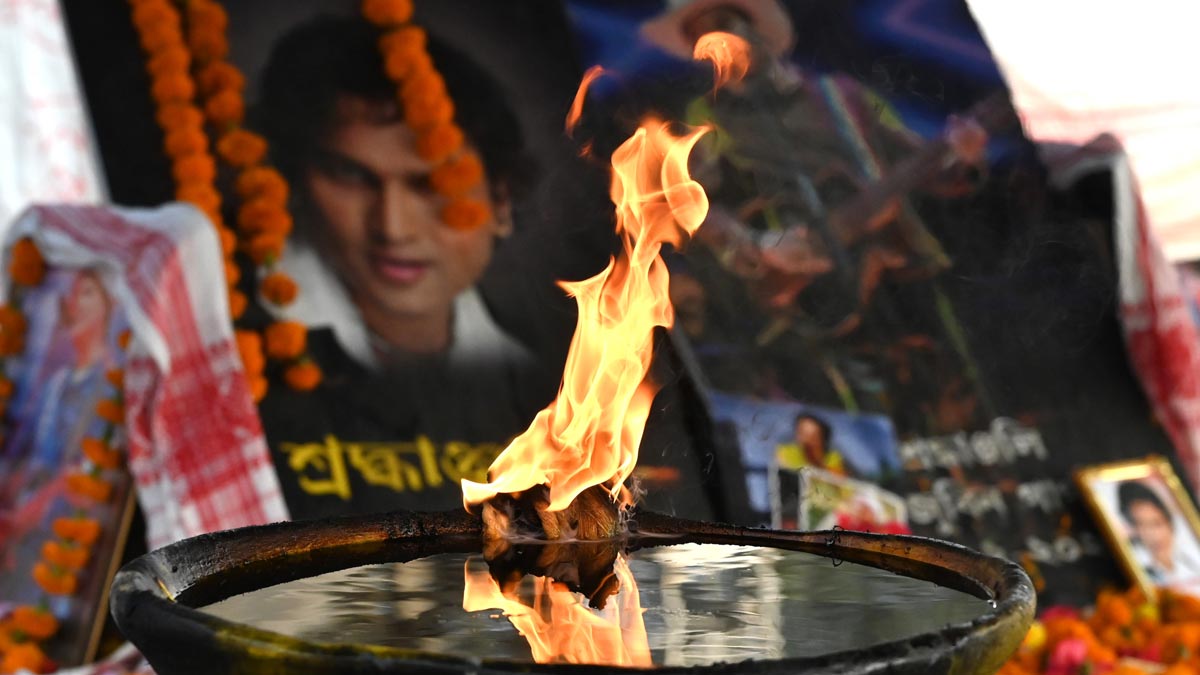
September 19 will mark a year after Zubeen Garg died in Singapore, but, in Assam, the first death anniversary is set to become a much larger public event. From September 17 to 19, Zubeen Kshetra will host a three-day programme bringing together people from different communities and ethnic groups for prayers, cultural performances and traditional observances in the memory of the singer who became a defining voice of Assam.
Zubeen drowned during a yacht outing in Singapore. Authorities later concluded that his death was accidental and found no evidence of foul play.

The government-supported programme will open on September 17 with an all-faith prayer. From that evening through the morning of September 18, different communities will conduct their own prayer and tribute programmes. A cultural programme on September 18 afternoon will showcase Assam’s diversity. On September 19, an Asana will be established, followed by Bhagawat Path in the morning and a Bhaona in the evening.
The significance of Zubeen Kshetra, however, lies beyond these three days.
For months, the site has drawn visitors from across Assam. They arrive with flowers and gamchas, light lamps, fold their hands and stand quietly before his photograph. Some pray. Others simply pause for a while before leaving.
For many Assamese, the place has become almost sacred.
An elderly admirer can speak of Zubeen like a son. A younger visitor may associate him with songs from childhood. Families arrive together; some people come alone. Their reasons may differ, but the destination is the same.
That is what gives Zubeen Kshetra its character.
It is not simply a place with a photograph or commemorating a famous artiste. Visitors bring something of their own lives to the site. A gamcha is an offering, a lamp is a quiet tribute. Prayers are a personal conversation.
His death left a void that is difficult to fill because his presence in Assam was never limited to the music industry. His songs were part of weddings, festivals, journeys and everyday life. His voice travelled easily between generations and communities. He sang across genres and languages, worked in cinema and music, and became closely linked with the cultural identity of Assam.
The diversity of the anniversary programme reflects the same reach. The cultural programme on September 18 will put Assam’s varied traditions at the centre, while Bhagawat Path and Bhaona will bring religious and theatrical traditions into the three-day observance.
As September 19 approaches, the three-day gathering will bring the connection between the artiste and the people into public view.
