



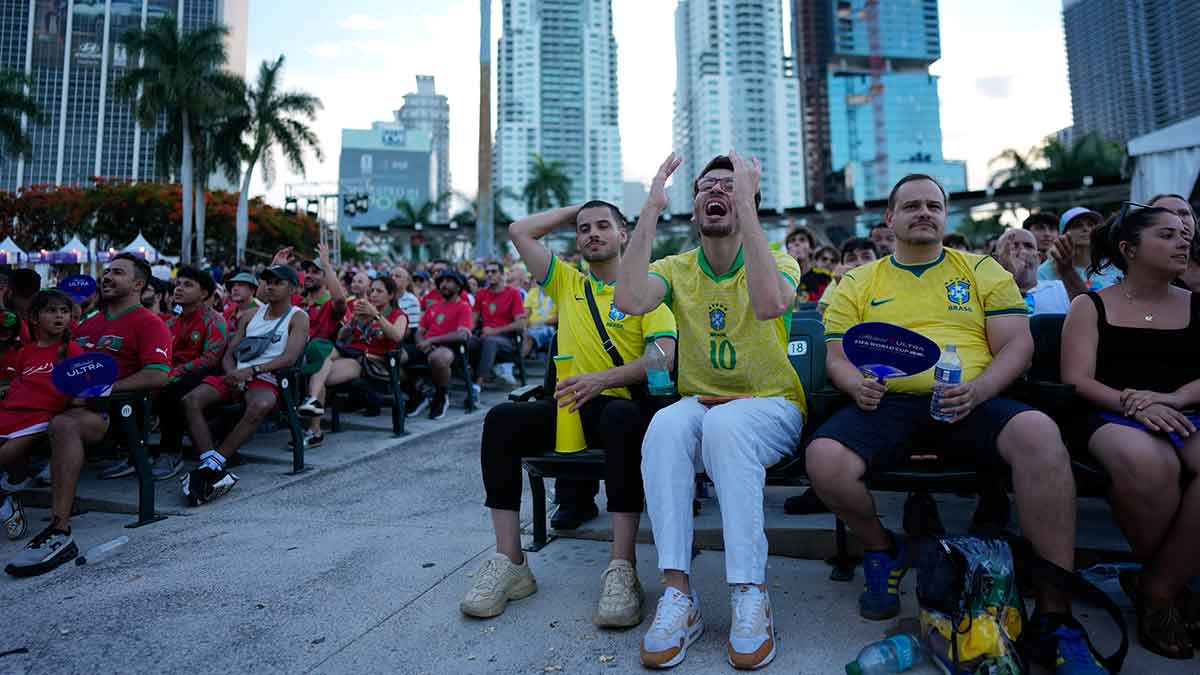
Before we saw the crowd, we heard it: “Brasil, olé, olé, olé!” The moment we stepped into the MetLife Stadium in New Jersey on June 13, we were enveloped by the roar of Brazilian fans. Their chants echoed through the massive arena as yellow jerseys shimmered in the summer sun, Moroccan flags waved proudly, and dozens of languages blended into a vibrant hum. For a few hours, the stadium became a small reflection of the world itself.
As an Indian family living in the US, the experience carried special significance. Our sons—Abel and Adith—were born and raised here and, like many American children, grew up with American football, basketball and baseball as their primary sporting passions. Soccer—football to much of the world—has always occupied a secondary place in their lives. Yet even they were swept up by the spectacle. When Brazil’s stars, Neymar Jr and Vinícius Jr, walked into the stadium the atmosphere became electric. The chants grew louder, strangers exchanged high fives, and entire sections of the stadium moved in rhythm. For a brief moment, nationalities, backgrounds and allegiances seemed less important than the shared excitement unfolding around us. That is the unique power of the FIFA World Cup.
For many Indian fans, the tournament is experienced through television screens, mobile devices, or late-night streaming sessions. While broadcasts capture the drama of the match, they cannot fully convey the scale of being there in person. A World Cup stadium is more than a sporting venue; it becomes a temporary global community of cultures, emotions and shared experiences. Yet, beneath the excitement lies another important dimension of global sporting events: public health.
Experts have long viewed major sporting events as unique settings where people, pathogens and environments interact on a massive scale. The same movement of people that creates the magic of the World Cup also brings unique public-health considerations. With tens of thousands of fans gathered in close quarters, often travelling from different parts of the world, respiratory illnesses can spread more easily. Gastrointestinal infections can also affect large groups despite good sanitation measures, and global travel may introduce diseases such as measles into areas where outbreaks are otherwise uncommon.
Environmental factors deserve attention as well. Sitting under a bright summer sun for several hours, we were constantly aware of the importance of hydration. Large sporting events require physical endurance for extensive walking, long queues and crowded transit systems, all of which can be taxing, particularly for older spectators and those with underlying health conditions.
Yet what struck us most was not the risk itself, but how manageable it felt.
Simple precautions—staying hydrated, using sunscreen, and maintaining good hygiene—allowed us to enjoy the day without anxiety. In fact, the benefits of participating in such events may be just as important as the risks. Health professionals increasingly recognise social connection as a cornerstone of physical and mental well-being. Shared experiences, whether attending a match in person or gathering with friends to watch from home, foster a sense of belonging. Social bonds reduce loneliness, lower stress, and contribute to better long-term mental and physical health. We witnessed this firsthand. Fans from different countries who shared no common language communicated effortlessly through chants, gestures, smiles and celebrations. There was a spontaneous camaraderie—an unspoken understanding that, for a few hours, everyone was part of the same story. As we walked out of the stadium, the chants still ringing in our ears, we realised that what we had witnessed went beyond sport. It was a reminder of the power of collective joy, shared identity and human connection in an increasingly fragmented world.
For fans watching from Kochi, Kolkata, Cleveland, or anywhere else, that may be the tournament’s most important lesson. Long after the final whistle, what remains is not simply the scoreline but the memory of thousands of strangers singing the same song. In an increasingly divided world, that sense of belonging may be one of the World Cup’s greatest gifts—not only to humanity, but also to our health.
Shyla Jovitha Abraham, is a health and wellness writer, based in Cleveland, and Dr Jame Abraham, is chairman, department of hematology/medical oncology and professor of medicine at Cleveland Clinic. The views expressed are his own and do not represent the views of Cleveland Clinic.
