What steps did you take to win the assembly polls?
One of the main things [we did] was to prepare the organisation at grassroots level, and make it effective and active. For that we created a system at the booth level. It took us two years.
Another key factor was the creation of a social combination. We developed leaders in communities like the dalits and the OBCs, from booth to state level. They were given responsibilities so that they felt the BJP cared for all castes. We made full use of social engineering.
The BJP’s strategy focused on non-Jatav dalits and non-Yadav OBCs. How did you woo them?
Whenever Mayawati was in power, 80 per cent of the government jobs and schemes went to one particular caste. Similarly, when Mulayam Singh and Akhilesh Yadav were in power, they supported only Yadavs. This led to anger in other communities. For the BSP, dalits meant only Jatavs, and for the Samajwadi Party, OBCs meant only Yadavs.
How was the ticket distribution done and candidates selected.
We carried out the procedure for six months. We took several feedback—common names, good candidates—and based on the social engineering, the candidates were allotted tickets.
Where you hopeful of a victory of this scale?
We were confident of the victory. Sometimes, when mahual (atmosphere) and current are created, we get such a mandate.
What was the difference between 2014 and 2017 elections?
Modi has been popular. We got 42 per cent in 2014, and even now over 40 per cent. His image is intact among people. Look at the way he interacted with people through schemes like cleanliness, Ujjawala or noteban. There is a Modi wave in the whole country, but to convert the wave into votes, we need a machinery.
What is that machinery?
That is strengthening of the organisation, social engineering, encouraging participation of people and bringing people to our point of view. (That is) creating a mahual. We worked silently for two years at grassroot levels. In the pre-election campaign, thousands were coming to BJP programmes at all levels. This was an indication to us as to how many people have been associated with us through our organisation. We conducted programmes for youth, women, farmers and Parivartan Yatra. Over two crore people joined us in these activities. This showed us people were getting associated with us.
Whom would you credit for the emphasis on building organisation?
Amit Shahji is the man behind it. He emphasises on strategy and planning.
How does he do it?
One of his intrinsic traits is to seek feedback. He seeks feedback from the grassroots level and not just from leaders. After collating the feedback, he gives directions to the team executing the work. He does not give up easily; he persists with the issue and keeps getting genuine feedback.
What was your daily routine during elections?
Since August last year, I had set up a team of 150 professionals and 13 departments to oversee work like media watch, publicity and programme. We constantly interacted and monitored the progress. So, by pre-election campaign they had gained experience and by the time elections came they were trained and were managing everything. We revived the work after 12 hours. We worked as team.
Demonetisation was criticised for causing discomfort to people, but it seems to have paid electoral dividends.
Though there was discomfort, people said the prime minister had done this [demonetisation] for the country. There was no agitation against it in Uttar Pradesh. Some trading communities were cross; they are our core voters. But we spent time with them and convinced them about the benefits of demonetisation.
How do you evaluate your rivals the SP and the BSP? What is their biggest weakness?
One of their biggest weaknesses is that they as parties are based on individuals. There is no second chain of leaders after Mayawati or Akhilesh Yadav. Secondly, they play politics of appeasement, only to help a particular caste, be it in recruitment or by helping them. They don't have network at ground. They distribute tickets two years in advance, and then make them work. Individuals ca be built in this manner, but not the organisation.
What is your next responsibility?
After winning UP elections, our biggest responsibility is 2019. Eighty per cent of work is done for 2019, but we need to work more, and do the remaining 20 per cent of the job.
The BSP and the SP pursued Muslims, yet they didn’t win. Why?
Both of them gave disproportionate tickets to Muslims. If there were one lakh Muslims in a constituency, there were two lakh other voters, too. So they voted differently. Moreover, this time Muslims did not vote to get a chief minister elected; they voted for an individual candidate, seat-wise.

INTERVIEW
We made full use of social engineering
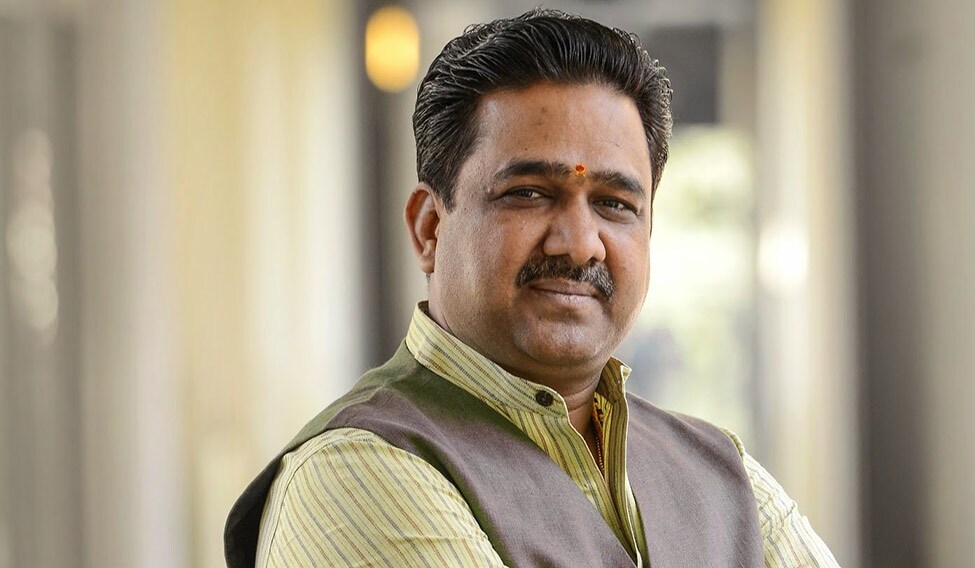
Sunil Bansal, BJP general secretary, Uttar Pradesh
This browser settings will not support to add bookmarks programmatically. Please press Ctrl+D or change settings to bookmark this page.