



-
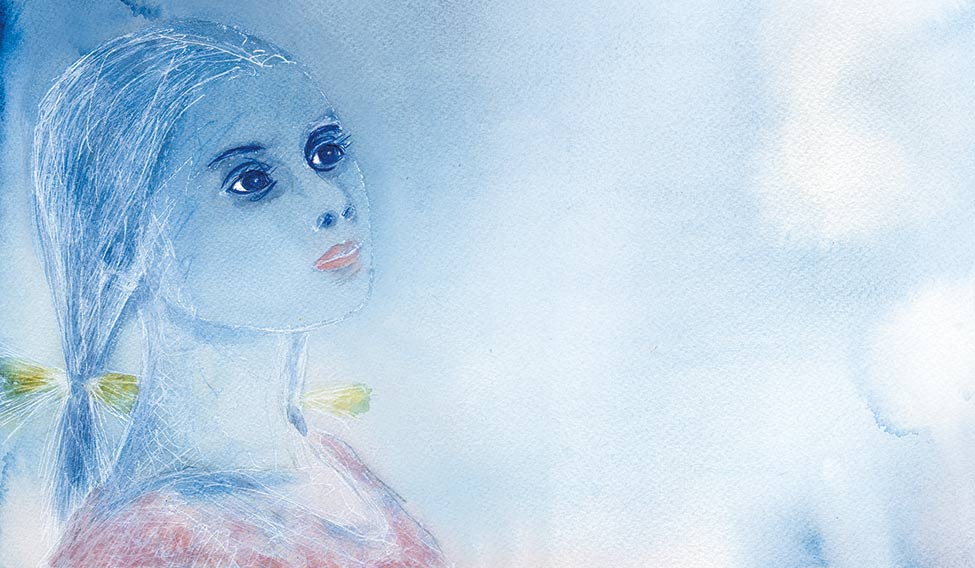
I have long ago put down the belief that children are helpless beings and that it is grownups alone who can effect change in their lives. It is with this in mind that I have been writing more and more about children on the edge of crises.
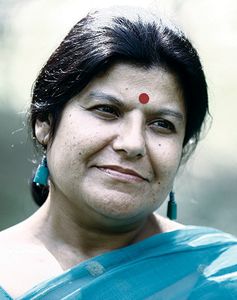 Paro Anand
Years ago, when I was still in my teens, an English friend came to stay with me in Delhi. She went with another friend on a trip to Rajasthan. When she returned a week later, her friend had cut short her trip and returned home. And my friend was subdued. Something was obviously amiss. That is when I noticed a couple of bruises on her arm. I touched them and asked her if she had been in an accident. She started to cry, silent sobs that shook her body. And me. She showed me bruises all over her. She and her friend had met up with some local boys in Jaipur who had said that they would take them on cycles up a hill to see the city by the full moon. They went. They were ‘attacked’, she said. I said we should tell my mother, but she begged me not to. And so, I didn’t.
Should she have known better than to go off into the night with a group of unknown boys in an unknown land? Of course. Should she have spoken up after the attack? Yes. Should I have told my mother about it? Most certainly, I should have. But we kept our teenage secret and for years and years, we never got in touch with each other again. And she never returned to India. But none of the above justifies the assault. The girls made the mistake of trusting these boys. But what followed was a criminal act. And they should have been dealt with as criminals. But they weren’t. Our collective silence bought them their freedom. And very likely, freedom to repeat their heinous act. Until someone spoke up.
In all that time, I accepted that she had been ‘attacked’. And, in my mind, she had got away. It was years and years later, while participating in one of the Nirbhaya marches at Jantar Mantar, that truth dawned on me. My friend had been raped. Her bruises, her body were screaming it out. But fear, and a natural ‘turning a blind eye’ made me block this out. Also, at that time, rape was something that happened rarely. Did it really happen that infrequently? Or, was it that there was no reporting or discussion around it? We thought that it was such a rare occurrence that it never struck me that this is what must have happened to my friend.
It was there, in a crowd of singing, chanting thousands that I knew that I had witnessed the aftermath of rape. It was then, years later, that I cried tears for the things I should have done and never did—for the things I should have known. But I lived, as most of us do, in the firm belief that bad things happen to other people, not to our own. My friend and I have met since. In her country. Never in mine, which is probably tainted beyond repair in her heart. We have never ever talked about that time. And our relationship never quite recovered from the burden of unsaid truths.
The shocker is, that after that, I have asked every one of my female friends and relatives who have spent any length of time in north India. And there is not one—NOT ONE—girl or woman who has not been a victim of sexual assault at least once in their lifetime here. NOT ONE.
I relive those moments, I re-see those bruises and rethink what I could have or should have done back then. But I was a child. And what, after all, can children do? Right? Wrong! I have great faith in children as instruments of positive change. If they are able to develop empathy on the one hand and empowerment on the other, they can be a collective, unstoppable force. I have long ago put down the belief that children are helpless beings and that it is grownups alone who can effect change in their lives. It is with this in mind that I have been writing more and more about children on the edge of crises, children in difficult circumstances.
My purpose in this is three-fold. Firstly, to share a situation in which other young people may find themselves. This gives those in similar circumstances the comfort that they are not alone. There are others just like them. Secondly, it is to show them that there is a way out, there is a light at the end of that tunnel, no matter how dark it may seem right now. That is why, I always end my stories on an upswing, on a note of hope when I am writing for a young readership. And lastly, it is to create an awareness and empathy with other children so that they can develop an understanding by living in someone else’s shoes and crisis for the duration of the story, and maybe even beyond. It is only by talking about these difficult subjects openly that we can recognise that a crime, a wrong has been committed and to know that there is legal or other recourse that they can and should take.
To this end, I am writing a new book, The Other, which is a collection of short stories of children on the edge. One of those stories deals with rape of a young girl by her uncle. I know that I am going to be asked why I would write such a story for teenagers and young adults. I am often asked this. I know that this book may end up being banned. Because, sometimes, too often, we prize silence over truth. But I am still writing it. It is important to. Young people know about rape. They know it is happening. And they are made aware of it in myriad ways. Girls are told to cover up and dress decently lest... lest the unthinkable should happen. More and more women are wearing burkhas because we cannot trust our men. In some Islamic countries, there are all kinds of strictures. Like the men ascend the stairs before the women, otherwise a man who is not your husband will be tempted to look at your bottom. In a restaurant, women sit facing the wall, lest other men stare at them. I always want to shout out that if men have so little control, perhaps they should wear blindfolds and handcuffs. And, let women be. We are not doing any of this.
In the book and mini series, 13 Reasons Why, a young girl commits suicide which she is driven to because she is a victim of slut-shaming.
In my story, I look at the incident of a rape from several points of view. I try and look at the impact it must have on the victim as well as those around her. In fact, I tried to write a portion from the rapist’s point of view as well. But I couldn’t. I couldn’t see his point of view, couldn’t dig deep enough to find even a shred of empathy. No justification. So, I have left him out.
But then it struck me that there was a way. The idea came to me when I was reading the story of the ten-year-old victim of incestuous rape. She is pregnant and it is too late to medically terminate her pregnancy. She is going to have that child. Think of this man, the rapist uncle, spending his life in jail (hopefully). He must know by now that he is going to be a father to his niece’s child. Think of him imagining the life his son is going to lead. Yes, it is not the baby’s fault. He will probably be put up for adoption. But surely, surely, some last shred of humanity will awaken in this man as he wonders about his son—growing up and hopefully never finding out about his origin. It will torture him. And finally, I pray, he will suffer deep, deep regret for his depravity.
That is the story I am going to write next.
A Sahitya Akademi Award Bal Sahitya Puraskar winner, Paro Anand writes for young adults and children. She has worked with over 3 lakh children all over the country and abroad.