



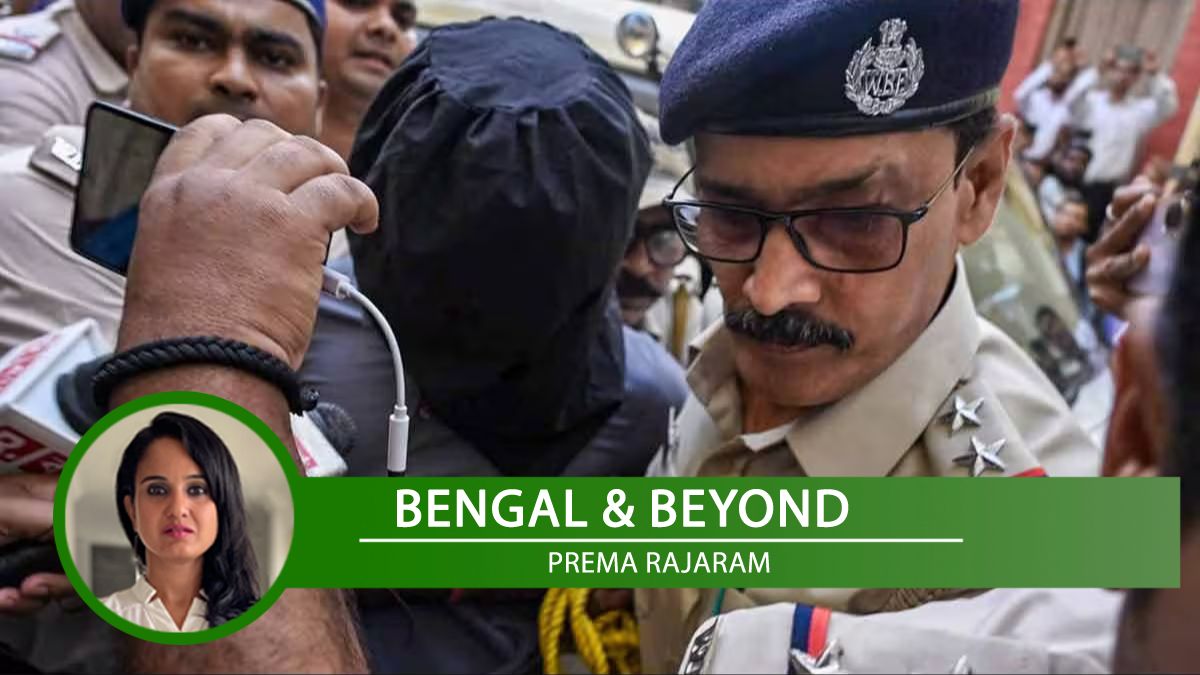
By the end of last week, two suspected Jaish-e-Mohammad (JeM) operatives were arrested from West Bengal and a third was arrested on Monday.
The modus operandi was to target Chief Minister Suvendu Adhikari, for which they were tracking his movements to find security lapses. Other ministers in the West Bengal cabinet were also on the list, in addition to possible other leaders from the Centre as well.
The issue began when West Bengal Minister of State for Urban Development and Municipal Affairs Umesh Rai from Howrah filed a police complaint that he was getting extortion calls and that his son was getting abduction threats.
Investigators traced back digital footprints to Arpita Sarkar in Sahibganj in the Jharkhand district and got leads to Hamim Mondol in Burdwan. Rai alleged he got an extortion call for ₹5 crore and suspected it was someone from the locality.
Mondol was the first to be arrested by the Special Task Force (STF) of Kolkata Police at the Renaissance Housing complex gym in the Purba Bardhman district where he stayed with his family.
Mondol’s father worked in a garment factory in Pilkhana in Howrah where Mondol lived previously, in closer proximity to the CM. Sarkar was the second to be arrested a day later, with allegations of honey trapping and extortion against her.
Both Mondol and Sarkar had been in touch with each other over the past 3-4 years, as well as with Pakistani terrorist handlers linked to Shahzad Bhatti, via international WhatsApp numbers and social media platforms like Instagram, Telegram, and X.
The third arrest, Aditya Singh, was from Howrah, where he is believed to have met Mondol. Singh was the photographer who took pictures of Umesh Rai’s family and passed them on to Sarkar. Police are questioning the three suspects to ascertain whether they received monetary benefits from the handlers.
The other modus operandi—say investigators—was for Mondol to procure police uniforms and create disruptions at the Coackroach Janata Party (CJP) student protests in Jantar Mantar in Delhi. Mondol was also tasked to widen the JeM network amongst the youth in West Bengal.
What is striking is that all three are in their 20s and college students, with Mondol being a dropout. This particular case emphasises the youth being vulnerable to encountering anti-social or dangerous people on social media platforms, falling into the trap of money and power.
What is this sense of power? The gumption to do something that others around them are too scared to embark on? Something daring? Something that seems like a secret operation much like the fictional movies? Something that brings them easy and big money?
What happened to taking a judgement call as an adult on what is right or wrong? What happened to professional aspirations that majority youngsters are busy contemplating? The larger question is—should there be more parental supervision into the so-called privacy despite them being young adults who can succumb to vulnerability? How much supervision is too much supervision?
Social media is a boon and a bane. It is primarily the youth that are more susceptible to the dark work of social media, the dark world of wrong company and a world of their own that youngsters create, while keeping parents away from getting a peek into this side.
In the end, it was not a honey trap that created mayhem, but the trap of a terrorist network and investigators that the three suspects have fallen into—darker than the future of grit and gumption they once envisioned.
