



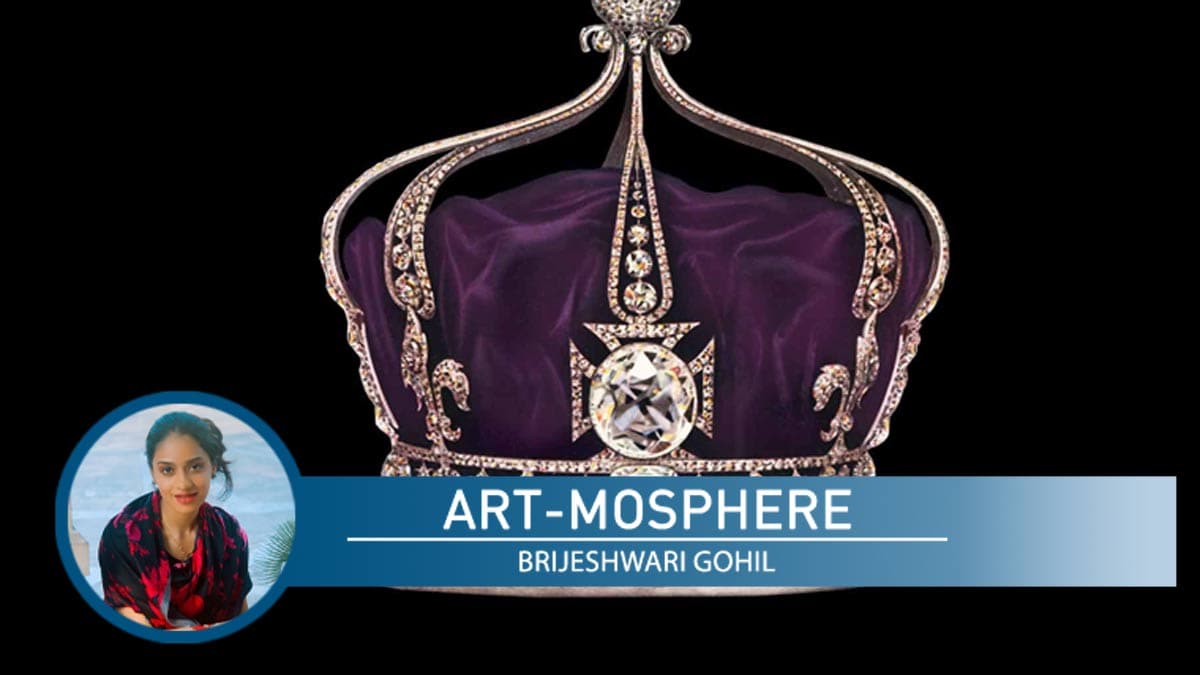
When Zohran Mamdani urged King Charles III to return the Koh-i-Noor, the appeal landed with familiar force: an object taken under empire should be restored to where it belongs. It is a position that feels, at first glance, both morally clear and historically overdue.
It is also, on closer inspection, the wrong question.
The Koh-i-Noor today part of the Crown Jewels of the United Kingdom did not pass from a nation called India into British hands. Its most consequential transfer occurred under the 1849 Treaty of Lahore, when the Sikh Empire ceded the diamond to the British East India Company after the annexation of Punjab. The seat of that power was Lahore.
By the strict logic of succession, the diamond’s last sovereign home before British possession lies not in modern India, but in what is now Pakistan. Earlier still, it passed through Afghan hands, and before that through the shifting courts of the subcontinent’s pre-modern empires. To choose a single point of return is to privilege one historical moment over many.
This does not weaken the moral case for restitution; it complicates it. The Koh-i-Noor is less a question of ownership than of narrative of which past is being restored, and for whom.
Yet while this debate unfolds in the language of diplomacy and symbolism, another story quieter, more transactional, and arguably more consequential plays out in the global jewellery market.
For if the Koh-i-Noor represents a singular, contested treasure, the broader category to which it belongs, Indian historic jewellery moves with remarkable fluidity across borders, auctions, and private collections. And here, the imbalance is striking.
Auction houses such as Christie’s and Sotheby’s have, over decades, perfected the theatre of the “Magnificent Jewels” sale. In Geneva, New York, and Hong Kong, diamonds from Golconda, Mughal spinels, and commissions from princely India appear with regularity, often achieving extraordinary prices. The catalogues are rich with subcontinental history; the bidding, increasingly, with Indian capital.
But the stage itself remains elsewhere.
This absence is not accidental. It is structural.
India’s regulatory framework complex import duties, tax considerations, and compliance burdens makes the temporary import and resale of ultra-high-value jewellery cumbersome. Auction houses, whose business depends on the seamless movement of goods and capital, favour jurisdictions where friction is minimal and legal certainty maximal.
Equally important is infrastructure. The global secondary market in jewellery is built on trust: rigorous provenance research, enforceable contracts, discreet client services, and decades of institutional credibility. London and Geneva did not arrive at this position by accident; they engineered it over time. India, by contrast, remains a formidable primary market one of the world’s largest consumers of gold and gemstones but a comparatively underdeveloped secondary one.
There is also a cultural dimension. In India, jewellery has historically functioned less as a tradable asset than as an inheritance absorbed into family systems, reset across generations, or held as both adornment and security. The idea of consigning heirlooms to public auction, so central to Western estate culture, has had less traction.
And yet, paradoxically, it is Indian provenance that often provides the most compelling narratives in global sales. Auction houses do not merely sell stones; they sell stories of maharajas, courts, conquests, and craftsmanship. Many of these stories are Indian in origin, but are curated, authenticated, and ultimately monetised abroad.
Which brings us back to the Koh-i-Noor.
The diamond is frequently invoked as a static emblem of imperial extraction, its fate tied to the possibility of return. But in truth, it belongs to a far more dynamic ecosystem, one in which jewels of comparable historical richness continue to circulate globally, largely without calls for repatriation, and with considerable enthusiasm from the very markets that might lay claim to them.
Restitution, in this light, begins to look less like a singular act and more like a selective one.
For India, the more provocative question may not be whether the Koh-i-Noor should come back, but why so much of its broader jewellery heritage continues to find value, validation, and visibility elsewhere. The answer lies not only in history, but in systems, in law, finance, infrastructure, and narrative control.
Until those systems evolve, the paradox will endure: India as both the origin of some of the world’s most storied jewels, and a spectator to their most important sales.
And in that context, the debate over one diamond however legendary feels almost beside the point.
