



Senior anaesthesiologist Dr M. Subramanyam’s father was a geologist and entrepreneur who set up his own mining company in a remote forest area near Rajahmundri in Andhra Pradesh. Being a Naxalite area, his father used to get many threats, but he was not scared. Eventually, he became very successful. He was also a kind man, never refusing help to anyone who came to him, even building a crematorium for the people of his village. Although he hailed from a family of priests, he was liberal in outlook and let his children pursue their passion, sending Subramanyam to get medical training from some of the best institutes in India, the UK and the US. When his father was diagnosed with prostate cancer in 2003, Subramanyam was devastated. He fought it valiantly, but when it recurred five years later, he told his children that he wanted no more treatment. He wanted to die peacefully at home.

His father was an active Rotarian. Even when he came to visit Subramanyam in a foreign country, he would seek out the nearest Rotary club and attend its meetings. After his death in 2008, to honour him, Subramanyam joined Rotary. Having seen death at close quarters, he had the idea to start the first hospice in Telangana and Andhra Pradesh to provide palliative care to dying patients. He suggested it to the Rotarians in his club—the Rotary Club of Banjara Hills in Hyderabad—and that is how Sparsh came into being in 2011.
“We started small with 10 beds in a rented house,” says Subramanyam. “But awareness about palliative care was so low then, among the people and even among doctors, that we found it difficult to find takers for even those 10 beds.”
Ten years later, they moved to an 82-bed facility in Khajaguda—a sleek building with landscaped garden and airy, well-lit rooms. The 60,000sqft on which Sparsh is built has been given by the government of Telangana. Since 2011, the hospice has touched the lives of over 15,000 patients, ensuring they had a peaceful and dignified end among friends and family. The stay, food and medicines for patients as well as accommodation for caregivers are completely free. “The facility cost us Rs15 crore,” says Subramanyam. “In addition, the operations cost is almost Rs50 lakh per month. To raise the funds, we formed a charitable trust. I am one of the three founding trustees. We have many donors and companies helping us.”
At a recent TED talk, Subramanyam told the story of Shoba, who became the first girl from her village to join the postgraduate programme at the Tata Institute of Social Sciences (TISS) in Mumbai. That is when she was diagnosed with bone cancer. When it recurred, doctors gave her mere weeks to live. She came to Sparsh with one regret. She would miss her upcoming convocation. To help her fulfil her dream, the Sparsh team started communicating with TISS staff and convinced them to organise Shoba’s convocation at Sparsh. “Shoba didn’t spend her last days as a terminal case; instead, she spent it dressed in her best, with her family members around her and holding her degree,” said Subramanyam. “She died a few days later not as a cancer victim, but as a proud graduate.”
Last year, Subramanyam was presented with Rotary’s ‘Service Above Self’ award, which is the highest honour for individual Rotary members and given to only 150 people globally each year for exemplary humanitarian service and dedication to the motto ‘Service Above Self’.
Rotary did not begin with service as its primary motive. It was started in 1905 by Paul Harris, a Chicago lawyer who had the idea that business and pleasure could be mixed at a time of cut-throat competition when, as the Rotarian Chesley R. Perry put it, “a businessman’s competitors were his enemies and if he could put any of them out of business, he thought he was doing himself a good turn”. Harris wanted to change this paradigm and turn businessmen from different vocations into friends. To discuss the idea, he met with coal dealer Silvester Schiele, merchant tailor Hiram Elmer Shorey and mining engineer Gustavus Loehr on February 23 at Loehr’s office in Room 711 of Chicago’s Unity Building, which could perhaps be called Rotary’s first meeting.
Although Harris established Rotary as a way to make friends with people from different vocations, its identity as a service organisation began the next year. In 1906, it was brought to the notice of the new club that a doctor in the Chicago suburb of La Grange had lost his horse. The hat was passed and Rotary raised $150 to buy the doctor a horse which, says Rotarian N. Bhaskaran Pillai in the 9th edition of his book Know Your Rotary, could be considered Rotary’s first service activity.
But the principle of service was made concrete in the motto ‘Service Above Self’ (which is one of Rotary’s two official mottos, the other being ‘One Profits Most Who Serves Best’) in 1911. That year, at the second Rotary convention in Portland, Ben Collins, the president of the Rotary Club of Minneapolis, was discussing the proper way to organise a club meeting with Seattle Rotarian J.E. Pinkham during an outing on the Columbia River. He spoke about the principle his club had adopted: ‘Service, Not Self’. When Harris joined their conversation, he was fascinated with the principle and asked Collins to address the convention, where ‘Service, Not Self’ was met with great enthusiasm. Slightly modified to ‘Service Above Self’, it was established as Rotary’s principal motto at the 1989 Council on Legislation.
Winston Churchill once said, “There is indeed a wealth of meaning in the motto, Service Above Self.” One wonders why when it goes against the very grain of human nature. In this dog-eats-dog world, why serve others at the cost of yourself? According to K. Seshasai Kumar, district chairman, public image, RID 3150 (each rotary international district is given a specific number), they consider service to be a privilege. “We feel we are the beneficiaries,” he says. “Being able to serve is a true opportunity. It gives us much peace and happiness.”
For Mukesh Aggarwal, a member of the Rotary Club of Delhi South Central, the gratitude of the patients at Gurugram’s Vivekanand Arogya Kendra charitable hospital is worth all the money they have donated to it, establishing several departments including the heart, cancer, diabetes, dialysis and retina eye centres.
When Shivani Tibrewal was 18 years old, she developed a heart condition and had to undergo a valve replacement surgery. Afterwards, a senior cardiologist who was visiting from the US happened to see her report. “If it was God’s will, even at the operation table you could have died,” she told Tibrewal. “God must have a special purpose for you.” Tibrewal had no idea what she was talking about, until many years later she joined Rotary in her native place of Tezpur in Assam in 2006. She was the only woman among the 32 members of her club. Initially, she could not understand Rotary jargon and would feel bored at the meetings. But all that changed when she attended a conference in Shillong and met a Rotarian there who told her about his club’s ‘Gift of Life’ programme where children with heart conditions from BPL families were sent for free treatment to hospitals in Delhi and Kochi with which Rotary had a tie-up. Tibrewal was instantly captivated. “It felt like I had found my calling,” she says. “Even though I am not religious, I felt like some divine force was behind this.” Later, after she had instituted the programme in her own club and helped over 20 children with holes in their hearts, she thought of what the cardiologist from the US had told her. “Perhaps this was the purpose for which I was saved,” she says. “I won’t say I saved these children’s lives, but maybe God made me the medium.”
Initially, it was difficult to find suitable candidates for the surgery. After they spoke to the parents, cleared all their doubts and everything was set, the parents would suddenly back out. “One of the reasons was that they were scared. They had never travelled outside Assam,” says Tibrewal. “They did not speak any language other than Hindi. Another reason was that they did not trust Rotary. They could not believe that someone would take care of all their expenses. They thought there was some hidden agenda. Some even suspected child trafficking.”
But after one or two successful cases, word spread and more people started approaching Tibrewal. She would send each child’s medical report to the Rotary club in Shillong, from where it would be passed on to the doctors in Delhi or Kochi. After they got a response from the respective hospital, members of Tibrewal’s club would start making travel arrangements. Each family would be provided with around Rs5,000 in addition to the free treatment. The whole programme was funded through international grants from the Rotary Foundation.
One of the children that Tibrewal helped in 2022 through the programme was the son of forest ranger Rakesh Nabam. To send the child and his father to Kochi for the surgery, Tibrewal set up a 16-member WhatsApp group that would take care of all their needs, including stay, food and travel.
“Rakesh and his son were completely clueless when they came here,” says my colleague Mathew T. George, who was Tibrewal’s point of contact in Kochi. “They had never travelled outside their state. I took them to the beach, because they had never before seen the sea. They were enthralled and took a hundred photographs. After the successful surgery, they had a connecting flight to Guwahati via Chennai. Since they had never flown before, I called the Indigo staff in Kochi to ensure they wouldn’t miss their onward flight.” He credits Rotary with doing a great job to ensure their wellbeing. “If it wasn’t for Rotary, that child might not have gotten a second lease of life,” he says.
The Rotary Foundation, which provided the funds for Tibrewal’s ‘Gift of Life’ programme, is today one of Rotary International’s most important institutions. But it had a modest beginning, with Rotary International president Arch Klumph proposing an endowment fund in 1917 “for the purpose of doing good in the world”. The Rotary Club of Kansas City was the first to contribute with $26.50, which has grown to over $2 billion in 2025. With this money, Rotary has instituted the world’s largest international scholarship programme, established Rotary Peace Centres in eight universities around the world and contributed to the relief of some of the worst disasters in the world.
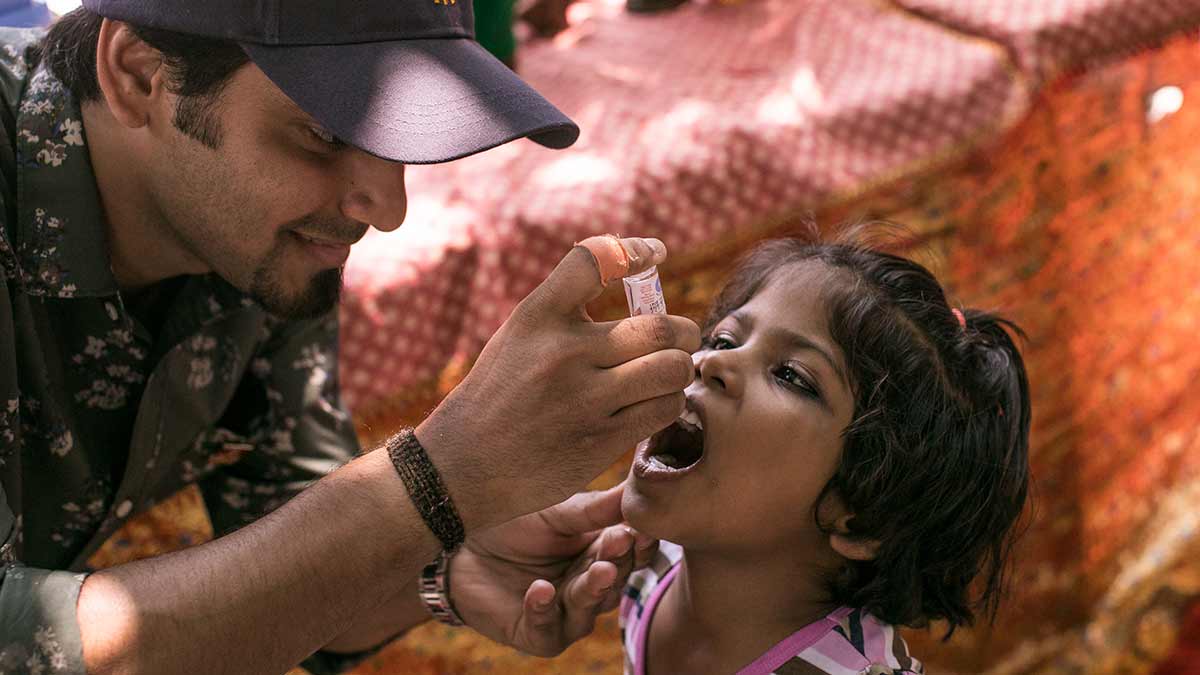
But its crowning achievement has to be its efforts to eradicate polio. Its PolioPlus programme is the “biggest ever private sector health initiative in the world”. Rotary’s first polio project was to vaccinate children in the Philippines in 1979. Inspired by its success, Rotary went on to become a founding partner of the Global Polio Eradication Initiative in 1988 (which includes the WHO, the US Centers for Disease Control and Prevention, the UNICEF, the Gates Foundation and Gavi, the Vaccine Alliance), which has reduced polio cases around the world by 99.9 per cent. Rotary has contributed more than $2.9 billion in PolioPlus grants to protect over 3 billion children in 122 countries from the disease. Today, polio remains endemic only in Afghanistan and Pakistan.
In India, Rotary was vigorous in its efforts. When it started here in 1987 with a grant of $2.6 million for the Tamil Nadu Project to immunise over 13 million children in the state, more than half of the global polio cases were in India. Rotary formulated a well-structured social mobilisation and awareness plan, sending its members to reach vaccine hesitant and remote communities of the country. It also mobilised village volunteers and roped in celebrities like Amitabh Bachchan and Shah Rukh Khan to promote its campaign. Upon signing a declaration in which Rotary pledged a grant of $20 million for polio eradication efforts in India, author N. Bhaskaran Pillai quotes former prime minister Narasimha Rao as saying, “Of the hundreds of documents which I have signed as a government official, I cannot remember any one document of this importance and usefulness to this country. Not only does it represent money, it represents a spirit and commitment to children, the children of India.” On March 27, 2014, India was officially declared polio-free.
Rotary did face many challenges in its polio campaign. In some states of Nigeria like Kano, for example, rumours spread in 2002 that the vaccine caused sterility in girls. The people stopped taking it, and as a result the cases of polio in the country skyrocketed. At the time, one of the Rotarians working to dispel the myth was Uday Pilani, the Rotary district governor of RID 3150, currently settled in Hyderabad. “A fatwa was issued there that anybody administering the vaccine would be shot,” says Pilani. “The militant group Boko Haram was very active there. Not knowing about the fatwa, I volunteered to lead the polio campaign in Kano. Because my father had a lot of influence in the city, I was not attacked. That’s how I was able to restart the campaign, which had come to a standstill.”
We visit Pilani—an industrialist who owns luxury hotels, IT and aerospace companies in India, the US and the UK—at his spacious office overlooking the city on a pleasant Tuesday evening. When we arrive, he is discussing a Rotary scheme of providing e-autos to distressed women with three Rotarians from another club. His presence is imposing, but he has a child-like smile which softens an otherwise commanding demeanour.
Arch Klumph, who set the ball rolling for the Rotary Foundation, once described himself as someone who “thinks Rotary, sleeps Rotary and dreams Rotary”. If the description can be applied to anyone in India, it must be to Pilani who becomes animated when he speaks about the institution. “Rotary is the one cause I’m passionate about,” he says. “Every morning around 6:30am, the first thing I do is get down to Rotary business, with which I will be occupied for the next four hours. By then I would have helped solve someone’s need, planned or funded a project and done something that would have benefited somebody else. Then, my frame of mind is so positive that I can attend to my business and solve my own problems with better outcomes. So, attending to Rotary matters in the morning is like meditation for me.”
Rotary’s district governor post is for one year. A district is a group of 60 to 80 Rotary clubs, organised based on geographical, linguistic and cultural similarities. There are around 540 Rotary districts worldwide grouped into 34 zones with one director for two zones. So, there are 17 directors in the Rotary International Board of Directors and each director is responsible to provide support to the districts in their zone. Each district can apply for international grants from the Rotary Foundation for their service projects. According to its 2025 fact card, $331.6 million was allocated in 2024-2025 by the foundation globally for its projects, scholarships, vocational training and peace centres, out of the $569.6 million it received in contributions.
I ask Pilani how Rotary prevents misuse of its funds. “The governance model is such that every project is governed by a set number of auditors,” he says. “Neither the person who initiates the project nor the person who donates to it is a signatory to the project. So, there is a lot of autonomy as well as oversight. Since many of us run companies ourselves, we are aware of the checks and balances that are needed to prevent misuse.”
Like most institutions, Rotary has not been completely free of controversy, like its decision not to allow women to enter its ranks until the US Supreme Court intervened with a ruling in 1987. But overall, Rotary’s impact in the world has been monumental. From raising over $17 million to help war victims in Ukraine to associating with the Central Reserve Police Force (CRPF) in India for medical camps and blood donation drives in insurgency-affected areas to negotiating humanitarian ceasefires during the height of war in Sri Lanka and Afghanistan to conduct polio immunisations, Rotary has helped save millions of lives.
As it moves into its 122nd year, what role should Rotary play to stay relevant in the world? The answer may lie in something that the Frenchman Abbe Pierre told the orthopedic surgeon and missionary Paul Brand who worked for years among leprosy patients in Vellore. The incident was recounted by Brand in his autobiography Fearfully and Wonderfully: The Marvel of Bearing God’s Image, co-written with Philip Yancey. One day, Pierre showed up unannounced at Brand’s hospital, wearing a monk’s habit and carrying a single carpetbag that contained all his possessions. Brand invited the Frenchman to stay with him and at his home, Pierre recounted his story.
Born into a noble family, Pierre renounced his inheritance, became a Catholic priest and served in the French Resistance, helping to rescue Jews from the Nazis. During one harsh winter, Pierre witnessed many beggars freezing to death in Paris. He realised that there was only one way to help them: to mobilise the beggars themselves. First, he taught them to do their tasks more efficiently, organising them into teams to scour the city. Next, he helped them build a warehouse from discarded bricks and to start a business sorting vast amounts of used bottles from hotels and businesses. Then he inspired each beggar to help another beggar poorer than himself. The project caught fire, and within a few years an organisation called Emmaus was founded to expand Pierre’s work into other countries. The movement became known as ‘Abbe Pierre and the ragpickers of Emmaus’. Now, he had come to Vellore to find more beggars that the Parisian beggars could help. “If I don’t find people worse off than my beggars, this movement could turn inward,” Pierre told Brand. “They’ll become a powerful rich organisation and the whole spiritual impact will be lost. They’ll have no one to serve.”
That, in a nutshell, might encapsulate both Rotary’s danger and its opportunity: to embrace its service roots and truly put service above self, instead of “turning inward” to its own power and wealth. When the Vellore beggars later thanked Pierre for helping them, he told them that it was they who had saved him and his organisation. “We must serve,” he said, “or we die.”
