


 Add as a preferred source on Google

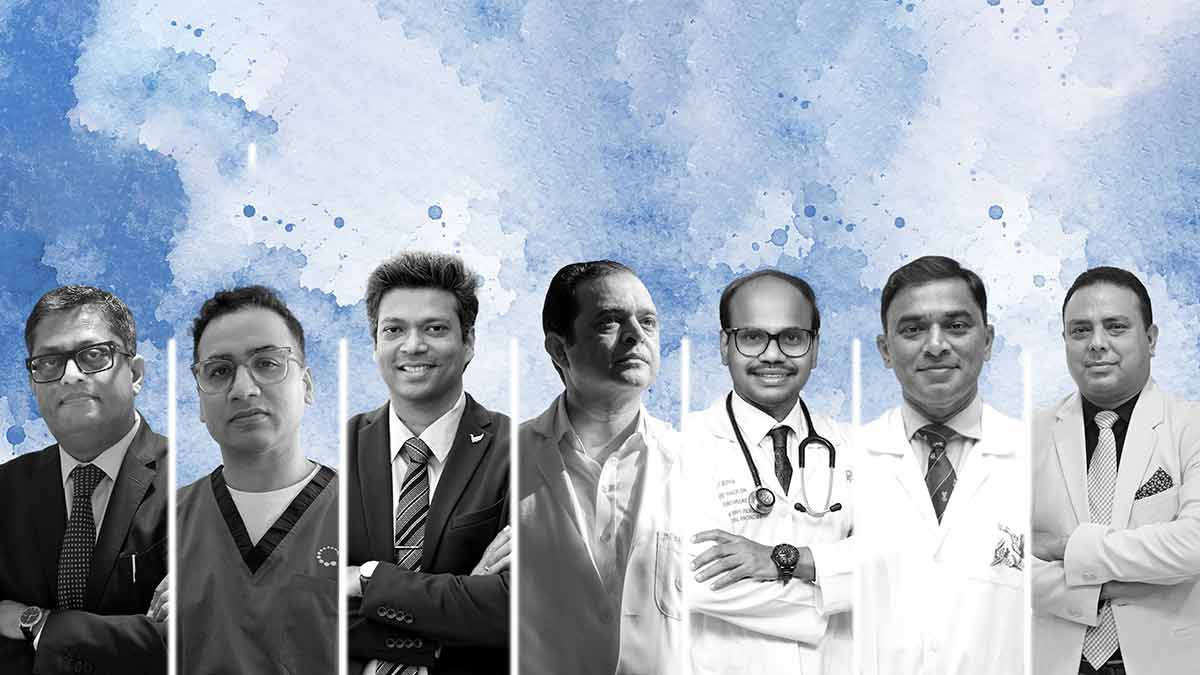
How do you measure a hospital’s strength? By the number of beds it houses? Or, by the reputation of its star doctors?
Beds merely do not make a hospital, nor do a handful of good doctors. While those are essential, a hospital’s true strength lies in the systems it builds, the expertise it nurtures, the technologies it adopts and, above all, the outcomes it delivers. Across India, a new generation of medical professionals and health care leaders is reimagining what a hospital can be, moving beyond conventional models of treatment to create more specialised, connected, efficient and patient-centric institutions. What makes this generation distinctive is its willingness to look beyond established practices and ask how medicine can be delivered better.
Take the case of Dr Rakesh Reddy Boya, who built an entire oncology ecosystem in a region that previously lacked these facilities. When Boya returned to Visakhapatnam after his specialist training at the All India Institute of Medical Sciences, New Delhi, he identified two significant gaps in cancer care in the region—a shortage of trained medical oncologists and the absence of facilities to treat patients with blood cancers such as leukaemia. Many patients had to travel to Chennai or Hyderabad for treatment. And so, he established a dedicated haematology and blood cancer treatment unit at Apollo Hospitals, followed by a comprehensive bone marrow and stem cell transplantation programme. The unit grew to perform approximately 30-40 bone marrow transplants annually.

Another significant area of Boya’s work has been introducing advanced cellular therapies to patients in Andhra Pradesh. When CAR-T cell therapy became available in India around three years ago, he got the technology to Visakhapatnam. CAR-T cell therapy involves modifying a patient’s own immune cells to recognise and attack cancer cells. “Earlier, patients from India had to travel to countries such as Israel, the US or Hong Kong to access CAR-T cell therapy for refractory blood cancers,” says Boya. “When the technology became available in India, I wanted to ensure that patients in Visakhapatnam could access it, too.”
Beyond clinical care, Boya also focused on building the region’s medical education capabilities by initiating a postgraduate oncology programme and subsequently helped establish two medical oncology training units in collaboration with other institutes. He has also developed a cancer research programme, enabling patients in the region to access investigational therapies and participate in clinical trials without necessarily travelling to larger research centres.
Forget travelling far, patients at times find it hard navigating procedures and protocols within hospitals. A hospital’s growth, believe policymakers and public health experts, must also be measured by the technology it brings in, the manpower it skills and the processes it establishes. And this is exactly what those who helm the administration, management and care inside hospitals are imbibing in their everyday work. “When we look at the average length of stay, our objective is not simply to reduce the number of days a patient spends in hospital. It is to ensure that the patient receives the right treatment, recovers efficiently and can return home safely,” says Sombrata Roy, zonal head, CK Birla Hospitals. “Our average OPD waiting time, which was close to four hours, has come down to less than 30 minutes. Similarly, we have worked on reducing discharge delays so that patients and their families do not spend unnecessary hours waiting.”
When he took charge as the zonal head in Kolkata, Roy identified challenges around patient trust, communication, delays in care and the functioning of visiting consultant-led departments. “So the very first thing I did was to get full-time doctors who would be available and loyal at all times to their place of work,” he says. He strengthened departments including pulmonology, orthopaedics, renal sciences, gastroenterology, general surgery, emergency medicine and critical care, while investing in nursing, technical and administrative manpower.
Roy’s approach to hospital leadership has centred on transforming health care delivery beyond physical infrastructure expansion. A significant part of this transformation has been the introduction of measurable clinical and operational benchmarks. “The hospital began tracking parameters such as central line-associated bloodstream infections, catheter-associated urinary tract infections, ventilator-associated pneumonia, surgical site infections, unplanned ICU returns, readmissions within 30 days, falls and mortality. These indicators are reviewed against established international benchmarks,” he says. A collaboration, initiated under Roy’s leadership around two-and-a-half years ago with the University of Dundee, Scotland, involves clinical research and trials in respiratory distress management.
The impact of the operational changes is reflected in several key performance indicators. The hospital’s average length of stay has reduced from 6.8 days to 4.4 days, with the average for surgical patients at around 3.9 days. “Discharge timelines have also been streamlined,” he says. “Cash-paying patients are now generally discharged within an hour, while TPA-related (insurance) discharges are targeted within four hours, compared with earlier delays of eight to nine hours.”
Meanwhile, in Mumbai, Dr Abhishek Srivastava, director of the Centre for Physical Medicine and Rehabilitation at Kokilaben Dhirubhai Ambani hospital, is addressing one of the most challenging areas of modern medicine—helping patients regain consciousness and functional independence after catastrophic brain injuries.
Srivastava’s work has focused on a particularly challenging category of patients: those with Disorders of Consciousness. These include patients who remain in a coma or a vegetative state (unresponsive wakefulness syndrome) or a minimally conscious state following brain injuries, massive strokes or other neurological events. Typically, such patients undergo emergency treatment, surgery and intensive care. But even after their immediate medical condition stabilises, some remain unconscious, paralysed or dependent on tracheostomy and feeding tubes. Families are often left struggling to understand what recovery might look like and how to care for them at home.
“To address this unmet need, we developed a dedicated neurorehabilitation pathway based on intensive, structured intervention,” says Srivastava. “At its centre is the 6/6/6 programme with six therapy sessions a day, six days a week, for six weeks. The approach combines physical and occupational therapy, sensory stimulation, swallow therapy and neurological music therapy with medical management and advanced interventions. The underlying principle is neuroplasticity, which is the brain’s ability to reorganise itself, establish new neural connections and recruit other areas to compensate for damaged functions.”
The hospital has treated patients who were initially considered unlikely to regain consciousness but subsequently became conscious, were weaned off tubes, and eventually returned to independent living. For Srivastava, the larger challenge is to change the way health care systems perceive rehabilitation. “It is an essential component of recovery that can determine whether a patient remains dependent or regains meaningful function,” he says. “The objective is to give every patient a chance of regaining awareness and function.”
Elsewhere in Mumbai, Dr Charudatt Vaity, director, critical care, Fortis Hospital, Mulund, has spearheaded an initiative called the enhanced remote monitoring unit (ERMU), designed to extend the vigilance of an intensive care unit to patients recovering in general wards. For critically ill patients, being shifted out of the ICU is an important milestone in recovery. But leaving the ICU does not necessarily mean that the risk of complications has passed. While patients in the ICU are continuously monitored, those transferred to general wards are usually assessed at fixed intervals. A deterioration occurring between two rounds can sometimes go unnoticed, delaying intervention. That is where ERMU comes in. Initiated in 2025, the system uses medical-grade wearable patches attached to patients to continuously capture vital parameters. The information is transmitted through Bluetooth to bedside monitors and subsequently to a cloud-based platform, allowing designated clinicians to access the readings remotely.
The distinguishing feature of the initiative is not merely the technology, but the clinical response mechanism built around it. Rather than leaving individual clinicians to monitor alerts independently, the hospital established a central command centre where ICU-trained nurses oversee patient data and identify warning signs. Events are classified into mild, moderate and severe categories, with a defined escalation protocol for each. For relatively minor events, the monitoring team alerts the bedside nurse to assess the patient. More serious developments trigger the rapid response team. “The objective is to identify deterioration before it becomes a medical emergency,” says Vaity.
The early results have been encouraging. According to Vaity, the hospital monitored approximately 700 high-risk patients and recorded nearly 1,700 events in its analysis up to July 2026. “One of the most significant indicators of impact has been the reduction in ICU transfers following rapid response team activation,” he says. “Before the initiative, approximately 80 per cent of patients for whom the rapid response team was activated would subsequently be transferred to the ICU. Following its implementation, this proportion declined to around 40 per cent. The hospital also reports that it has not recorded a code blue or cardiac arrest in the monitored wards during the reported implementation period. Almost 80 per cent of the events are managed in the ward, while patients who need ICU care are shifted proactively.”
The project has also received recognition at national and international platforms, including awards in clinical excellence and innovation at the IHH Quality Summit in Malaysia. For Vaity though, the larger significance of the initiative lies in changing the way hospitals approach patient safety.
And that is at the heart of psychiatric care, which often demands more than clinical expertise. It requires the ability to introduce new treatment approaches, establish robust protocols and create systems that make specialised therapies accessible to patients. At Sir Ganga Ram Hospital, Dr Rajiv Mehta, vice chairperson, department of psychiatry, has been contributing to this evolving landscape through clinical innovation, academic leadership and research. One of his significant contributions has been the introduction of ketamine therapy for treatment-resistant depression at the hospital. Although ketamine has emerged as a promising treatment option for patients who do not respond adequately to conventional antidepressants, its adoption remains limited in India. “The challenge in psychiatry is not just identifying a mental health condition, but continually expanding the range of treatment options available to patients who do not respond to conventional therapies,” says Mehta. “We need to bring evidence-based newer interventions into clinical practice at all times.”
Mehta also introduced the Naloxone Challenge Test as part of opioid de-addiction treatment. The test helps establish whether opioids are still present in a patient’s system following detoxification before initiating anti-craving medication. This is an important clinical step because administering opioid-blocking medication while opioids remain in the body can precipitate severe withdrawal symptoms. While urine testing is another method used to establish opioid abstinence, Mehta advocates the Naloxone Challenge Test as an additional clinical tool. Recognising the growing challenge of opioid dependence, Mehta is also working towards introducing ultra-rapid opioid detoxification, a procedure performed under anaesthesia to accelerate the withdrawal process.
Moreover, Mehta’s research has explored unusual and relatively under-reported psychiatric presentations. A paper he published in the Indian Journal of Psychiatry in September 2026 examined food-associated sexual arousal, a rare phenomenon described as sitophilia. The paper documented three cases: a 14-year-old girl with anorexia nervosa who experienced sexual arousal while watching cooking videos; a homemaker who experienced arousal from the aroma of food she prepared; and a chef whose arousal was associated with the perfection of food preparation. The cases highlight the complex and sometimes unexpected associations between sensory experiences, behaviour and sexual arousal.
Another area involving private bodily functions that is seldom reported is colorectal issues. When Dr Venkatesh Munikrishnan, a colorectal surgeon with nearly 15 years of specialist training and surgical experience in the UK, returned to Chennai in 2010, colorectal surgery was still largely practised as part of general surgery. He saw an opportunity to establish a specialised department focused on diseases ranging from piles, fissures and fistulas to colorectal cancer. At Apollo Hospitals, he helped develop a multidisciplinary programme built around sub-specialisation, advanced laparoscopic and robotic surgery.
One of the distinctive aspects of his work has been making robotic surgery more affordable without compromising clinical outcomes. Munikrishnan and his team developed a cost-efficient technique using three robotic arms instead of the conventional four, combining two advanced robotic instruments with standard laparoscopic instruments for other tasks. By reducing instrument usage, streamlining procedures and leveraging their specialised experience, they brought the cost of robotic surgery closer to that of conventional laparoscopy. He describes this approach as “frugal innovation”.
His current frontier is telesurgery, which Munikrishnan sees as a way to overcome the geographical concentration of advanced surgical expertise. Using India’s indigenously developed SSI Mantra robotic system, his team performed an intercity telesurgery demonstration. “The larger ambition is to allow experienced surgeons to operate remotely or assist local surgical teams, enabling patients in smaller cities and underserved regions to access specialist expertise without travelling to metropolitan centres,” he says. Looking ahead, he envisages AI-assisted patient triage, remote surgical planning and a global network through which Indian surgeons could extend their skills to patients across countries, potentially transforming how specialised surgery is delivered.
Medical practitioners of today are also constantly attempting to make established treatments more personalised, precise and responsive. Take, for instance, the deep brain stimulation (DBS) technique that involves placing electrodes in specific brain regions to regulate abnormal electrical activity associated with Parkinson’s disease. At Kokilaben Dhirubhai Ambani hospital in Mumbai, a new approach goes a step further. Instead of looking only at the target location, which is a wider area, neurosurgeon Dr Akshat Kayal and his multidisciplinary team use tractography—3D imaging technique to reconstruct white matter fibres—and connectomics—mapping of the brain’s complete network—to understand the neural pathways connected to that region and stimulate specific brain circuits to produce the desired therapeutic effect. This is important because two patients can receive stimulation at apparently similar locations but experience different outcomes. Kayal, who specialises in neuromodulation, and his team try to understand why a particular patient’s treatment isn’t working optimally, rather than simply increasing stimulation settings. The objective is to personalise electrode positioning according to the patient’s individual brain connectivity rather than relying exclusively on standard anatomical coordinates.
“The idea is to make treatment more responsive to the patient’s changing neurological requirements rather than relying entirely on fixed stimulation settings,” says Kayal. “Patients cannot repeatedly visit the hospital or clinic every time their symptoms fluctuate. Adaptive DBS offers the possibility of managing some of these variations through automated, signal-informed adjustments. So, the hospital has incorporated adaptive DBS as a central component of its treatment workflow, rather than treating it merely as an additional technological option.”
The programme is intended to help patients who have undergone DBS elsewhere as well as those treated at the hospital. Kayal says the various technologies being incorporated into the DBS programme have emerged from different areas of neurological research and were not originally developed as components of a single DBS workflow. The team’s approach has been to identify the clinical relevance of each technique and integrate them into different stages of DBS treatment. The team is preparing to publish its experience with an initial pilot cohort of 31 patients who underwent tractography-guided DBS.
For Kayal, the evolution of DBS is not simply about introducing a new device or performing more surgeries. It is about building an integrated clinical programme that combines surgical precision, brain connectivity, physiological recordings, computational modelling, adaptive technology and long-term patient management.