



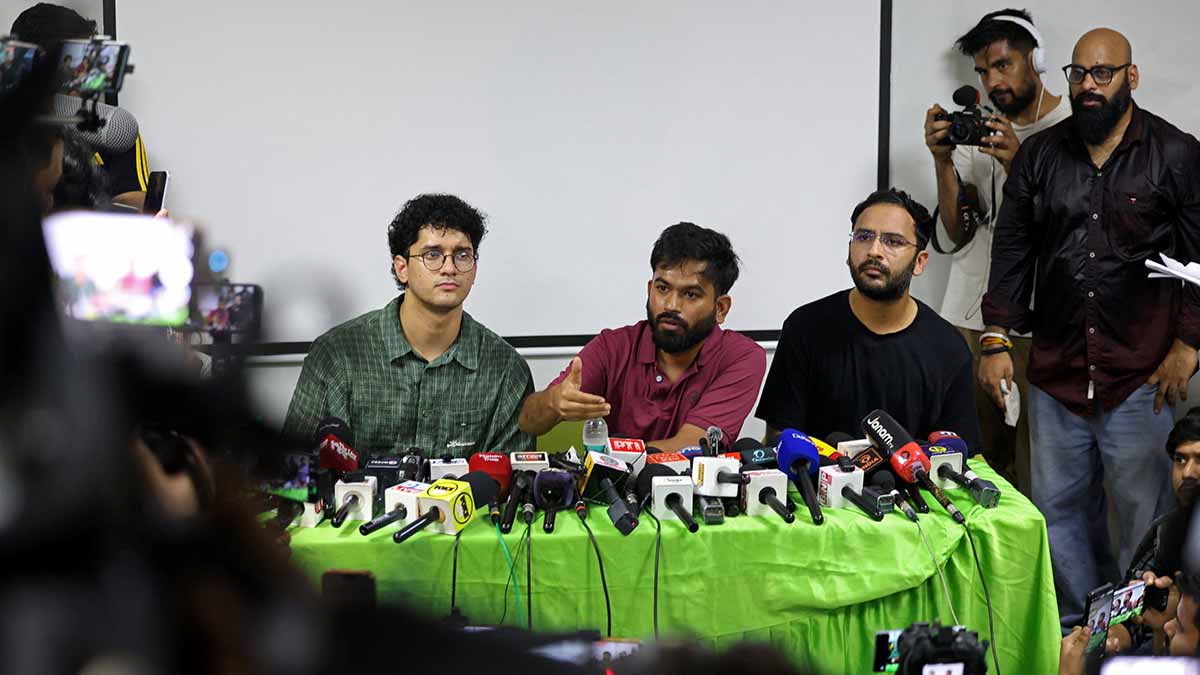
On September 27, Assam Police detained Cockroach Janta Party cofounder Ashutosh Ranka. He was there to attend the party’s first volunteer meeting in the state. Hours later, as he was released, Ranka said Assam Chief Minister Himanta Biswa Sarma—the BJP’s mascot in the northeast—was scared. “We, the cockroaches, are not afraid of you,” he said.
This was notable because, during its protest at Jantar Mantar, the CJP had avoided targeting the BJP and its leaders; the focus was solely on the resignation of then Union education minister Dharmendra Pradhan.
Since then, however, the CJP’s following has grown, and now, going into its protest against Chief Election Commissioner Gyanesh Kumar, it has decided to take on power centres in the government directly.
“Pradhan’s resignation would not have unsettled the government,” said political analyst Aditya Rathi. “But if Gyanesh Kumar resigns, it will prove the opposition claims right and further affirm the allegations of the BJP’s electoral malpractices. So, there seems to be no finish line to the protest in Maharashtra, unless the government falls.”
The CJP’s frontline leaders—Abhijeet Dipke, Saurav Das and Ranka—have alleged that the Special Intensive Revision process was conceived at the behest of the BJP to deliberately delete names from the voter roll to benefit it. The CJP has said that this time its focus would be on raising questions about what was influencing Kumar’s decisions.
While it might have taken a hard stand against Kumar, it will need evidence to back up its claims when it points fingers at the institution itself. And that will be its test during the protest.
Till now, the CJP has strategically kept itself away from the agendas of opposition parties, projecting itself as a pressure group that feels the pain of ordinary people and has nothing to gain from the movement. This has helped lend its campaign legitimacy.
It has also been able to keep itself relevant after its first protest by taking the education reform movement to villages, highlighting places that had been previously ignored.
As its target now moves from a Union minister to the Election Commission, and with its protests increasingly directed against the ruling BJP, the similarities with the anti-corruption movement of 2011 cannot be missed.
However, political analysts argue that the CJP does not yet have the popular base to contest elections. Its mobilisation so far has centred on specific issues and on urging people to demand accountability from the government.
Interestingly, the CJP and opposition parties seem to have understood how to co-exist and take the movement forward. In August, Dipke explicitly said that the CJP would remain a pressure group, as it had no plans to become a political party, and argued for the need to hold institutions accountable through public movements.
But, ahead of the protest, Maharashtra Chief Minister Devendra Fadnavis publicly called CJP “Congress Jitao Party”, alleging that the Congress was using the outfit to fill a political vacuum.
For the CJP, that might be the bigger test: whether it can continue to present itself as a pressure group while increasingly taking on political power.
