



In the past year and a half, three parties—the AAP, the Trinamool Congress and the DMK—have lost assembly elections, and all three have, at some point, questioned the functioning of the Election Commission.
After Mamata Banerjee’s defeat in West Bengal in May, Rahul Gandhi, whose Congress has most vehemently attacked the EC, suggested that all opposition parties put aside petty politics and come together to save democracy. However, it was a post-poll phase, leaving little common ground for the parties to unite.
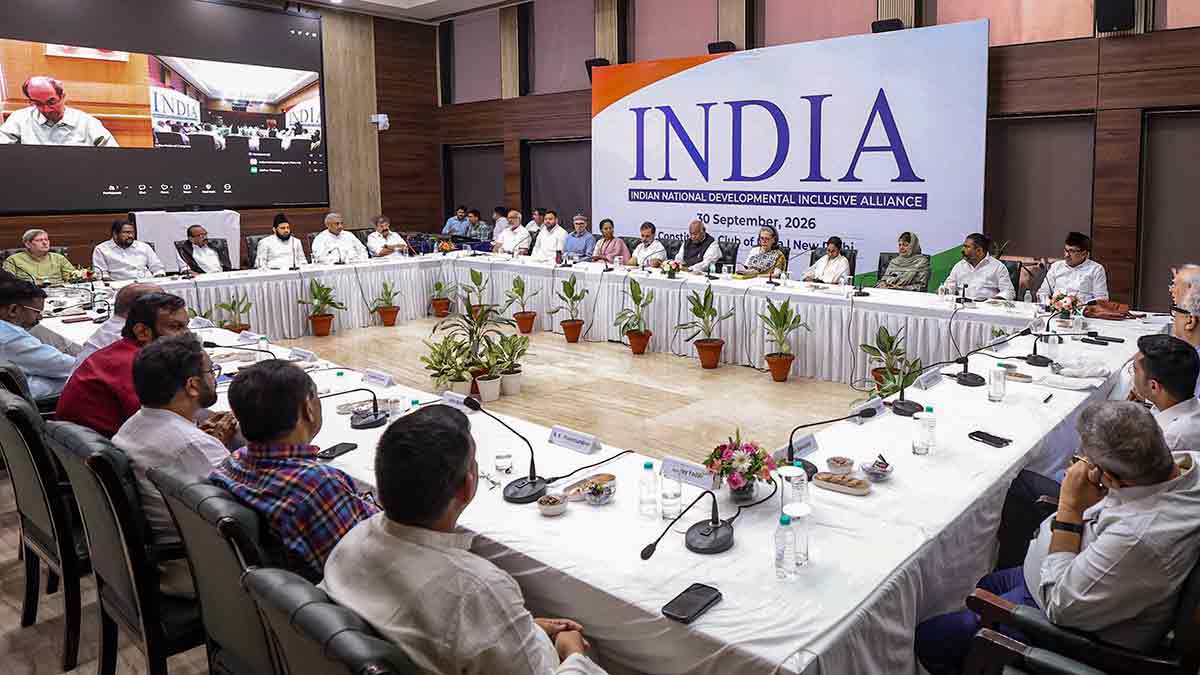
That seems to have changed. With five assembly elections scheduled in the next few months, a much bigger fight is taking shape over the electoral process and against Chief Election Commissioner Gyanesh Kumar. The recent controversy over Kumar’s alleged partisan handling of the elections has given the opposition a new entry point to take on the ruling BJP in four of these states—Uttar Pradesh, Uttarakhand, Goa and Manipur.
While Banerjee has recently aligned with the broader opposition campaign, Arvind Kejriwal, too, has shown a strategic willingness to support the larger fight. For instance, the AAP is in a direct political fight with the Congress in Punjab, but Kejriwal has mounted a bigger attack on the BJP, which is not even in a direct contest with the AAP in most of the five upcoming state elections.
There seems to be a feeling among some opposition leaders that attacking the BJP only on conventional issues—such as inflation, unemployment and welfare schemes—no longer brings electoral dividends. Hence, the focus on the electoral system itself.
To do this, the Congress has put in place a long resistance plan. Party leaders and cadres have spent considerable time discussing the pros and cons of fighting Kumar until he resigns. “Over the past 19 months, Rahul Gandhi has constantly provided the public with evidence that the CEC is compromised and that elections are being rigged, whether through electronic voting machines or voter lists,” said Congress general secretary K.C. Venugopal. “When the government doesn’t hear the voice of the country, one solution is to resist. Therefore, we are going to resist aggressively with peaceful demonstrations and movements countrywide.” He added that the recent Congress Working Committee meeting in Delhi was “not an ordinary one”.
“How will they lose if they can manipulate elections? The government isn’t concerned about people now because they know they will come back to power by stealing votes,” a CWC member told THE WEEK.
Said political analyst Madan Mohan Jha: “Earlier, it looked like sour grapes for the Congress, but now, apart from just a Congress issue, it has gotten more credence because more political parties are voicing the same concerns.”
If it is successful in cornering the BJP and Kumar on the issue, the Congress would have won the perception battle. But the party would hope for more tangible outcomes, in terms of seats, and in bringing swing voters into its fold.
A section of political observers remains sceptical about whether the credibility of the Election Commission can become a voter issue. The Congress had designed its campaign around “vote theft” during the Bihar and Assam assembly elections, but lost by a higher margin than before.
But the potential of a wider opposition unity and the emergence of the Cockroach Janta Party as a pressure group might change the equation. Notably, the CJP has announced another street protest, this time against Kumar. And if it draws the same numbers in did at Jantar Mantar, it could be more than a headache for the BJP and Kumar.
