



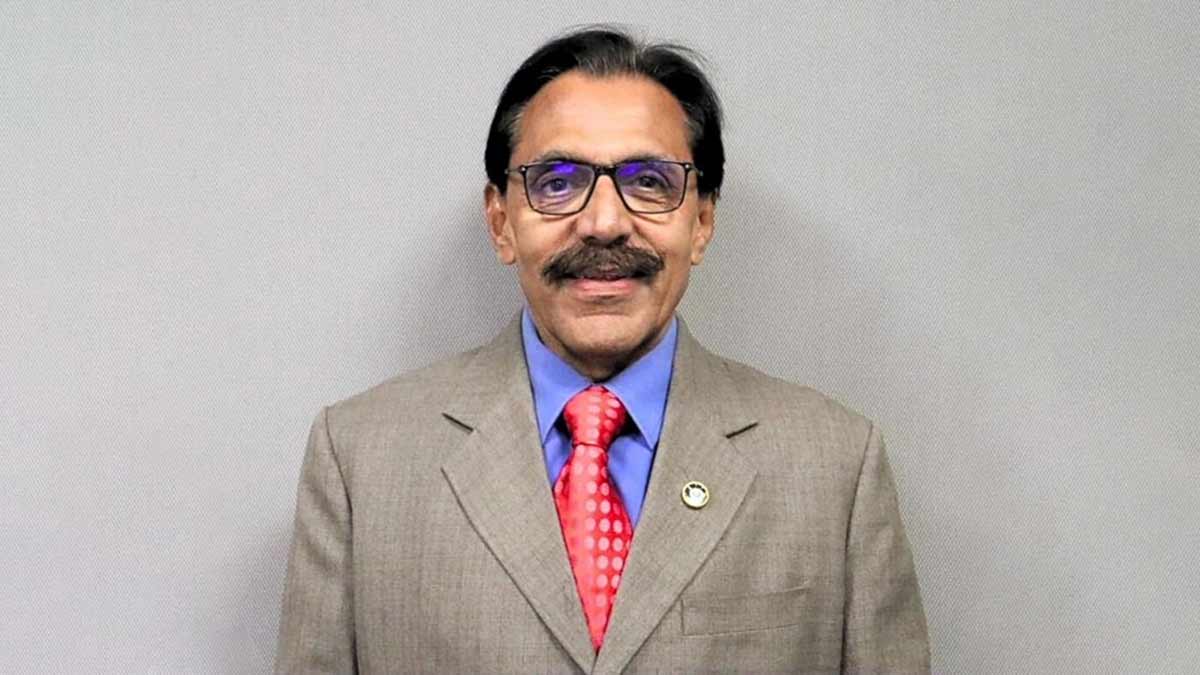
Interview/ P.M. Nai, honorary senior adviser, National Commission for Protection of Child Rights; honorary adviser, National Commission for Women; and former director general, National Disaster Response Force
Q/ Could you explain how human trafficking and bonded labour are interconnected in India, and how this cycle typically operates?
Under Indian law, both the former Section 370 of the Indian Penal Code (IPC) and the current Section 143 of the Bharatiya Nyaya Sanhita (BNS) make it clear that if a person is held in slavery, it amounts to human trafficking. The word ‘slavery’ itself is explicitly used in the law. It was introduced in the IPC through the 2013 amendment to Section 370 and has been retained in Section 143 of the BNS.
At its core, slavery is a situation where a person is deprived of rights, freedom and dignity, and is then exploited. From that perspective, every bonded labourer is a victim of human trafficking. They are stripped of all three and forced to work. Unfortunately, the police, district administration, the public and even the media often fail to recognise bonded labour as human trafficking. They tend to see it merely as child labour.
One question should always be asked when you encounter a child labourer: “How much money was paid to your father when you were taken for work?” What is commonly described as an ‘advance’ is actually the mechanism that creates bondage. During my 35 years in the IPS, I realised that this so-called advance is a deception. A trafficker pays a poor family a lump sum and later tells the child that the debt can only be repaid through years of labour. That is how slavery is created. Once that bondage is created, it becomes slavery. Therefore, every case of bonded labour is, in fact, a case of human trafficking.
Q/ Are you saying that every case of bonded labour should also be treated as a case of human trafficking, with the corresponding legal provisions and penalties applied?
In addition to invoking the Bonded Labour System (Abolition) Act and the Child Labour Act, the provisions relating to human trafficking should also be applied.
Q/ Rehabilitation of rescued bonded labourers cannot begin until a release certificate is issued. Yet there seems to be enormous reluctance to issue these certificates, with many cases being dismissed as ordinary labour disputes or even denied as instances of bonded labour. Why does this culture of denial persist?
There are three main reasons. First, a lack of knowledge. Many officials simply do not understand bonded labour or human trafficking. Even today, if you ask many young IAS or IPS officers whether a rescued child is a victim of bonded labour or trafficking, they will often say, “Isn’t this just child labour?” These issues receive very little attention during their training.
Second, a lack of professional skills. Investigating bonded labour is not like investigating an ordinary crime. You need to know how to interview traumatised victims, build trust, observe what is left unsaid, listen carefully, document evidence and present it properly in court. Many officers don’t have these skills. They ask a few routine questions, the victim says nothing, and the investigation goes nowhere. The court relies on the case diary, not on newspaper reports. Even if good fieldwork is done, poor documentation and poor presentation hamper crucial evidence reaching the court.
Third, and perhaps most important, a lack of accountability. If 20 labourers are rescued after being held in bondage for months or years, we must ask: Where were the local sub-divisional magistrate, sub-collector and station house officer all this time? Their job is not to remain inside their offices or police stations. They are expected to visit villages, understand local conditions and identify exploitation before it becomes a crisis. Authority alone is meaningless. It should be coupled with accountability.
Q/ Is this essentially a problem arising from a lack of proactive governance?
Exactly. There is no outreach. The attitude is, “Let people come to me, and then I’ll act.” It should be the other way around. Officials must proactively reach out to people instead of waiting for complaints. Unless that mindset changes, we will never address these issues effectively. Responsibility exists on paper, but in practice, accountability is largely absent.
Q/ We have found that even in high-profile rescue operations, there appears to be under-reporting. Why do you think this happens?
There is a misconception within the bureaucracy that recognising bonded labour or trafficking cases will tarnish the image of a district or a state.... We should not let [such] concerns stand in the way of protecting vulnerable people. We have to confront these problems honestly and act on them. Without accountability, nothing will change.

Q/ In 2016, the government set a target of releasing 1.84 crore bonded labourers by 2030. Data suggests that we are far from achieving that goal. How do you assess India’s progress in tackling bonded labour in the last decade?
In my view, only a handful of states and districts truly understand this issue. The law is being implemented properly in some places, and effectively enforced in even fewer. The reality is that not even one-third of the problem is being addressed.
This is not about blaming any one state. The problem is the highly uneven implementation and enforcement of the law across the country.
What is needed is political will. The labour minister, the chief minister and the home minister must decide that the law will be implemented in letter and spirit. There should be a dedicated monitoring team to ensure that happens.
These are practical reforms. They will require resources. But rehabilitation assistance is not a favour; it is a legal entitlement of rescued persons. We cannot continue to treat this as a welfare act by the state.
Q/ Women, children, migrant workers, persons with disabilities and marginalised caste communities are disproportionately affected by bonded labour and trafficking. Has India’s rehabilitation framework evolved to address their specific needs, especially the psychological trauma that survivors often carry?
As far as psychosocial rehabilitation is concerned, I doubt whether even 10 per cent of India’s 800-plus districts have an effective system in place.
The first problem is the lack of trained personnel. But training alone is not enough—people also need compassion. Too often, the system fails because professionals are not equipped to deal with traumatised survivors.
There is also very little supervision. Every system needs a maker-and-checker mechanism, where one person’s work is independently reviewed. Senior officials cannot simply sign files and sanction funds; they must ensure these programmes are actually working on the ground.
India already has commissions and departments for child rights, human rights and women’s welfare. The question is: What are these commissions doing? They, too, must be held accountable.
Counsellors are essential, but in many places they do not exist. Where they do, they often lack proper training, and there is little oversight of their work. Without compassionate engagement and accountability, this system cannot succeed. Of course, there are good examples across India, but they are far and few.
Q/ Poverty, caste and distress migration continue to push people into bonded labour. What more should governments do to prevent people from falling into this cycle, particularly through better inter-state coordination?
Migration is both necessary and inevitable. It is a right. But being a migrant should never mean that your rights can be violated. This calls for appropriate orientation of migrants. We need to set up PAHT (Panchayat Against Human Trafficking) and enlist their involvement in preventing trafficking and in empowering migrants. Similarly, anti-human trafficking clubs should be set up in colleges.
The second point is that poverty alone is not the root cause. A national study I did on human trafficking for NHRC and TISS has established that nearly 90 per cent of trafficking victims come from socially marginalised communities—Scheduled Castes, Scheduled Tribes, poor Muslims and other disadvantaged groups. I prefer the term ‘vulnerability factors’ rather than poverty because vulnerability also includes caste, social exclusion, displacement and disasters.
Natural disasters, for instance, sharply increase trafficking because people lose their homes and livelihoods. Traffickers know this and target disaster-hit areas. Bonded labour also becomes inter-generational—if a parent remains trapped for years, the children often inherit that bondage.
The third issue is demand. We spend a great deal of time talking about victims but rarely ask, “Who is creating the demand?” Wherever there is demand for cheap, exploitable labour, there is a greater likelihood of human trafficking and bonded labour. If we punish those who create the demand, we can reduce exploitation.
Ultimately, we need to address both sides of the problem—reduce demand and reduce vulnerability. And above all, we need strong political will. If governments across India sincerely implement the law, we do not have to wait until 2030.
