



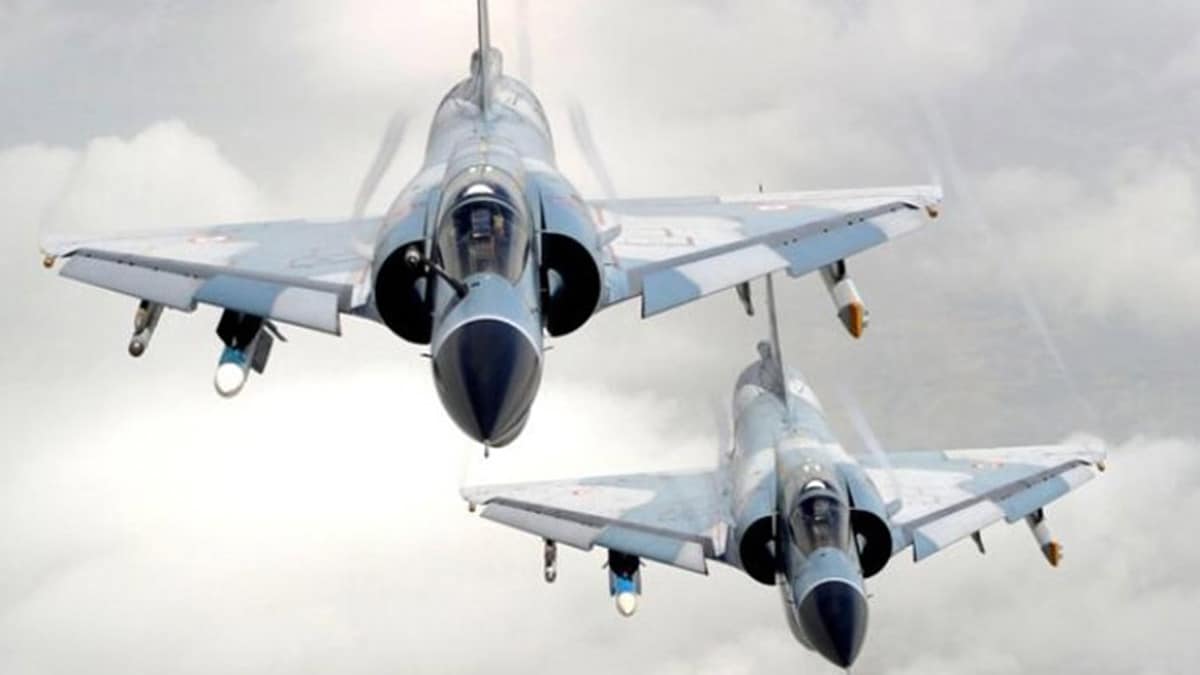
A ₹135-crore simulator deal with a start-up for the Mirage 2000 is set to give Indian Air Force (IAF) pilots more opportunities to master complex combat procedures and better prepare them for demanding operational missions.
The IAF has reportedly signed a contract worth ₹135 crore with Threye Interactive, a subsidiary of NewSpace Research & Technologies, to develop part-task simulators for the French-built Dassault Mirage 2000 fighter aircraft.
The simulators will allow pilots to practise highly complex combat procedures without taking the actual fighter aircraft into the air. They will be particularly useful for rehearsing missions that require a large number of jets to operate together.
A part-task simulator is a specialised training device designed to reproduce a particular subsystem, control interface or set of procedures instead of replicating the entire flying environment. This allows pilots to repeatedly practise specific tasks such as identifying targets, selecting weapons and responding to threats. Repeated training also gives them an opportunity to identify mistakes and master procedures before performing them during actual flying.
The simulators are intended to help pilots gain a deeper understanding of the fighter's systems and practise tasks such as tracking friendly aircraft and responding to enemy fighters and ground-based defences. According to a LiveFist report, the system will also allow pilots to repeatedly rehearse scenarios that are difficult to replicate in the air.
Such ground-based training is particularly important for complex combat missions, where pilots may have to manage several tasks and coordinate operations involving multiple aircraft.
Threye has been tasked to help prepare Mirage 2000 pilots for such demanding combat missions, a role that has a direct bearing on the IAF's operational readiness, the LiveFist report said.
