



Imagine a 50-year-old woman with diabetes walking into a primary health centre for a routine eye examination. A health worker photographs the back of her eyes using a smartphone-based retinal camera. The test takes less than a minute.
Today, those images may be used to look for diabetic eye disease. In the not-too-distant future, the same photographs could also help identify people at increased risk of kidney or cardiovascular disease.
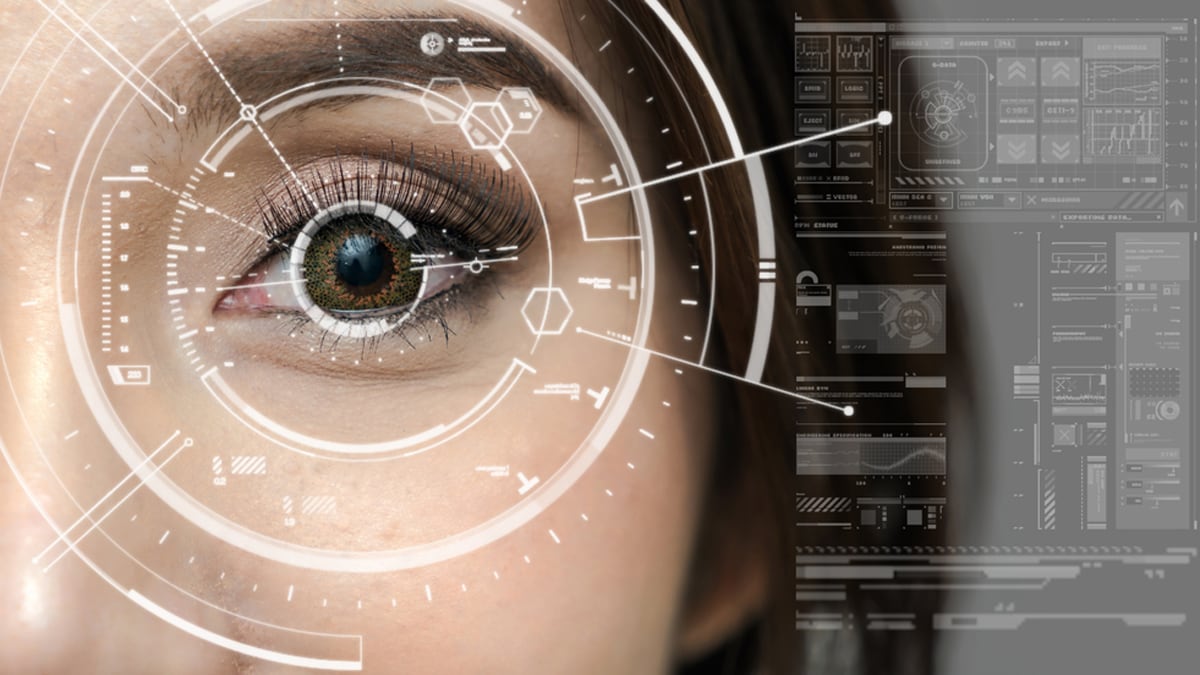
That possibility lies at the heart of an emerging field called oculomics—the use of information from the eye to understand health elsewhere in the body.
It could be particularly important for India, where many of the diseases that cause the greatest long-term harm remain silent for years. Chronic kidney disease can progress substantially before symptoms appear. Coronary artery disease may first make itself known through a heart attack. Modern medicine has treatments for many of these conditions. The harder problem is often identifying people at risk early enough.
What the eye can reveal
The retina gives medicine a rare, non-invasive view of both neural tissue and the body's smallest blood vessels. It is an extension of the central nervous system, and its microvasculature shares characteristics with vessels elsewhere in the body, including those supplying the heart, kidneys and brain.
Doctors have long known that systemic disease can leave signs in the eye. High blood pressure can alter retinal vessels, while diabetes can damage them sufficiently to cause diabetic retinopathy. What has changed is our ability to analyse these images using artificial intelligence.
AI systems can detect patterns that may be too subtle or complex for the human eye to recognise consistently. They can analyse features such as the width, curvature and branching of retinal blood vessels, as well as changes around the optic nerve and other structures. Oculomics seeks to determine whether such patterns can offer useful information about a person's wider health.
In 2018, researchers showed that deep-learning models could extract cardiovascular risk factors such as blood pressure and smoking status from retinal photographs and demonstrated some ability to predict major cardiac events.
Since then, researchers have investigated whether retinal images can provide clues to conditions including chronic kidney disease, coronary artery calcification, liver disease, Alzheimer's disease and anaemia.
The idea is not that the retina contains a diagnosis of every disease. Rather, changes occurring across the body's vascular and nervous systems may leave measurable signatures in the eye. AI makes it possible to search for those signatures at a scale that was previously impractical.
From eye screening to health screening
India has already provided an important testing ground for retinal AI.
A 2019 study published in JAMA Ophthalmology, conducted by clinicians in Mumbai, evaluated an artificial-intelligence system running offline on a smartphone-based retinal camera for the detection of referable diabetic retinopathy in the community. Among evaluable participants, it reported 100 per cent sensitivity and 88.4 per cent specificity.
The study demonstrated the feasibility of AI-assisted retinal screening in community settings without requiring continuous internet connectivity.
Since then, retinal AI has moved closer to routine clinical use for eye diseases such as diabetic retinopathy, glaucoma and age-related macular degeneration.
Integrated with smartphone-based retinal cameras, these systems can operate offline at the point of care. In a recent prospective real-world evaluation involving 193 adults, the AI achieved 99.3 per cent sensitivity and 95.7 per cent specificity in detecting any of the three target conditions. Extending retinal AI from diseases of the eye to diseases elsewhere in the body, however, is a much larger scientific challenge.
A promising triage tool
Oculomics is advancing rapidly, although the field remains relatively young. Much of the evidence linking retinal images with systemic disease comes from retrospective datasets. These studies are valuable for discovering associations, but an algorithm that performs well on existing images must still prove that it works reliably in real-world clinical settings.
That means demonstrating performance across different age groups, ethnicities, geographies and disease profiles. For India, validation across diverse Indian populations will be particularly important.
Early results from our work on chronic kidney and cardiovascular disease are encouraging, while models examining maternal and liver disease risk are under development. None should be regarded as a diagnostic test. A retinal photograph cannot replace a kidney-function test, CT scan or coronary angiogram. Its potential role is as an initial risk-stratification tool.
Consider a primary health centre screening hundreds of people with diabetes or hypertension, most of whom have no symptoms of kidney or cardiovascular disease. If retinal imaging could reliably identify a smaller group at higher risk, clinicians could direct more specialised or expensive investigations towards those most likely to benefit. That is risk stratification rather than diagnosis. In a country with a vast population and uneven access to specialists, that distinction matters.
The India opportunity
The scale of India's chronic disease burden makes earlier detection particularly urgent. The ICMR-INDIAB study estimated that in 2021 India had 101 million people with diabetes, 136 million with prediabetes and about 315 million with hypertension. Together, these conditions contribute substantially to kidney and cardiovascular disease.
Many conventional screening pathways depend on laboratory tests, advanced imaging or specialists who remain concentrated in urban centres.
Retinal imaging offers a different proposition. It is non-invasive, images can be captured quickly and, in many cases, without dilating the pupil. Portable cameras can be operated by appropriately trained health workers rather than ophthalmologists, while AI can analyse images almost immediately.
If the AI runs directly on the device, screening can also be performed in settings where internet connectivity is unreliable. This creates the possibility of extending retinal screening beyond large hospitals into primary health centres, diabetes clinics, diagnostic laboratories and community programmes. The question now is whether the same infrastructure could eventually help identify risk beyond the eye.
Screening is only the first step
Technology, however, solves only part of the problem. Identifying someone as being at increased risk has little value unless the health system can provide the next test, the appropriate clinician and, where necessary, treatment.
Any large-scale use of oculomics would therefore require clear referral pathways. Someone flagged for possible kidney-disease risk would need access to appropriate laboratory testing and clinical follow-up. A person identified as being at elevated cardiovascular risk would need a different pathway.
India already has health infrastructure on which such models could build. Diabetic-retinopathy screening forms part of the eye-care package under Ayushman Bharat's comprehensive primary healthcare programme, including the use of non-mydriatic retinal cameras at the primary-care level. The Ayushman Bharat Digital Mission, meanwhile, is creating infrastructure for consent-based exchange of health information across different points of care. In time, retinal screening could become another signal within that broader health record.
But important hurdles remain. Oculomics will require prospective, multi-centre studies rather than promising results from isolated datasets. Regulators will need frameworks for evaluating AI systems that may assess several health risks from a single image. Clinical adoption will depend not only on accuracy, but also on evidence of benefit, workflow integration, clear accountability and appropriate referral pathways.
Health systems must also avoid creating a new problem: identifying large numbers of high-risk people without sufficient capacity to confirm their risk or provide treatment.
A window into prevention
So, will the eye become the body's next health sensor? The more useful question is what role it can realistically play.
The retina is unlikely to replace the tests medicine already relies on. Kidney disease will still require laboratory confirmation. Heart disease will still require appropriate cardiac investigations.
But the eye could become an increasingly useful place to start. For a health system trying to detect silent disease among millions of people, a test that is quick, non-invasive and deployable in the community has obvious appeal.
Oculomics has the potential to become a powerful new tool in preventive healthcare—helping identify hidden risk earlier, guiding timely investigation and bringing early detection closer to the communities that need it most.
(The author is the chief medical officer at Remidio, which develops retinal imaging devices and AI-based screening technologies)
The opinions expressed in this article are those of the author and do not purport to reflect the opinions or views of THE WEEK.
