



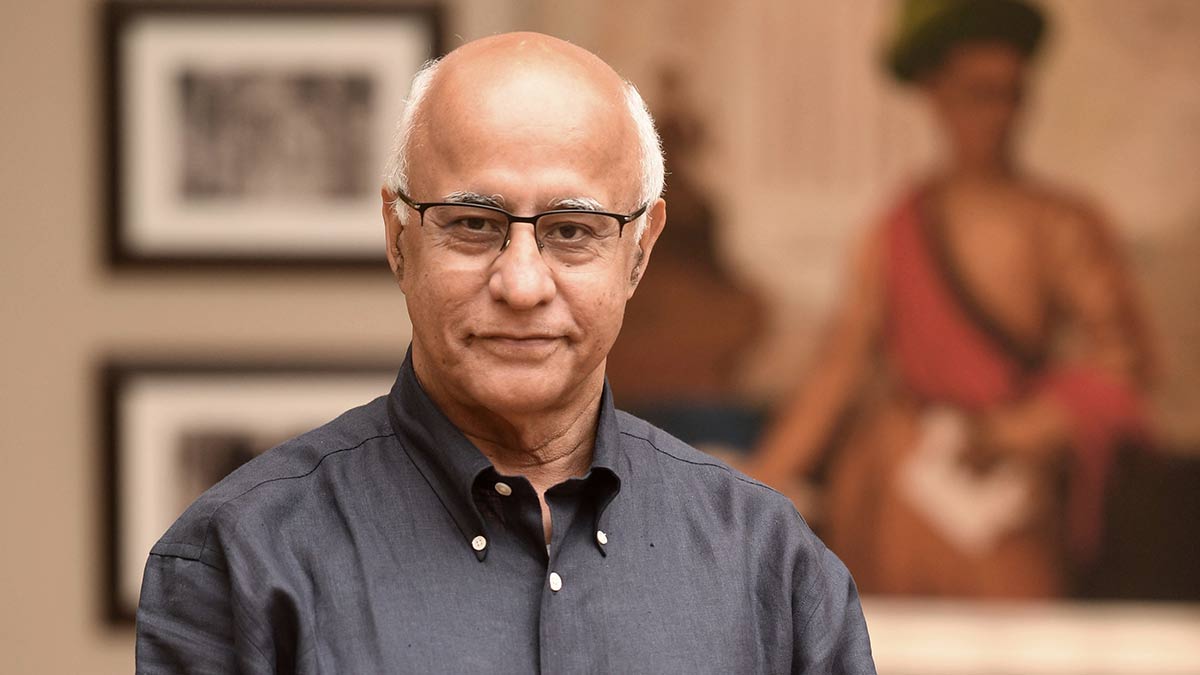
Interview/ Subroto Bagchi, co-founder of Mindtree and chairman, Odisha Skill Development Authority
After starting out as a clerk in the industries department of the Odisha government in 1976, Subroto Bagchi entered the computer industry in 1981, working in sales, marketing and operations for several companies. His longest stint was at Wipro, where he became chief executive of its global R&D before serving as corporate vice president (mission quality) under chairman Azim Premji. He left Wipro in 1998 to join Lucent Technologies, and, a year later, co-founded Mindtree with nine others, becoming its chief operating officer. He was appointed vice chairman in 2010 and chairman in 2012.
In 2016, at the invitation of chief minister Naveen Patnaik, he took on the full-time role of chairman, Odisha Skill Development Authority, with the rank of a cabinet minister. Bagchi talks to THE WEEK about higher education in India. Excerpts:
How should colleges balance academic rigour with the practical demands of a rapidly changing economy?
We need to look back before we look forward. When I joined the workforce in the mid-1970s, the industrial economy was giving way to the information economy. Now the information economy is making way for the AI-led economy. In each, the success ingredients were different.
In the industrial economy, three things were critical: obedience, domain skill and process knowledge. In the information economy, the ingredients became knowledge, analytical skills and technical capability—left-brain heavy. In the emerging world, the critical capabilities will be judgment, synthesis, trust, creativity, adaptability and moral leadership—right-brain intensive. The challenge before us is how to make our youth cognitively ambidextrous.
How is AI changing what a college education needs to deliver, and how quickly is India responding?
These are early days and even the top-tier, globally renowned institutions are figuring out what AI means and how it could impact things. To say that India is “responding” would be trivialising things. I flinch when everyone says, I am AI, I will teach you AI. There is a real danger in that, and all of us need to deeply introspect on what we may be doing and how not to trivialise AI.

That said, AI is going to be a civilisational inflection point. If you spend a few days working with Claude or ChatGPT, you begin to fathom the way things will change over the next decade. These can raze meaningless educational systems to dust and democratise knowledge to a level we do not even comprehend today. The government should mandate that all faculty of every higher educational institution undergo a four-week training in basic AI—understanding the basics, using it to teach, knowing what not to do with it, and guiding youth on how to use it as a knowledge and life-skill accelerator.
How should colleges and industry work together, and where does that partnership tend to break down?
In India, the relationship between industry and academia is tactical. In developed countries, it is strategic. A tactical relationship is largely driven by commerce and tends to build a use-and-throw mentality. A strategic relationship requires synergistic, long-term thinking in which both sides understand the importance of nobility. Indian industry has a much higher responsibility to bridge this gap. We do very little, and mostly nothing at all.
What would you say to a young Indian stepping into higher education in 2026 about how to make the most of it?
First, be authentic—be yourself. Next, learn to be useful to someone in some small way, every day. Know that usefulness is the base of all excellence. Finally, build a mindset that you will give more to life than you will take from it. The rest will fall into place.
