



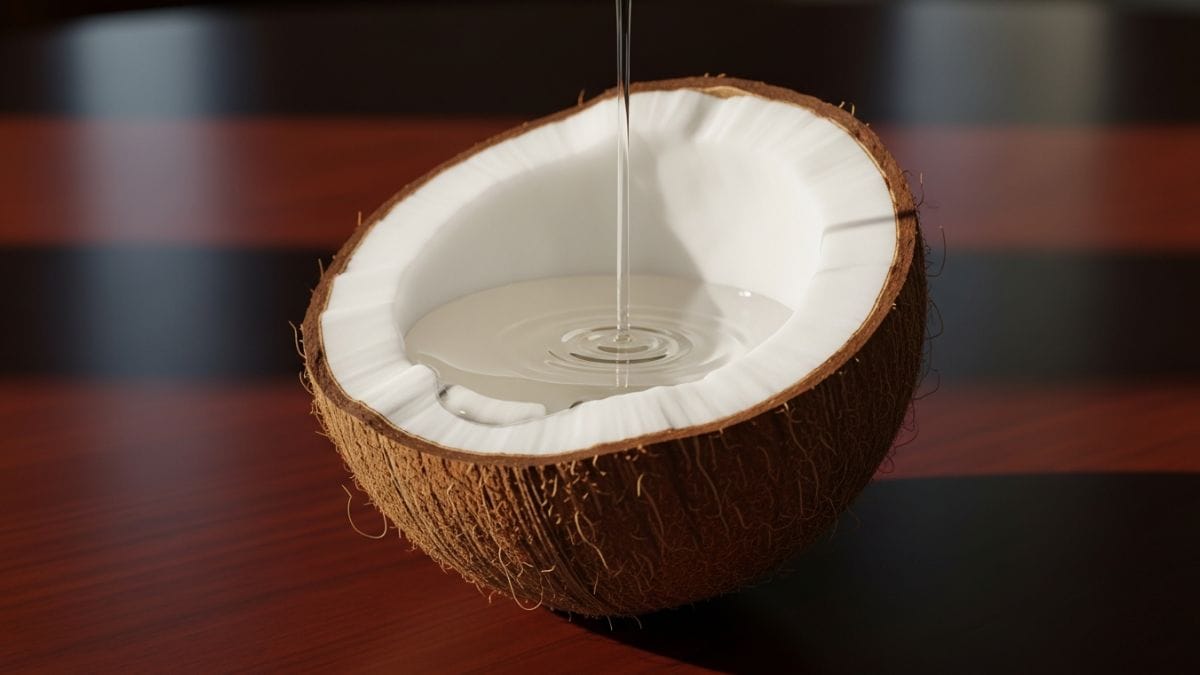
CLAIM:
The post claims that recent research shows coconut oil can remove harmful oral bacteria, reduce gum inflammation, and even reverse gum disease. It suggests that oil pulling with coconut oil supports oral health by improving the oral microbiome and can serve as an effective natural therapy for periodontal disease.
FACT:
Current evidence suggests that coconut oil pulling may offer modest benefits for oral health, such as reducing plaque, mild gum inflammation and some harmful bacteria when used alongside regular oral hygiene. However, there is no strong scientific evidence that it can reverse gum disease or replace brushing, flossing, professional dental care or standard periodontal treatment. Experts recommend using coconut oil pulling, if at all, only as a complementary practice alongside established oral hygiene measures.
In a recent Instagram reel posted by 'jerryscience', a page with over 9.11 lakh followers, a claim about coconut oil and gum disease has attracted attention online.
The post mentions that "New research shows coconut oil removes oral bacteria and reverses gum disease."
The caption of the post states that recent scientific research supports the therapeutic potential of coconut oil for oral health. It explains that studies suggest swishing or rinsing with coconut oil, a practice commonly known as oil pulling, may help modulate the oral microbiome. According to the caption, the medium-chain fatty acids in coconut oil, particularly lauric acid, interact with the fatty membranes of microorganisms, disrupting bacterial cells and reducing harmful oral bacteria. It further claims that this process "promotes beneficial bacterial growth while reducing the presence of pathogenic periodontal families such as Spirochaetaceae and Tannerellaceae."
The caption also states that coconut oil has been shown to reduce inflammation in the gums by lowering inflammatory markers such as IL-6 and TNF-α, which are associated with periodontitis and gingivitis. It adds that these findings suggest virgin coconut oil "can serve as a natural, non-toxic adjunct to standard nonsurgical periodontal therapy." However, the caption also acknowledges that "dental organisations generally recommend combining these practices with regular professional dental care rather than relying on them exclusively."
The post has gained considerable traction on Instagram, with some users expressing support for the claim. One user commented, "Oil pulling with coconut oil for the win", while another wrote, "Don’t believe everything u see on the internet."
What research says?
Several studies have examined whether coconut oil pulling can improve oral health and help manage gum disease. While some research reports benefits, the overall evidence remains mixed, with most studies suggesting it may serve as an adjunct to conventional dental care rather than a standalone treatment.
A 2020 systematic review evaluated the available evidence on coconut oil pulling and oral health by analysing four randomised controlled trials involving 182 participants. The studies, which lasted between seven and 14 days, found significant reductions in salivary bacterial colony counts and plaque index scores. One study also reported less tooth staining compared with chlorhexidine. However, the review noted that the evidence was limited due to the studies being small, of varying quality, and carrying a high risk of bias.
The authors concluded that, "The limited evidence suggests that oil pulling with coconut oil may have a beneficial effect on improving oral health and dental hygiene." They also emphasised that "Oil pulling with coconut oil could be used as an adjunct to normal preventative regimes to improve oral health and dental hygiene although further studies are needed to determine the level of effectiveness."
Further research has produced more mixed findings. A 2022 randomised crossover study involving 36 volunteers with gingival inflammation compared virgin coconut oil (VCO) pulling with palm oil (PO) pulling over 28 days as an adjunct to routine oral hygiene. Researchers found that the numbers of total, aerobic and anaerobic bacteria did not significantly change from baseline in either group. Interestingly, palm oil, not virgin coconut oil, showed a significant reduction in Mutans streptococci (MS), bacteria associated with tooth decay.
The researchers concluded that "VCO pulling did not show statistically significant superior benefit against plaque bacteria over PO pulling." They added that "Using PO pulling as an adjunctive oral hygiene care may reduce the number of MS, but this requires further investigations."
More recent research has explored whether coconut oil may offer additional benefits when used alongside professional periodontal treatment. A 2025 clinical trial involving 30 patients with periodontitis compared coconut oil, chlorhexidine and a placebo. Researchers analysed changes in the oral microbiome and inflammatory markers before and after treatment.
The study found that coconut oil reduced harmful bacterial families, including Spirochaetaceae and Tannerellaceae, while increasing beneficial bacteria such as Streptococcaceae. It also lowered inflammatory markers IL-6 and TNF-α, suggesting reduced local inflammation. According to the authors, "Coconut oil treatment significantly modulated the oral microbiome and reduced inflammatory markers in patients with periodontitis, suggesting its potential as a natural and effective adjunct in periodontal therapy."
Building on these findings, a 2026 clinical trial compared coconut oil, 0.12% chlorhexidine and a placebo mouth rinse in 30 participants with Stage II–III periodontitis. All participants later underwent nonsurgical periodontal therapy. Compared with placebo, both coconut oil and chlorhexidine significantly improved several periodontal outcomes, including plaque index, bleeding on probing, probing pocket depth and clinical attachment level. Coconut oil was also associated with reduced mouth dryness, improved breath perception and better oral health-related quality of life, while chlorhexidine caused more burning sensation and tooth staining.
The researchers concluded that "Compared with placebo, coconut oil and chlorhexidine improved periodontal parameters." They further noted that "coconut oil reduces mouth dryness and improves quality of life without the adverse effects associated with chlorhexidine." However, they also observed that participants preferred the placebo mouth rinse because of its taste and mouthfeel, highlighting that patient compliance remains an important consideration.
Do experts agree?
Commenting on the claims, Dr Sakshi Hinduja, BDS, Aster CMI Hospital, Bengaluru, said that the current scientific evidence on coconut oil pulling is promising but limited, and does not support many of the stronger claims circulating on social media.
Addressing the claim that coconut oil can remove harmful oral bacteria and promote beneficial bacteria, Dr Hinduja said that some small studies have reported reductions in bacteria associated with plaque and gum disease. However, she noted that the evidence remains inconsistent.
"Current scientific evidence suggests that coconut oil pulling may slightly reduce some harmful bacteria in the mouth, but the results are mixed and not strong enough to confirm that it can meaningfully change the oral microbiome," she said. According to her, "there is no clear proof that coconut oil promotes beneficial oral bacteria or restores a healthy balance of microbes." She added that while oil pulling may help reduce plaque and mild gum inflammation when practised regularly, "it should not be considered a treatment that can reverse gum disease."
Speaking about claims that coconut oil lowers inflammatory markers such as IL-6 and TNF-α, Dr Hinduja said some laboratory and small clinical studies have reported reductions in these markers and slight improvements in gum inflammation among people with mild gingivitis. However, she cautioned that the available evidence is based largely on small studies with short follow-up periods and differing methodologies.
"There is no strong clinical evidence that coconut oil alone can produce large or lasting reductions in these inflammatory markers or treat gum disease," she said. Dr Hinduja added that in routine dental practice, oil pulling may be considered "an optional supportive practice," but it "should not replace daily brushing with fluoride toothpaste, flossing, and professional dental treatment, which remain the most effective ways to prevent and manage gum disease."
On the claim that coconut oil can reverse gum disease, Dr Hinduja said the available evidence does not support such a conclusion.
"The claim that regular coconut oil pulling can reverse gum disease is not supported by strong scientific evidence," she said. While some studies suggest modest improvements in plaque, gum health and mild inflammation, "these benefits are modest and do not show that it can cure or reverse gingivitis or periodontitis." She explained that gum disease affects the tissues supporting the teeth and often requires proper oral hygiene along with professional dental treatment. According to her, current research supports coconut oil pulling only "as an adjunct, meaning it may provide some additional benefit alongside brushing, flossing, and dental care, but it should never replace standard periodontal treatment recommended by a dentist."
Dr Hinduja also noted that major dental organisations and periodontists do not recommend coconut oil pulling as a substitute for established oral hygiene practices.
"Current evidence shows that oil pulling may provide small benefits, such as reducing plaque or mild gum inflammation in some people, but the evidence is not strong enough to support it as a primary treatment," she said. She emphasised that coconut oil cannot replace "brushing twice a day with fluoride toothpaste, daily flossing or interdental cleaning, fluoride mouthwash when advised, or regular dental check-ups and professional treatment." She added that people who enjoy oil pulling may continue using it "as a complementary practice alongside a good oral hygiene routine," but advised that anyone experiencing bleeding gums, tooth pain, loose teeth or signs of gum disease should consult a dentist rather than rely on oil pulling alone.
This story is done in collaboration with First Check, which is the health journalism vertical of DataLEADS
