



India watched in awe as drones were shot out of the night skies over many of its cities and photographic evidence of precision strikes across the length and breadth of Pakistan emerged. Many never believed we were capable of this modern-age warfare. We not only defended our airspace but also penetrated Pakistan’s much touted air defence network, striking at the heart of its terror network and military installations with telling effect.
Operation Sindoor vindicates the need for and indeed the success of atmanirbharta in defence. It was one of the pillars of the Atmanirbhar Bharat initiative and naysayers have been firmly silenced. And BrahMos and Akash have become household terms.
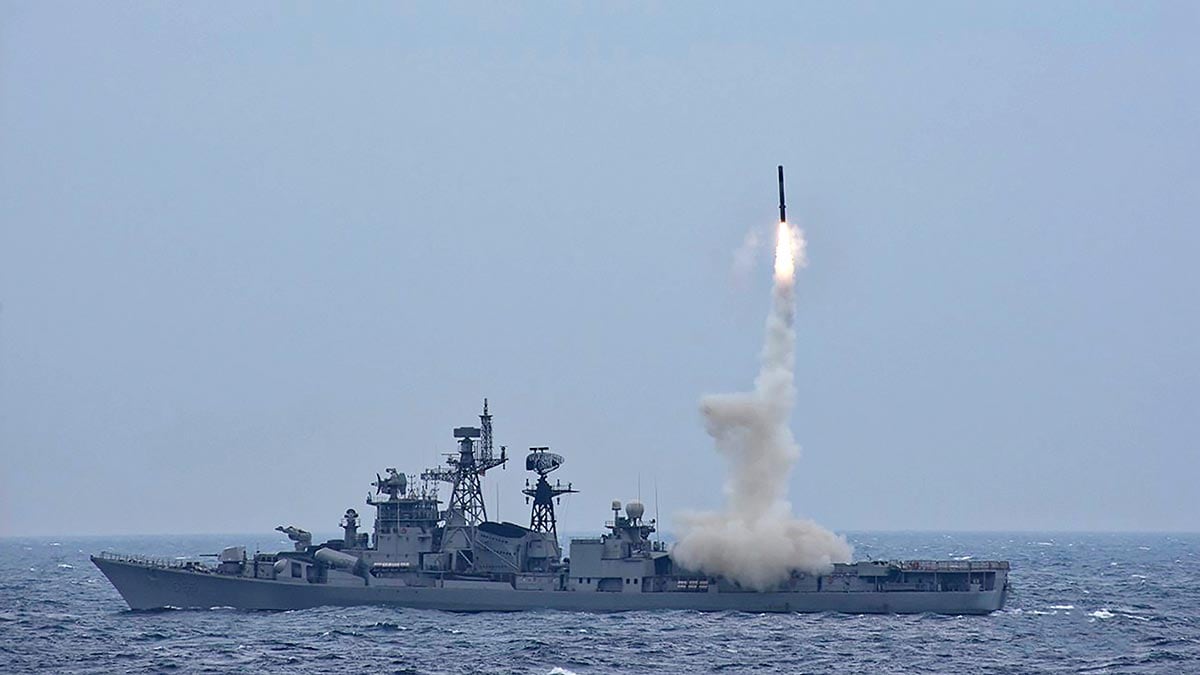
BrahMos, developed and produced with Russian collaboration, has a range of 280km, within Missile Technology Control Regime limit of 300km. Its range could be extended to 400km, and to 800km, if required. BrahMos delivers a massive payload of up to 250kg of explosives with a circular error probability of 10 metres (if the BrahMos missile was fired multiple times, it would hit within 10 metre of the target in 80 per cent of the attempts). A precision strike would thus cause huge destruction. It travels at Mach 3 (thrice the speed of sound), can be launched from land, sea or air and follows random trajectories (sometimes 2 to 5 metres above the earth or water surface) making it difficult to detect, much less intercept. The destruction seen on the runway at the Rahim Yar Khan airfield and the radar near Lahore was most likely caused by BrahMos strikes.
The Akash air defence system showcases atmanirbharta in defence in its truest sense. Its development is fully indigenous and components almost so. It has a range of 25km to 45km and intercepts targets 20km high. Its 60kg warheads explode with proximity fuses, fragmenting to assure destruction on reaching even the vicinity of the intended targets in the air. The sophisticated, DRDO-developed Rajendra radar system detects and tracks 64 targets and guides eight missiles simultaneously. The high kill rate that was on display during the days of hostilities proves Akash’s efficacy in battle against drones and aircraft.
Nagastra-1 is the newest inductee into the atmanirbharta hall of fame. These loitering munitions or kamikaze drones hover over targets and attack at the opportune moment. Nagastra, made by Nagpur-headquartered Solar Industries, is 80 per cent indigenous. It can be equipped with cameras, has a range of 30km and a payload capacity of up to 1.5kg (Israeli made SkyStrikers have a range of 2km and 5kg payload capacity). The Nagastra has a recovery mechanism, including a parachute system, in case a target is not detected or a mission is aborted.
The atmanirbharta policy boosted self-reliance, but not 100 per cent self sufficiency, yet, as is evident from the minor levels of imported content. India will achieve niche capabilities such as advanced chips in due course, but cannot be held back from the development of advanced weapon systems for want of these. India’s expenditure on defence imports has dropped from 46 per cent of overall procurement to 36 per cent in recent years. It is set to drop drastically in the next five years.
Meanwhile, defence exports have grown steadily. By 2023, exports hit $1.9 billion, a 240 per cent rise compared with 2019. It then grew to $2.54 billion by end of FY24. India has set a defence production target of $25 billion, with exports up to $5 billion in 2025 with the aim to raise it to $6.02 billion by 2028-29. We may now surpass it if we play to our strengths. In the wake of the recent hostilities, these proven weapons systems are likely to be sought by friendly foreign countries.
Atmanibharta in defence is here to stay. Its pace will now receive a boost. Incentives to local developers and manufacturers, particularly MSMEs, is the way forward for the government. Industry players, who till now felt that minimum order quantities by the Indian armed forces was the only way to manage their bottom lines, can capitalise on the battle worthiness that was on show to improve export figures.
The DRDO for its part needs to focus on fundamental research and speedily off-load its technologies to private industry players. Operation Sindoor was as much a DRDO and Indian industry success as it was a military success.
The author, a participant in track 1.5 dialogue straddling geopolitics and emerging technology, has a doctorate on indigenising the defence industry.
