



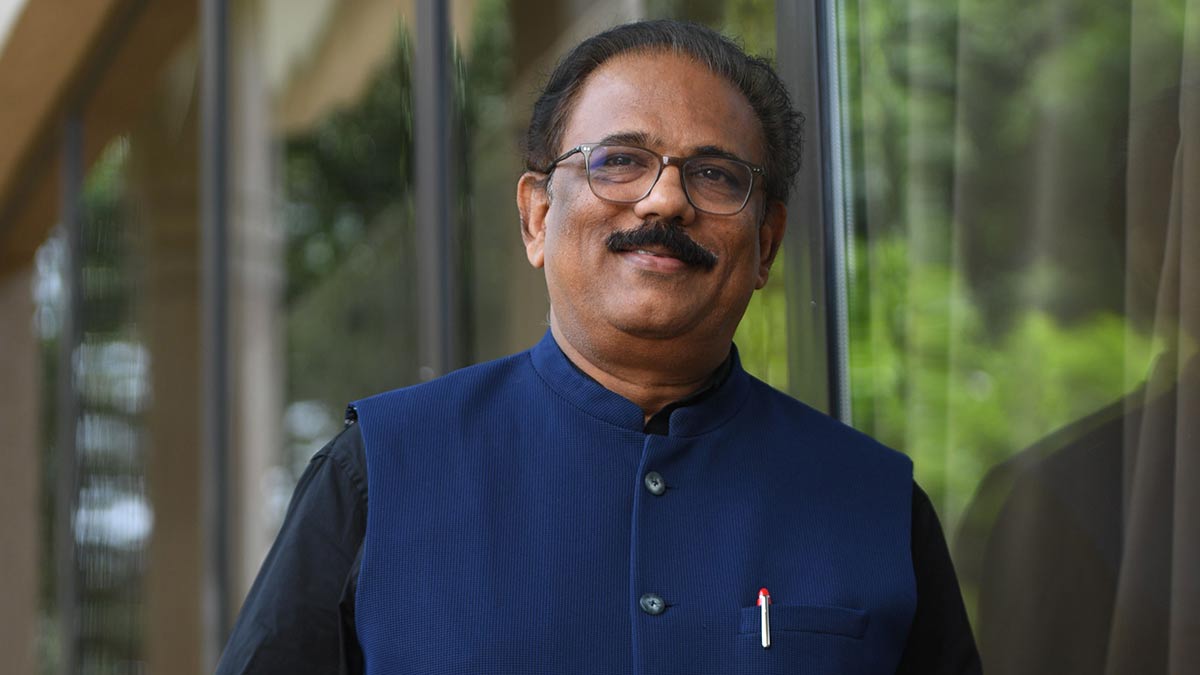
Interview/ A.V. Anoop, chairman, AVA Group
In an industry increasingly defined by asset-light models and digital-first brands, AVA Group stands as a counterpoint. The company, which makes Medimix, one of India’s most enduring soap brands, has deep manufacturing ownership and rigorous in-house R&D. Yet it is not frozen in its legacy. It is building premium tiers above its mass-market stronghold, racing to capture Gen Z consumers online, and thinking about new product launches with an international audience in mind.
In an interview, A.V. Anoop, chairman of AVA Group, reflects on his manufacturing philosophy, pricing discipline, digital disruption and what tradition truly means in a technology-first world.
Q/ Many mainstream FMCG companies avoid manufacturing—they white-label and outsource. You, however, have invested heavily in manufacturing facilities and R&D. How do you balance supply chain pressure and quality?
When I joined the business in the early 1980s, the first thing I did was set up a small lab to standardise our formulations. In those days, Ayurvedic drugs were not standardised—even the public domain records were poor, which is why India lost patents like the turmeric case. My initial work was to standardise the 18 herbs we use and identify which components were actually delivering efficacy. Over time we acquired a factory roughly every five years. Today all our main factories are within our group. We do outsource small experimental products, but only until a product proves itself in the market. Then we invest in bringing it in-house.
Q/ India is a price-sensitive market. When margins tighten, FMCG companies typically shrink pack sizes. How do you manage that tension without alienating consumers?
Grammage reduction is the primary industry response, but consumers notice it immediately. What has changed over the last decade is the emergence of distinct price-point segments. We pioneered the 18-gram hotel soap. For those smaller segments, we adjust the grammage to fit the price point. But for our core 75-gram and 125-gram products, we have never made any adjustment. Interestingly, our Rs10-segment is growing so fast we cannot even meet the demand. Consumers there are buying the price, not the weight. Multinational companies often compromise quality on smaller packs; we do not. Our 25-gram soap is priced proportionally to our 75-gram product’s price. That is non-negotiable for us.
Q/ There’s a broad premiumisation trend in India. Medimix is positioned as a mass-market product. How do you respond when consumer sentiment drifts upmarket?
Our position is slightly different. Ayurvedic skin care is itself a niche—a specific, well-defined space—and we are very strong in it. Medimix is in the mass market, available everywhere. That is a deliberate distinction. But we are aware that we sit just below the premium segment, so we are actively developing upward. Our glycerin soap and sandal soap are steps in that direction, and we are planning a further premium tier. We will not abandon the mass market, but we are building the range deliberately upward.
Q/ D2C brands like Minimalist and Mamaearth built their following online. Your stronghold is offline distribution. As there is a visible consumer shift to online shopping, how are you responding to that?
Over the past two years we have made online a serious focus. We are now available on almost every major platform. The shift from general trade to online is visible even in our own numbers—our traditional trade grows at fractions of a per cent in some months, while online grows 10 to 20 per cent every month. This is clearly a transition period; in another two or three years, online may well be the dominant channel. Our strategy is twofold: ensure our existing products are available and prominent online, and separately, develop products designed exclusively for online sales. The Gen Z consumer in particular is not visiting supermarkets. To reach them, we need not just a new channel but genuinely new products. Our R&D is already working on that.
Q/ You have moved beyond soap into spices and Ayurvedic wellness centres. What are the real challenges in diversification?
I don’t see it as a shift at all. AVA Group’s vision is to manufacture and sell products useful for human well-being—human consumption, human health care, human body. Melam spices and masalas are natural products for human consumption. Our wellness centres are services for humans. Every category we enter passes that same filter. The common thread is nature-based products in service of health.
Q/ Ayurveda has deep traditional roots. With AI and rapid technology disruption, do you feel traditional business values are being undervalued in the era of tech-first entrepreneurs?
Tradition is valuable—but only in combination with modernity. If you only emphasise tradition, you risk being left behind. In our Ayurvedic hospital, the treatments are fully traditional, but the ambience, cleanliness and experience are thoroughly modern. That mix is essential. And this modernisation is not new—it has been happening continuously. Ayurvedic doctors once prescribed specific herbs from specific forests, prepared at home. Today those same herbs come in capsules and tablets. Medimix’s original oil took two days to prepare by grinding and heating herbs in coconut oil. Over 25 years ago we moved to standardised solvent extracts—same herbs, same combination, but extracted precisely and added into the soap. The tradition is intact. The method is modern.
Q/ You are an award-winning film producer. Does that experience influence how you think about marketing your products?
In movies, every year audience taste shifts. The same is true in FMCG: consumers do not stay loyal to one fragrance or formula. You have to keep evolving. But the deeper lesson came from my film Sookshmadarshini. I was astonished that overseas demand far exceeded Kerala demand. That happened because of OTT. Malayalam cinema earned global recognition through quality storytelling, and now non-Malayali audiences are watching these films in hundreds of theatres internationally. That made me realise that the same is true for our products. When you launch anything today, you cannot think only of India. The overseas market is real, large and increasingly reachable—and they want Indian products, but adapted to their taste. That is now built into how I think about new product launches.
