



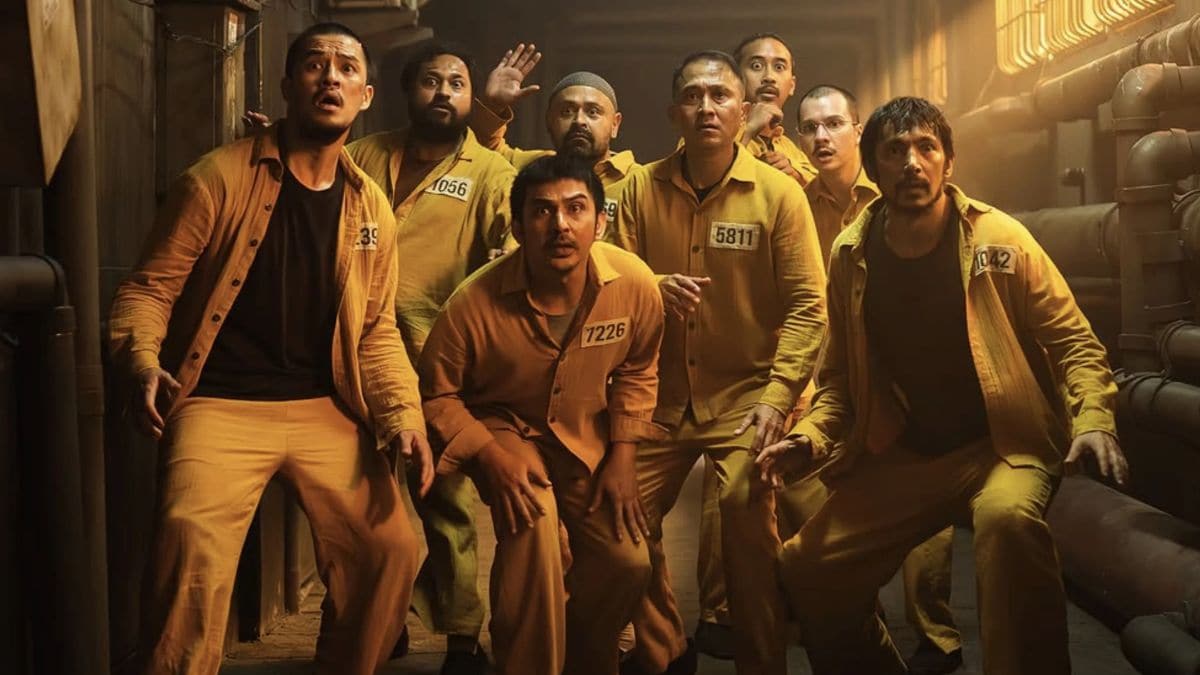
As if the idea of being in prison isn’t scary enough, Indonesian filmmaker Joko Anwar (”Gundala”) subjects his characters to an even more terrifying possibility: being sent to a prison inhabited by a malevolent spirit with an appearance that could repel viewers with trypophobia — it was quite a challenge for me, but I didn’t allow that to deter me from what turned out to be one of the most entertaining combinations of prison drama, horror, comedy, political messaging, and… wait for it… a healthy dose of spirituality.
Was the spirit already there or did it accompany one of the inmates? If you, like me, are a journalist, the opening scenes of “Ghost in the Cell” instantly grab our attention (very important in this age of Instagram-addled brains). A junior has been burning the midnight oil writing an illegal mining story, under the belief that it’s the best article he has written, believing that his editor will be mighty pleased. However, things don’t transpire the way he anticipates. In fact, it turns out to be something far beyond his wildest nightmares.
No spoilers. Long story short, he ends up in prison. From an empty newsroom to a high-security prison… What a strange transition! Yeah, I was hooked alright. How was this meek journalist going to survive in one of the filthiest, most dangerous places on earth? He is already marked by a tattooed pervert on the first day he arrives. But the thought of being violated in the shower by this creep is soon going to pale in comparison to the gruesome sights that the inmates, including the creep himself, are going to witness.
This concept, when conveyed exactly as it is, in the most basic form, to someone, would’ve caused overwhelming distress, but the film goes in some exhilarating directions with the material. Joko Anwar does something exceedingly smart: he makes the entire concept palatable by ingeniously blending humour at the right intervals, exactly when we badly need the after-effects of the ghastly “art installations” — maybe the most innovative we have seen after those in the “Hannibal” TV series — alleviated.
There is no doubt about Anwar’s skill in the way he moves the camera and where he places it, but he also proves himself to be an expert at creating characters with memorable qualities, even the nastiest ones. The principal focus, though, is trained on a select crew, the ones with whom we are supposed to empathise the most. They have their reasons for ending up in prison, but they are the most harmless of the lot. It’s like watching the Indonesian version of “The Great Escape”, “Stalag 17” or “The Shawshank Redemption” — well, it has more in common with “Stalag 17” (directed by Billy Wilder) than others.
Before we get an explanation for these nightmare-inducing occurrences, we are made to witness every killing in its goriest, ugliest detail. Disgust is natural, of course, but for me, this reaction was also coupled with an eagerness to see what kind of people this “spirit” makes its target and how they are going to fight it, because partiality is not, we learn, part of its vocabulary; it targets everyone regardless of the gravity of their crimes or their innocence. There exists one character who sees what’s happening and another to supplement his observations with the relevant spiritual knowledge. The modus operandi of this spirit is undoubtedly fascinating.
All you need to know is that if you’re harbouring strong negative emotions, you are… dead. Indian film buffs, who grew up around all kinds of superstition, will find much to relate to here. Who hasn’t heard of the “evil force” that attacks emotionally weak individuals?
The way these characters reach this conclusion and the way they devise these solutions, and finally apply them, generate enough laughter to dispel the tension brought on by the other areas, enough to prevent it from crossing “Project Wolf Hunting” territory.
Elsewhere, laughter gives way to serious introspection. On one side, we get a corrupt warden who was once an honest man. When he tells his story to a subordinate, we perfectly see where he is coming from. On the other, we get a “high-profile” inmate who was once an idealistic activist fighting for the right causes. The film doesn’t feel the need to go into detail about their backstories, because it doesn’t matter who they were before, only what they are now.
“Ghost in the Cell” is single-minded in its intentions, and the ending makes it fittingly obvious. But even if you set aside the political prism, the film works well as an exceptional specimen of superlative horror (and comedy) filmmaking.
Film: Ghost in the Cell
Director: Joko Anwar
Cast: Endy Arfian, Abimana Aryasatya, Yoga Pratama, Aming, Kiki Narendra
Rating: 5/5
