



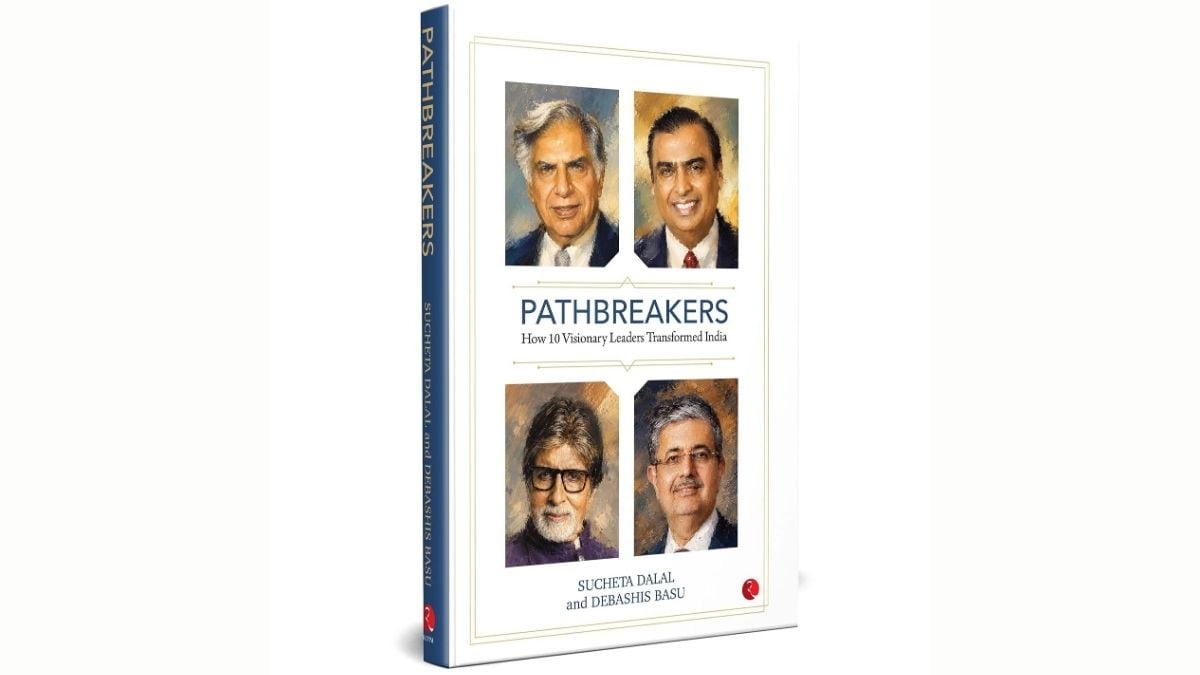
What do figures like Mukesh Ambani, Ratan Tata, Uday Kotak, and Amitabh Bachchan have in common? They may make an ordinary person feel slightly underachieving, but in their own ways, they have all changed the India they lived and worked in. Pathbreakers: How 10 Visionary Leaders Transformed India looks beyond their achievements to understand the people behind them.
Authored by Sucheta Dalal and Debashis Basu, Pathbreakers compiles ten long-form interviews with veterans from multiple fields like business, banking, finance, and even cinema. The book follows a structure where each chapter begins with an introduction to the person before moving into the excerpts from the interview. Many of the conversations were initially published in MoneyLife magazine and have been revisited and updated for the 2026 edition.
The book becomes interesting in its effort to humanise people who are usually encountered through headlines, corporate announcements, and public images projected to one. Instead of the interviews becoming a list of their achievements, it delves deep into their childhood memories, family, ambitions, doubts, failures, and the choices that shaped their careers.
Readers who do not usually pick up non-fiction may find some of the conversations around banking and business a little dry or tedious at times, but the personal experiences woven into these discussions keep the book from being purely technical. It interacts more with the readers as the chapters progress, with the emergence of different personalities and their journeys.
For example, Mukesh Ambani talks about how particular his father was about spending time with his children and how he emphasised having interests that expanded beyond academics. Uday Kotak in the interview recollects how he grew up in a house with 60 people. These little details offer an intimate insight into lives that would later evolve to become closely associated with some of India’s biggest institutions.
There are also fascinating contrasts between the personalities. Sanjeev Bikhchandani describes himself as extremely risk-averse despite being an entrepreneur, while R.H. Patil’s journey in building the National Stock Exchange highlights his willingness to take a professional risk when he believed in the institution he was helping create. Ratan Tata’s reflections move beyond business into questions of privilege, responsibility, philanthropy, and the pressures of public life.
The chapters regarding cinema provide a welcome change of pace from business-heavy conversations. Rajkumar Hirani’s odyssey of becoming a filmmaker, and Amitabh Bachchan’s account of his career trajectory allow the book to end on a different note than where it started.
Pathbreakers allows its muses to speak in their own voice. Their stories are different, their personalities are different, and so are the circumstances that shaped them. The book does not try to turn these people into flawless icons; instead, it gives readers glimpses of the childhoods, uncertainties, decisions, and experiences behind the names we already know.
It may require a little patience, particularly for readers who enjoy fiction or lighter non-fiction, but the conversations reward that patience. Beneath the business strategies and career milestones are stories that make these monumental figures feel considerably more human.
Pathbreakers: How 10 Visionary Leaders Transformed India
Author/s: Sucheta Dalal and Debashis Basu
Publisher: Rupa Publications
Price: ₹695
Pages: 286
