



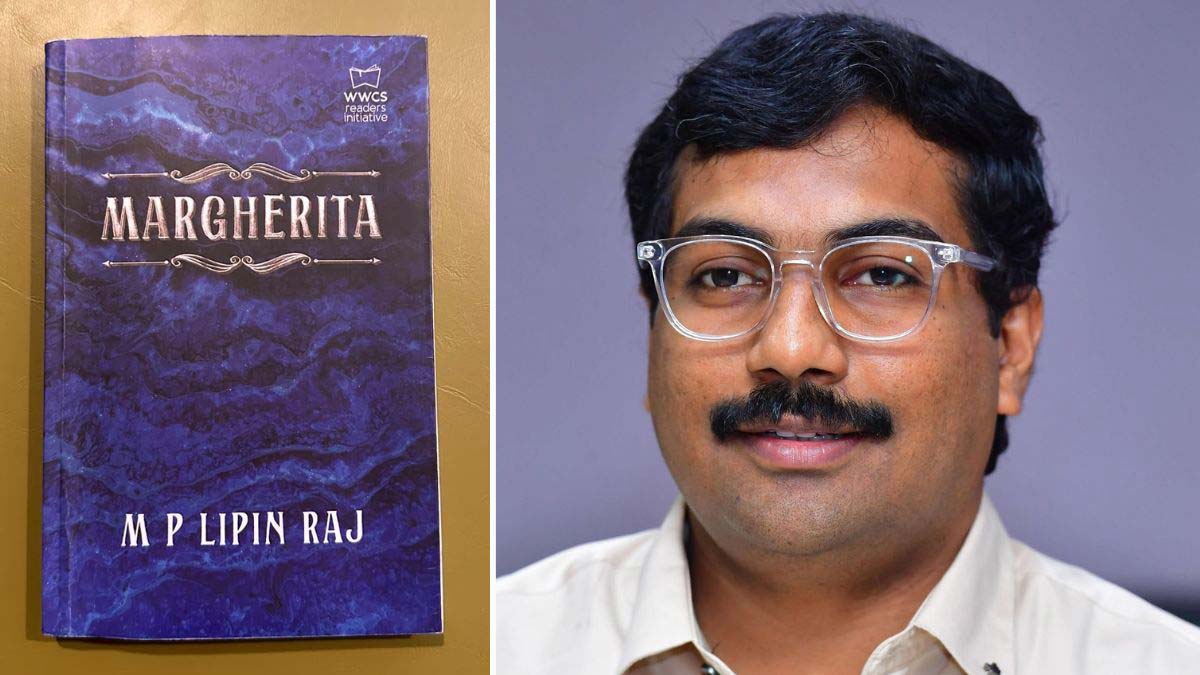
An average bibliophile often judges a fictional book by its ability to lure the reader into a new place. With M.P. Lipin Raj’s Margherita almost leading me to feel the gentle misty rain in Assam’s lush green hills and intensely crave Joha rice and chutney with jaggery, the book certainly passed the first quality check.
Recipient of the Padmarajan Novel Award 2024 and the Nooranad Haneef Award 2024, Lipin Raj is a civil servant and writer. Apart from Margherita, some of his prominent books include A Phoenix with Broken Wings, Mapini, Aanayum Puliyumilatha Kadha, Elimination Round, Padam Onnu: Athmavishwasam, Therumbine Theneechayakkam and Marangal Odunna Vazhiye.
Set in the small town of Margherita in Assam, the story follows the emotional journey of Jatin, a civil servant from Kerala, as he navigates the complex political landscape of the place to which he has been posted. It examines the constant ambiguity he faces in offering direct help to citizens while working for the authorities.
While Jatin possesses some of the qualities expected of a typical protagonist, he strays away from the textbook definition, often remaining an observer rather than a primary driver of the plot. Beyond his mission to uncover the truth behind a murder, the novel’s larger political and social conflict unfolds largely independent of Jitin’s emotions and actions.
One of Margherita’s strengths lies in its attempt to familiarise readers with a region that often remains outside of conventional discourse. Beyond the vivid landscape descriptions, Lipin Raj easily explains the socio-economic characteristics and culture through a second language, especially for a state that has been misrepresented and ignored in mainstream media. The book often draws parallels between Kerala and Assam, as Jatin points out the similarities and differences in their environment, approach to capitalism and corporatisation.
Explained through mathematical equations and connotations, the narrative is cleverly written yet easy to understand. Through the perspectives of multiple characters, the story explains the same ideologies through the outlooks of different generations and timelines.
The storyline is politically brilliant and timely, touching upon themes of racial purity, elitism and migration through a fictional ideological clash between different communities in Margherita. It explores the power of media framing and how authorities and citizens alike employ the technique to gather support for their agendas.
Through subtly repeated patterns associated with the protagonist, the novel moves beyond a typical thriller, as Lipin Raj carefully weaves the core of the story from the very beginning. Threads of technology, AI and the Metaverse complete the framework of the book, making it a thoughtful composition of political commentary and fiction.
