



Andy Burnham’s got a splitting headache. The first ministers of Wales, Scotland and Northern Ireland met last week and asked him to hold referendums whether their peoples wished to split from his UK.
Blimey! That’s King Lear in real life. The fictional king of Britain sought to trifurcate his lands in a bout of senility. That ended in one of the bard’s greatest tragedies. Remember also the play’s unintended political message—in the end, the armies of France defeated the feuding British earls.
Things could be horribly worse now. The Cardiff plotters want the UK quartered—Wales, Scotland, Ireland and England. What should Burnham do? Close his eyes and think of his England? That was what old wives did when things were done to them against their will. These days’ wives are wiser. They fake a headache.
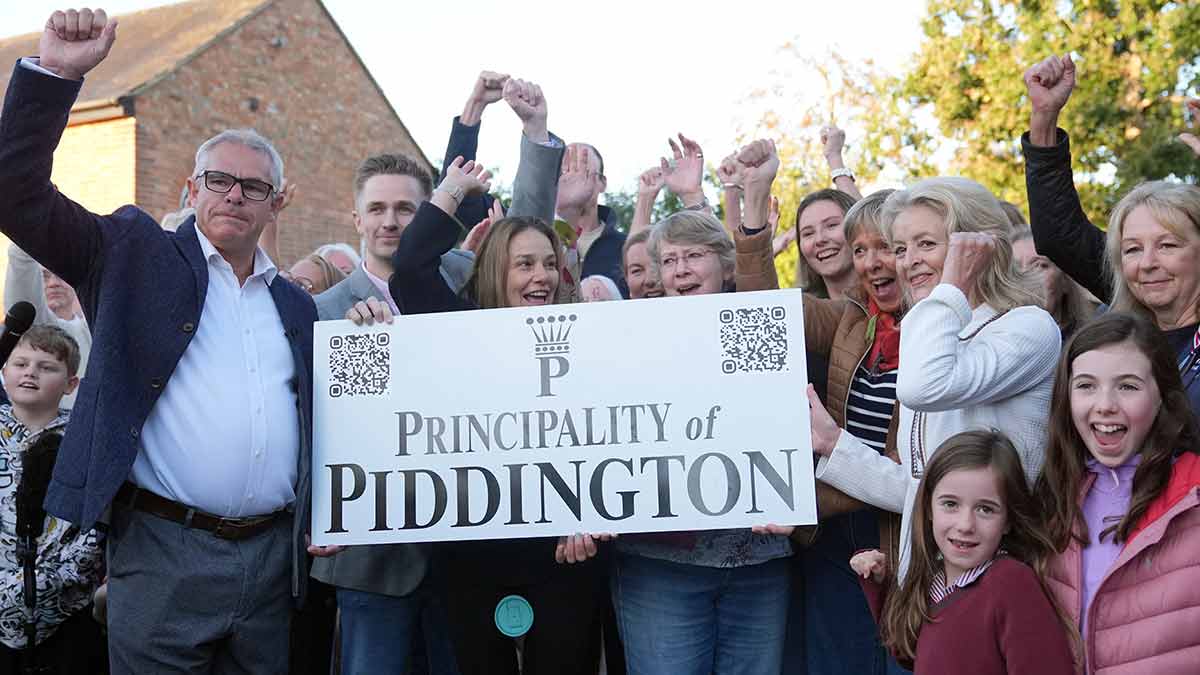
The splitting bug is riding the fiddlestick in Britain. A day after the Cardiff conclave, Piddington voted to split from the UK. No, not Paddington, that once-humble district that George Canning mockingly compared with the great city of London in an adage he coined about unworthy men succeeding great men. “Pitt is to Addington as London is to Paddington,” he said about the humble Henry Addington succeeding the great William Pitt the Younger as PM. No reading between the lines, please—no Nehru, Manmohan or Modi.
Piddington is a tiny village of 400 in Oxfordshire. Enraged over the Burnham government’s move to settle a thousand asylum-seekers on a nearby abandoned airfield, the villagers voted to secede from England, Britain, the UK and perhaps even the Commonwealth.
There’s no immediate danger. The chaps met in Cardiff not as constitutional authorities, but as leaders of parties—of the Scottish National Party, Plaid Cymru, and Sinn Fein. Neither they nor their legislatures can actually secede. The only forum that has the power to order a referendum is the parliament in Westminster. There, Burnham could improvise a line from Churchill: “I have not become the king's first minister in order to preside over the liquidation of the British empire.”
Let’s get things in plain English—Britain is on bad days, and the Brits have themselves to blame. Having mothered parliamentary democracy and fathered cabinet government, they forgot where to draw the line between what people should desire and governments should decide. They hold referendums on policy decisions. That’s offloading a Whitehall job to a crowd on the Clapham Omnibus. Can you think of an Indian PM holding a referendum on Kashmir? Bless me, holy Martand!
David Cameron did it with Brexit, and brought about perdition. He forgot what Benjamin Disraeli had said more than a century ago: what we call public opinion is often public sentiment. Just because a few yokels in Cornwall or Cumbria didn’t like the blokes in Brussels telling them how to roast their beef, they voted to exit EU. An entire nation behaving barmy!
Brexit gave ideas to splittists in Scotland, Wales and Northern Ireland. Now the Blighty elements that once presided over the largest empire are seeking to split like amoebae. Pity!
Indeed, Britain wasn’t one country always. No country of today was. Wales was annexed in the 13th century. Scotland joined when the English and Scottish crowns were conjoined under James I in 1603, and parliament passed the Act of Union a century later. Ireland joined in 1800, but southern Ireland seceded in 1921 and the north stayed on.
Tailpiece: Who was the last king of Scotland? Idi Amin! The Ugandan dictator styled himself ‘the last king of Scotland’ and ‘conqueror of the British Empire’.
prasannan@theweek.in
