



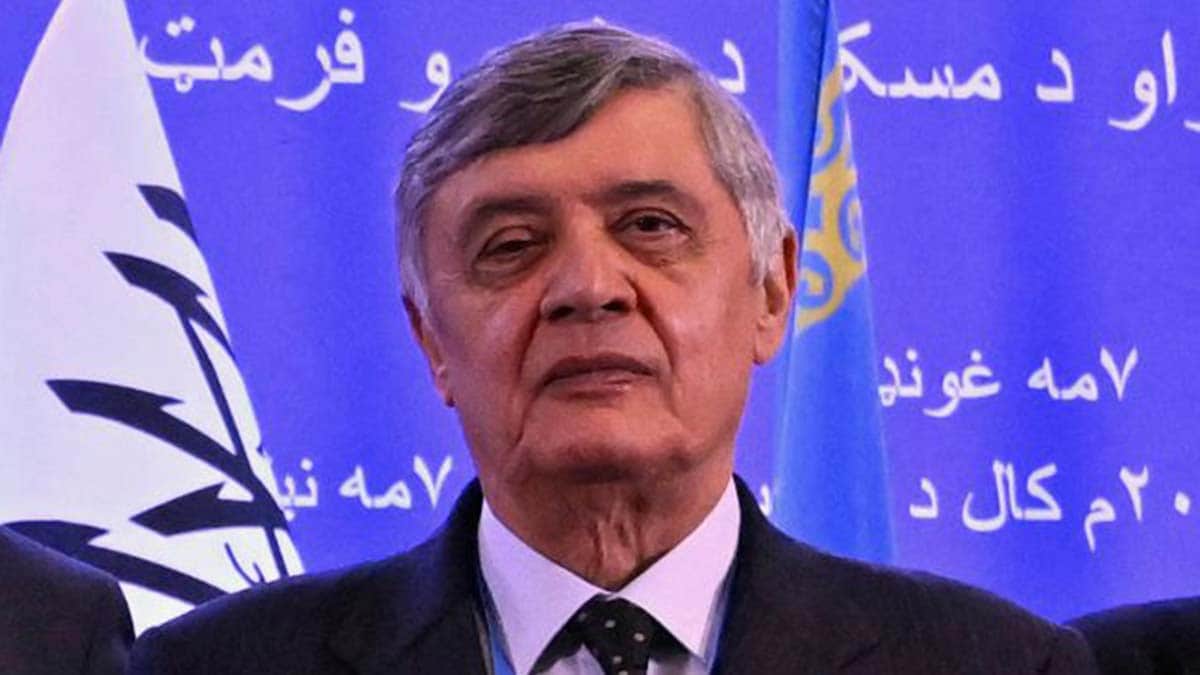
Vladimir Putin couldn’t have got a man with better credentials as his special envoy for Afghanistan. The guy had done long years at the Afghan desk in Moscow’s foreign office, had stints at the Russian embassy in Kabul, had undertaken tricky missions like sweet-talking the Taliban into releasing the Russian crew of a military plane that had landed in Kandahar in 1995, had a major role in the Russian team at the 2001 Bonn Conference that decided on the post-Taliban regime in Kabul, been Russia’s envoy to the Hamid Karzai regime. Even the name was right—Zamir Kabulov!
Kabulov has finally done justice to his name—he has landed Kabul back on Russia’s lap. Damn that Cupid-struck Capulet lass of Shakespeare who said, “What’s in a name?”
Names can also backfire on the bearer, as another Russian, a powerful politburo member, once found out. A hardline Marxist, he was Mikhail Gorbachev’s chief rival in the contest for the communist party’s top job in 1985. Eminent columnist and THE WEEK’S editor T.V.R. Shenoy made a wry comment then that his name came in his way. It was Grigory Romanov.
Let’s stop name-calling, and get to serious business, which is that Moscow is back in business with the Taliban who claim to be descendants of the mujahideen that sent back the Russian bear bleeding over the mountain. They had hanged Moscow’s trusted man, president Najibullah, from a lamp post in Kabul, sheltered the Chechen rebels, and waged a devastating civil war against the Russian-aided Northern Alliance before being routed from Kabul in 2001.
How did the old foes become friends? While Joe Biden’s GIs were pulling out of Afghanistan after 20 years of a futile war, and Don Trump was fretting, fuming, frothing and dropping other f-words over Russia’s invasion of Ukraine, Putin was building ties with the Taliban. Even as most envoys burnt their papers, locked up their missions and fled Kabul at the sight of the Taliban in August 2021, the Russians kept their shop open.
Eight months later they accredited a Talibani as the Afghan charge d’affaires in Moscow. In September, 2022, Putin began selling oil and wheat at cheap rates to Kabul; in 2024 he removed the Taliban from his list of terror sponsors and invited them to the St. Petersburg Economic Forum. Last July, Russia became the first country to recognise the Islamic Emirate of Afghanistan; in January Putin received the credentials of Gul Hasan as the Taliban-ruled Afghanistan’s ambassador to Russia.
The cake was cut last week when Moscow signed a deal by which it would repair and service Taliban’s Russian-origin weapons, and perhaps provide some ammo too. There are more than 100 Russian-made helicopters, 30,000 Kamaz trucks, and 2,000 other heavy vehicles with the Taliban, either left behind by the fleeing Russians in 1988-89 or newer ones gifted to the Afghan army since 2001.
Why do the Taliban want them? For two reasons. One, to fight the Islamic State Khorasan Province (ISKP) that is threatening them. Two, to fend off the Pakistanis who have been bombing them from across the Durand Line last few months.
Why do the Russians help them? One, the ISKP is spreading terror in Russia, too. In 2024, they killed 151 people in Moscow’s Crocus City Hall and injured more than 600. Two, with the Americans warming up to Pakistan again in what could turn out to be another great game (the US endorsed Pakistani strikes on Afghan cities earlier this year), Moscow would also like to keep the latter on tenterhooks.
Yes, Pakistan’s old strategic backyard, is now a battleground. Shouldn’t that gladden our hearts?
prasannan@theweek.in
