



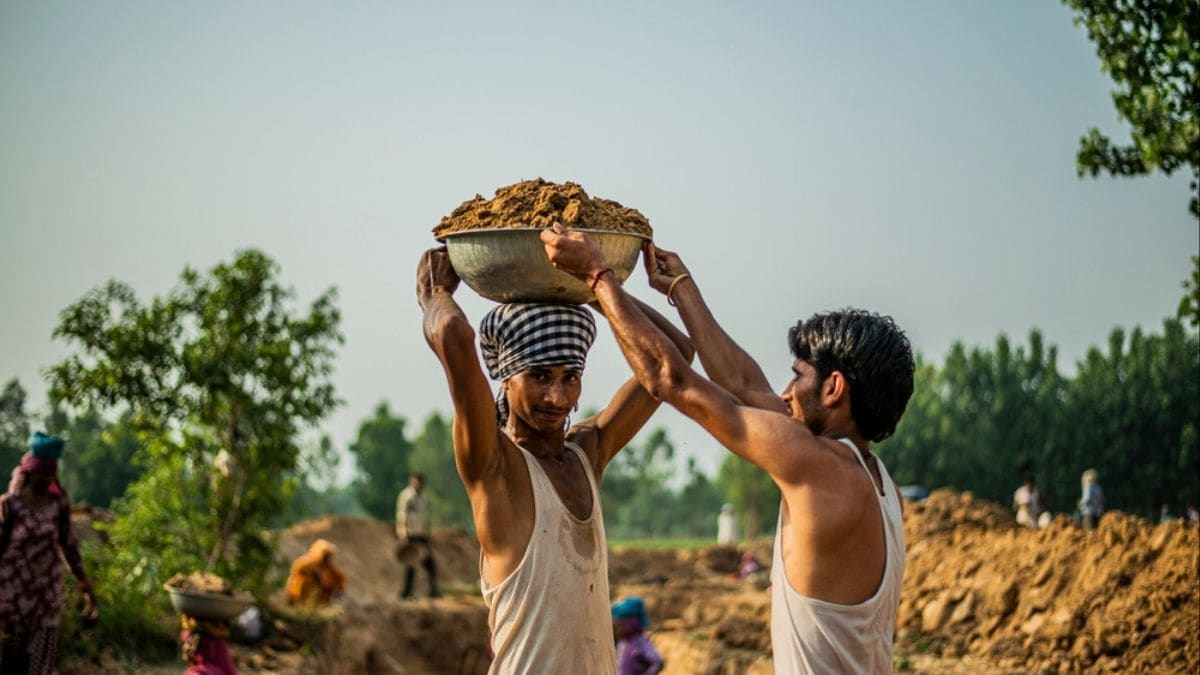
For a poor rural household, a guaranteed job is not a policy phrase. It is food bought without borrowing. It is medicine purchased before an illness gets worse. It is a few days of paid work when the crop fails, when the local construction site shuts, or when there is simply no other source of cash.
That is why India's new Viksit Bharat-Guarantee for Rozgar and Ajeevika Mission (Gramin), or VB-G RAM G, deserves careful judgement. The question is not whether the new law looks bigger than MGNREGA on paper. The question is whether it will feel stronger to the worker standing in the village queue.
The visible changes are real. The employment guarantee has gone up from 100 days to 125. No notified wage now falls below ₹300 a day, and the national average has risen from ₹298.8 under MGNREGA to ₹327.4. The programme promises direct payments and a sharper focus on assets that villages actually need: water security, rural infrastructure, livelihood support, and protection against extreme weather.
These are welcome steps. A higher wage floor matters most in states where rural workers were paid far less. Extra guaranteed days can carry a family through a bad monsoon or a slow season in the local labour market. And well-planned public works do more than provide relief. Ponds, roads, drainage and farm structures make village life a little less fragile every year after they are built.
But the most consequential change is the one workers cannot see. Under MGNREGA, the Centre paid the full cost of unskilled wages. Under VB-G RAM G, most states will now share wages, material and administrative costs with the Centre in a 40:60 ratio. North-Eastern and Himalayan states will follow a 10:90 split. The Centre will also fix spending limits for each state, and anything beyond that limit is the state's burden alone.
This is where caution is needed. Rural workers do not ask for public employment when government finances are comfortable. They ask when life turns difficult: after floods, droughts, crop losses, or a sudden fall in migrant income. These are precisely the moments when poorer states will find it hardest to pay their share.
The government's case for cost-sharing is not unreasonable. Shared funding, the argument goes, gives states a stake in planning better works and plugging leakages. But a job guarantee is meaningful only when a worker can demand work and the system must respond. If officials start worrying that every extra worksite strains the state's finances, the right can weaken quietly, without anyone formally refusing anything. A worksite opens late. A name stays pending. A payment gets delayed. A worker is told to come back next week. MGNREGA's own history of delayed central fund releases, and the suppressed work demand that followed in several states, shows how easily this happens.
The wage question also needs honesty. A ₹300 floor is an improvement, but improvement is not adequacy. The Anoop Satpathy expert committee recommended a need-based national minimum wage of ₹375 a day as far back as July 2018, after costing food, clothing, housing, education, health and transport. Eight years of rising prices later, ₹300 should be treated as a starting point, not the last word on a dignified wage.
None of this is a case for rejecting VB-G RAM G. MGNREGA had serious problems of its own: delayed payments, uneven social audits, weak planning, poor worksite quality and exclusion through technology. A new law can and should fix delivery, cut leakages and build better village assets.
But reform must not make a worker's right depend on the financial comfort of her state. MGNREGA was historic because it changed the language of welfare. The poor worker was not asking for charity. She was claiming work promised to her by law. That principle has to survive the transition.
So, the true test of VB-G RAM G will not be the slogan, the launch date, or the national average wage. It will come when a landless household asks for work in a stressed district in a cash-strapped state. Will the system respond because the law requires it? Or will it pause because the money is tight?
A job guarantee matters only if it reaches the worker before distress becomes debt.
The writer is Associate Professor, Economics, XLRI Delhi-NCR Campus.
The opinions expressed in this article are those of the author and do not purport to reflect the opinions or views of THE WEEK.
