



WHO IS A COMMUNIST? Tough question that. Is he the one who stands with the underprivileged and the natural environment? The one whose heart bleeds for the exploited and the disenfranchised? The one who advocates and practises a unity that cuts across race, caste, class, gender…? Or is he the one who hacked down his political opponent T.P. Chandrasekharan with 52 cuts? Or the one who chopped down the Sain brothers in Sainbari in March 1970 and force-fed their mother rice laced with her sons’ blood?
Even when it comes to ideology, there are communist parties of various hues, and the common man often does not know the difference between them. For example, in real-life terms, what differentiates the value systems of the CPI and the CPI(M)? How does this translate into policy?
This larger conversation and the recent electoral debacle of the communist parties in Kerala led to this cover by Principal Correspondent Nirmal Jovial. He interviewed CPI(M) general secretary M.A. Baby, who spoke about the parliamentary left and the ongoing rectification process in the party.
Resident Editor R. Prasannan’s opinion is that India’s secular intellectual space will continue to be rooted in the leftist school. He sees the idea of the left and the communist parties as separate entities, and makes an excellent case for it.
Prof Sanjay Kumar Pandey of the Jawaharlal Nehru University argues along similar lines, but against the backdrop of a global canvas. Senior News Editor Lukose Mathew’s take is on the Latin American variant of communism and how it does not necessarily mirror the global variant ideologically.
The Malayala Manorama’s Special Correspondent Javed Parvesh grounds the cover story in today’s political realities by reporting from Tripura and West Bengal, the communist bastions that fell before Kerala. He says that the CPI(M) does not offer a compelling political vision for younger generations in these states, and there lies the challenge.
There is also the practical issue: without money, how will a party highlight its political views? For the sake of this letter, I did a back-of-the-envelope calculation of costs for a corner meeting. Microphones, a tiny stage, chairs… even if I stop there, it is hardly a zero-budget affair, is it? I do hope you enjoy reading this political commentary, which forms the core of our Mid-Year Special issue.
In @leisure, Deputy News Editor Navin J. Antony looks at an Indian-origin NASA scientist who took up the uncommon assignment of building a museum in memory of his artist father. Rahul Ramachandran did it for his father, the renowned painter-sculptor A. Ramachandran.
People often say that there is something intangible linking football and communism. Our coverage of the FIFA World Cup 2026 continues with 10 pages of snippets compiled by Chief Subeditor Karthik Ravindranath, Senior Subeditor Bechu S. and New Media Coordinator Sarath Ramesh Kuniyl.
For example, did you know that the main street in Praia, the capital of Cape Verde, is named after a Goan priest? Or that 20-year-old Socceroo Nestory Irankunda can technically play for two countries other than Australia—the country of his birth and the one his parents hail from.
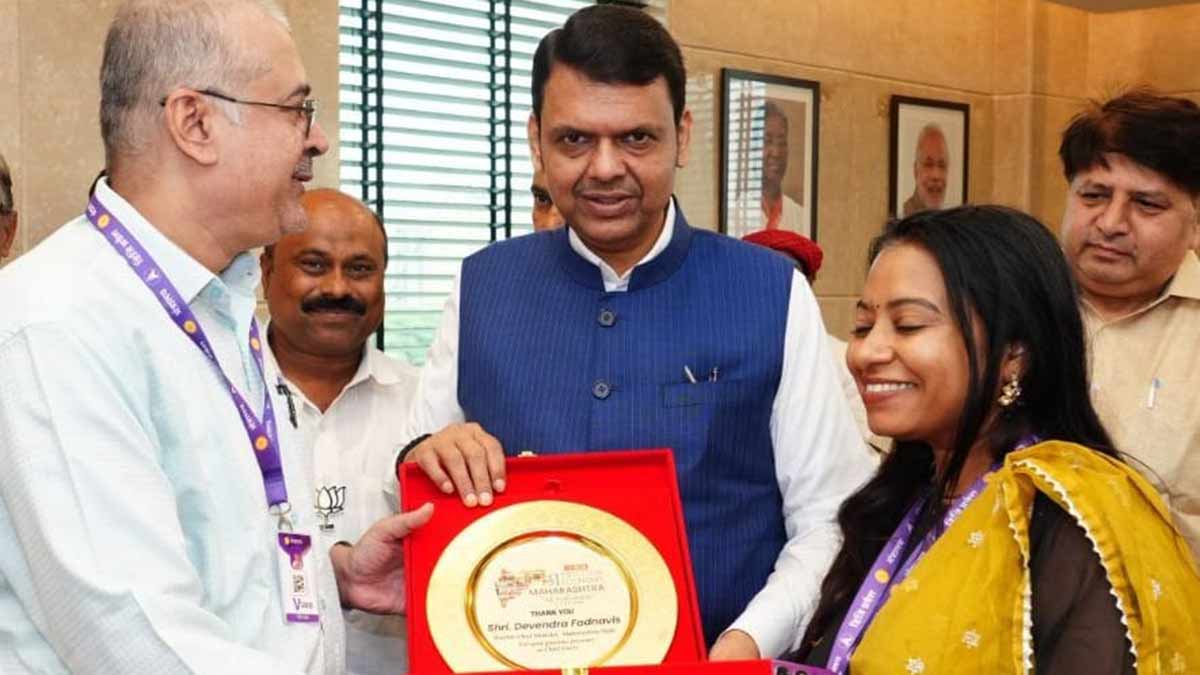
Speaking of birthplaces, earlier this week Mumbai hosted THE WEEK’s event titled $1 Trillion Economy Maharashtra: The Road Ahead. Chief Minister Devendra Fadnavis sent a video message addressing the gathering. Minister Nitesh Rane, who oversees ports and fisheries in the state, MIDC Joint CEO Dr Kunal Khemnar, BMC Commissioner Ashwini Bhide and veteran actor Rohini Hattangadi were among the personalities who graced the event. My special thanks to all of them for taking the time out for THE WEEK and Mumbai, the city of my birth.
