



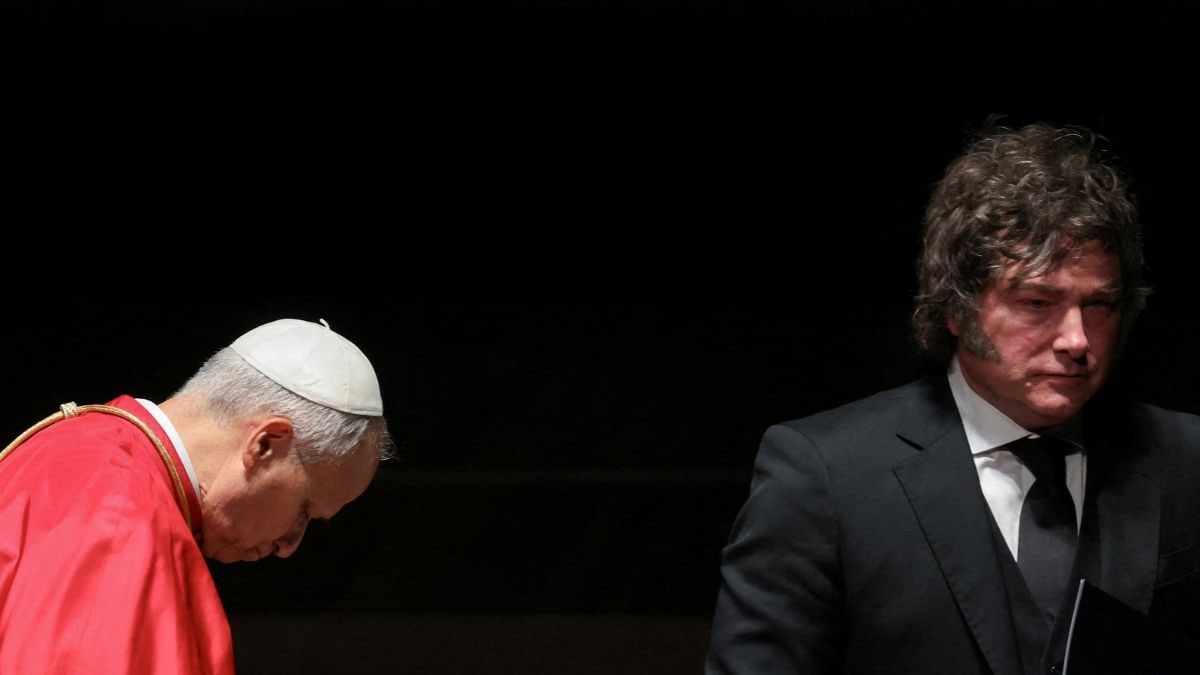
Pope Leo XIV's visit to Argentina has pulled the Vatican into a bitter argument over the Latin American country's future. It is the first papal visit in nearly four decades, and it coincides with President Javier Milei's radical austerity programme and the questions being asked about its social cost. By placing the dignity of ordinary citizens and the protection of the vulnerable at the centre of his message, Leo has challenged the moral assumptions behind Milei's policies. The question is not whether Argentina needs economic stability. It is how much hardship can be justified in getting there.
The 71-year-old pontiff arrived in Buenos Aires for a 12-day Latin American tour, three weeks after surgery for lung cancer. Pope Francis, though Argentine, never came home during his 12-year papacy, partly to stay clear of la grieta, the country's entrenched political divide. Leo describes his mission as retracing Francis's footsteps, and he has walked straight into that divide, at a time when the Church's social concerns are again central to national debate. The last papal visit was by John Paul II in 1987.
Speaking to Argentine leaders, Leo insisted that growth must serve society and not the other way round. "The economy must be at the service of the people, rather than people being at the service of the economy," he said, to applause. This was more than the usual Catholic concern for the poor. It went at the premise of Milei's programme, which treats fiscal consolidation as the precondition for recovery.
Milei has made eliminating the fiscal deficit his central aim, through deep cuts to public spending, subsidies and welfare. His government argues that Argentina cannot escape its cycles of inflation, debt and instability until it stops financing itself through deficits. The economic case is a serious one. The political trouble is that the gains from stabilisation and the costs of adjustment are not evenly spread, and they do not arrive together. The government points to falling inflation as proof of progress, yet many households still struggle to afford basic necessities.
Leo is not disputing the need for stability. He is asking whether fiscal balance can be an end in itself. A government can cut spending and repair its macroeconomic numbers without making its policies socially sustainable. The test is whether the sacrifices asked of people are proportionate, and whether those least able to bear them are adequately protected.
The Pope reinforced the point by speaking about pensioners, poor families and people living with disabilities or serious illness. His words landed in the middle of a row over cuts to disability assistance, which have set off sustained protests. His visits to a prison and to a specialised home for people with severe disabilities gave the message a practical edge. They also echoed the work of Argentina's community-based Catholic priests, who run soup kitchens in poor neighbourhoods and have challenged the withdrawal of state support. Leo was in effect asking whether the state can step back from its social responsibilities without leaving vulnerable communities to fend for themselves.
The disagreement exposes a deeper divide between Catholic social teaching and Milei's libertarian worldview. Catholic doctrine does not reject markets or private enterprise. But it puts human dignity and labour rights above economic activity. Francis set this out in Fratelli Tutti, warning against an economic order that pushed the poor to the margins. Milei sees individual freedom, market competition and private property as the foundations of prosperity. He has called social justice theft, arguing that redistribution undermines incentives and entrenches dependence on the state.
Leo is not arguing about whether the state should spend more or less. His point concerns the limits of market solutions, and whether economic policy can be separated from social obligation. Milei's philosophy holds that a smaller state reduces dependency and instability. For the Church, withdrawing state support becomes a problem when it leaves people who cannot meet their basic needs through the market without protection.
Leo also tied economic justice to democratic stability. He urged leaders to respect constitutional limits, listen to opposing views and show restraint in public debate. He did not name Milei, but the words carried weight in a country where politics has grown steadily more confrontational. He warned too that corruption and a lack of integrity in public office wear down confidence in institutions.
Milei has kept a respectful personal relationship with the Pope while defending his policies. He said he was deeply moved to welcome Leo, and the two discussed natural law and scripture in a private meeting. Afterwards, however, he argued that relaxing fiscal discipline would push the burden of today's spending on to future generations. He credited his cuts with bringing runaway inflation under control and accused sections of the opposition of backing measures that threatened macroeconomic stability.
The dilemma is real. Argentina's history shows what fiscal mismanagement costs, but the effects of abrupt adjustment cannot be dismissed as a technical detail. Calls for more social spending, in turn, have to reckon with how it would be paid for in an economy with a long record of instability. The task is to get past the false choice between fiscal responsibility and social protection.
