



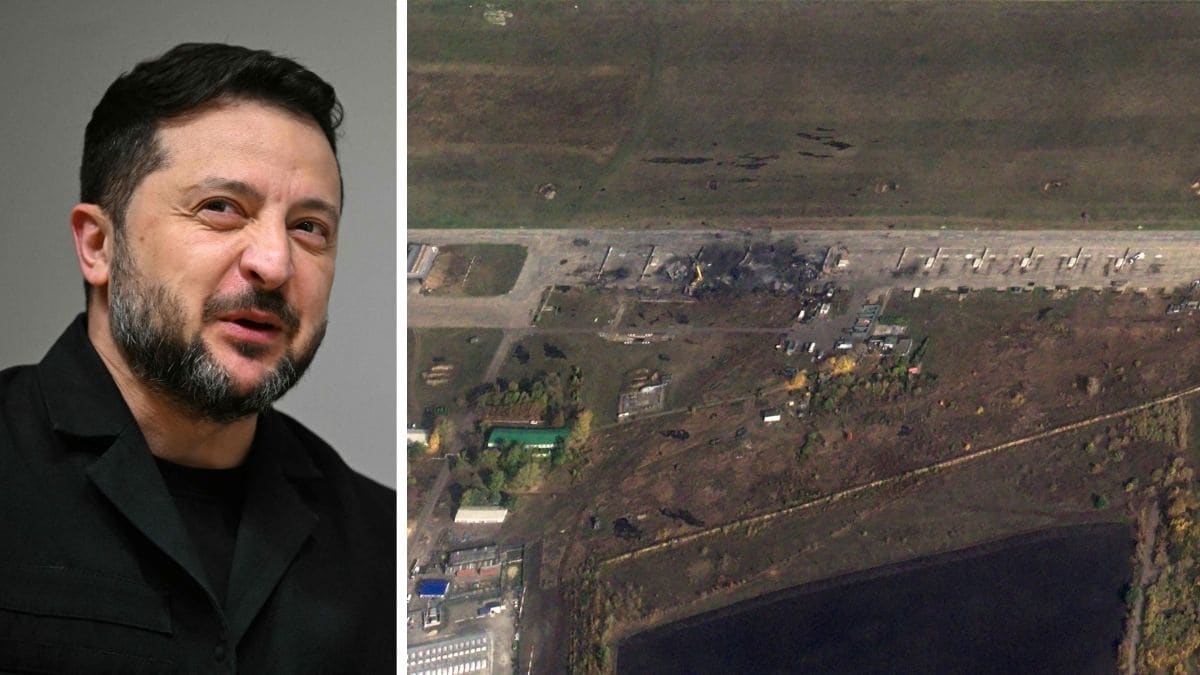
If Donald Trump expected Kyiv to comply fully when he unilaterally declared an "energy ceasefire" and ordered Ukraine to stop striking Russian refineries, Volodymyr Zelensky had other ideas. After pausing drone attacks for three days to test the arrangement, Ukraine realised that Russian missiles and drones continued to batter their power grids as winter approached. "The block is out. We're done," Zelensky told world media, and Ukrainian drones soon returned to Russian energy facilities, including the Ryazan refinery. Zelensky said he felt "betrayed" by Washington, a harsh rebuke from a leader who has long depended on American goodwill.
With the midterm elections approaching and average diesel prices reaching $6.32 a gallon, Trump lifted sanctions on Russian diesel, agreed to purchase Russian fuel and blamed Ukrainian strikes for rising prices at the pump. Energy analysts attribute the squeeze chiefly to the war with Iran and the tension in the Strait of Hormuz, and they note that the diesel arrangement is unlikely to deliver relief before voters go to the polls while it sends money to Moscow. Members of both parties in Congress described the deal as a gift to the Kremlin that may breach federal sanctions law. In rural states such as Iowa, where fuel costs directly influence the price of crops and food, voters are furious with Trump, and the White House has found that blaming Kyiv does not settle the matter.
According to reports, American negotiators warned their Ukrainian counterparts in Miami that continued attacks on refineries would bring a blackout of military intelligence. Soon afterwards, satellite early-warning transmissions failed, and Kyiv received no prompt alert before 39 Russian ballistic missiles struck civilian and infrastructure targets. Speed limits were also placed on Starshield, the military version of Starlink, which Ukraine uses to coordinate logistics, direct strike drones and intercept jet-powered Russian drones. American officials attributed the missile warning failures to technical faults or bad weather, but Ukrainian and European leaders believe it was a deliberate ploy intended to push Kyiv towards unfavourable peace terms. Zelensky called the throttling "dangerous" for his country's defence.
The episode reflects a wider change in how American policy towards Ukraine is made. Trump and prominent allies, Elon Musk among them, have signalled that it is "time for Zelensky to go", a demand for a change of leadership in a country at war. Defence Secretary Pete Hegseth has withdrawn the United States from its leading role in the Ukraine Defence Contact Group, and Secretary of State Marco Rubio has been largely bypassed. Institutional channels that once handled such disputes have been sidelined. Sensitive exchanges with Kyiv and Moscow are instead conducted by the president's private envoys, Steve Witkoff and Jared Kushner, whose transactional approach has unsettled traditional national security specialists.
European capitals have drawn their own conclusions. The Pentagon under Hegseth has created a "Bergen Group" of high-spending allies such as Norway and Poland, leaving established partners like Britain and Germany outside it. Europeans have responded with workarounds, notably the PEARL initiative, under which they buy American weapons directly for Ukraine rather than relying on American grants. Emmanuel Macron, Mark Rutte and Giorgia Meloni have lobbied hard to keep Trump from abandoning Kyiv altogether, yet strategists increasingly accept that a lasting American withdrawal must be planned for. Higher defence spending, wider sovereign industrial capacity and direct military partnerships with Ukraine are the elements of a security architecture meant to hold notwithstanding the mood in Washington.
On the battlefield, the war has settled into two distinct contests. Ukrainian forces have held their lines, and most reports suggest that Russia is suffering casualties up to 30,000 a month (including those who are severely wounded), a rate that exceeds Moscow's capacity to replace. In the air and at sea, the advantage lies with Russia, whose jet-powered Shahed drones and ballistic missiles target the power grid and the Black Sea trade routes. Strikes on Ukrainian ports have damaged the grain and metallurgical exports on which the economy rests. Ukraine's answer is its long-range drone campaign against Russian refineries, which has exposed weaknesses in the energy sector, produced local fuel shortages and reduced export revenue for the Kremlin.
Formal negotiations are at a stalemate, and the war has become one of economic and industrial attrition. At the moment, an end is nowhere in sight.
