



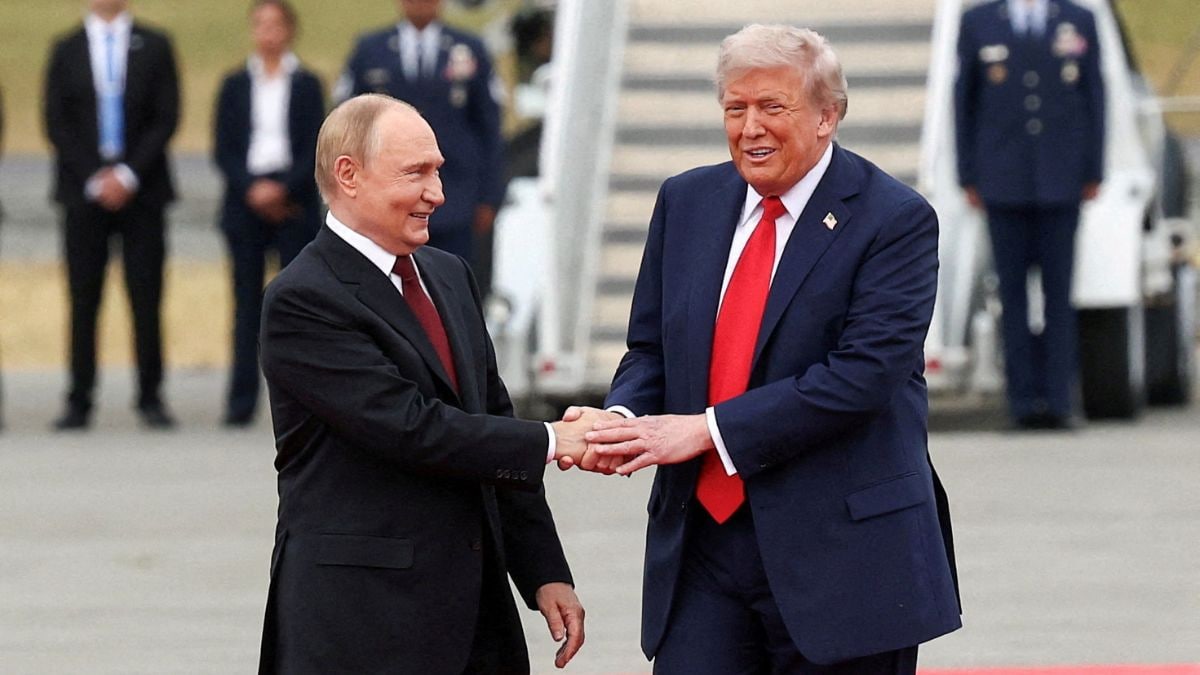
An agreement between Donald Trump and Vladimir Putin concluded yesterday to allow Russian diesel to return to global and American markets has been welcomed in Moscow and condemned almost everywhere else, from Kyiv to Capitol Hill. It has also exposed an awkward inconsistency for countries like India, which has spent months under American pressure and the threat of heavy tariffs for buying discounted Russian crude, while Washington now clears its own imports of Russian fuel.
Russia will release diesel in tranches, with volumes tied to the condition of its refineries and rising to as much as 3,000,000 tonnes a month. The US Treasury's Office of Foreign Assets Control moved quickly to give the arrangement legal cover, issuing a temporary general licence that permits the sale, delivery, offloading and direct importation of Russian-origin diesel into global markets and the United States until April 7, 2027. Russian Deputy Prime Minister Alexander Novak said Moscow would begin lifting the diesel export ban that has been in place since July.
Trump announced the understanding on social media after his call with Putin. "I have just concluded a highly successful discussion with President Vladimir Putin of Russia, wherein it was agreed that Russia will immediately supply over 300,000 Tons of Diesel Fuel to the American and Global Marketplace, another 500,000 Tons during the month of November, and 1,000,000 Tons immediately thereafter. Based on the condition of their diesel refineries, Russia will then deliver, within a short period of time, 3,000,000 tons of diesel fuel," he wrote.
The motive is largely domestic. Retail diesel has reached record levels of between $6.28 and $6.53 per gallon, a surge traced mainly to supply bottlenecks from the war with Iran and disruption around the Strait of Hormuz. The cost has weighed on trucking, logistics and farming, and it has created political difficulty for the administration ahead of the midterm elections, especially in agricultural states such as Iowa, Kansas and Nebraska. Trump has also voiced frustration with Ukrainian drone strikes on Russian oil infrastructure, which he argues have tightened global supply.
The reaction from Kyiv was swift. Ukrainian officials were particularly aggrieved by the timing, since the announcement came while a Ukrainian delegation was in Miami meeting US envoys Steve Witkoff and Jared Kushner to discuss peace proposals. President Volodymyr Zelensky said his negotiators had been used as a "smokescreen" for a transaction with the Kremlin, and he defended the strikes on Russian refineries as a response to Russian attacks on Ukraine's energy grid. In a formal statement, he said: "Any easing of sanctions against Russia without a clear and lasting de-escalation agreement with Russia is an obvious weakness. Allowing Russia to sell petroleum products is an investment in a war that must be ended, not prolonged."
The decision also sits uneasily with American law. Three weeks earlier, Trump signed the Lindsey O. Graham Sanctioning Russia and Iran Act of 2026, which passed with broad bipartisan support and authorises tariffs of up to 100 per cent on countries that import Russian crude oil or gas. The statute allows the executive to grant specific exceptions, but critics argue that waiving sanctions to enable direct Russian fuel sales runs against the intent of Congress. Senate Democratic Leader Chuck Schumer and Senators Jeanne Shaheen and Elizabeth Warren accused the administration of failing to enforce sanctions that Congress had passed. Republican unease was also evident, with Representative Michael McCaul warning that lifting energy restrictions would fund Kremlin aggression and Representative Don Bacon calling the propping up of Russia's war economy morally wrong. Richard Nephew, a former State Department sanctions official, observed that if Washington exempts itself, its authority to persuade other countries to observe energy restrictions is weakened.
That point carries particular weight in India. For months Washington pressed New Delhi to reduce its purchases of discounted Russian crude, with the Graham Act supplying the threat of steep tariffs. A waiver that allows American consumers to buy Russian diesel while other economies are warned off similar transactions has been criticised as a glaring double standard in trade policy. Indian policymakers have long defended their purchases as a matter of energy security, and the episode hands them a stronger argument in any future negotiation over sanctions compliance.
For Moscow, the gains are considerable. By securing an American general licence, Putin has loosened the isolation surrounding Russian energy exports without offering security concessions or agreeing to a ceasefire in Ukraine. Kirill Dmitriev, the Russian economic envoy, said energy cooperation between Russia and the United States would benefit global markets, while the export revenues give the Russian state useful liquidity as wartime spending continues.
Energy analysts are less convinced that the deal will deliver. Ukrainian strikes have cut Russian refining capacity by nearly 30 per cent and forced Moscow to ration fuel at home, which has led former officials to question whether the promised surplus exists. Even if it does, the initial tranches amount to roughly 72,000 to 124,000 barrels a day, a small fraction of global diesel consumption of about 30 million barrels a day and unlikely to lower pump prices for long. One analyst described the measure as a "Band-Aid over a bullet hole", designed for short-term political relief. Others warn that the larger cost is strategic, since trading long-term alignment for price relief weakens American leverage, complicates relations with NATO allies and sets a precedent that Western sanctions can be set aside when domestic pressure mounts.
