



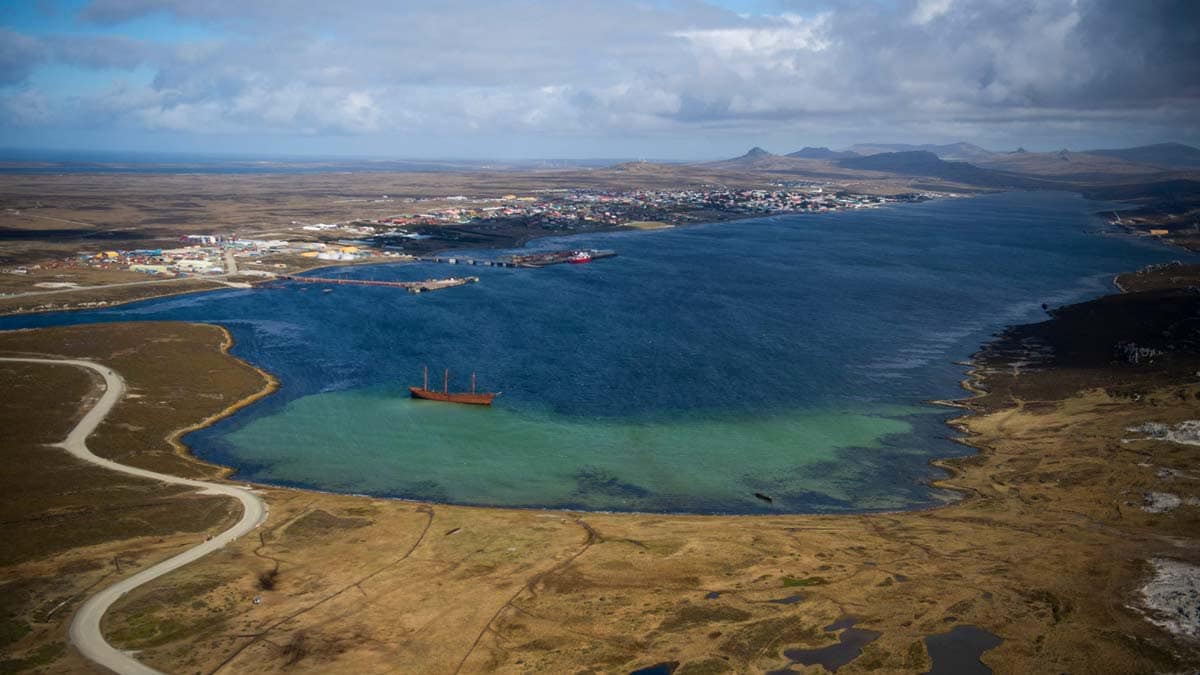
Argentine President Javier Milei yesterday used a televised address to sharply escalate his country’s dispute with Britain over the Falkland Islands, declaring the territory Argentine "historically and legally" and vowing tough new measures against an offshore oil project near the archipelago. He also welcomed signals from Washington that decades of American neutrality on the sovereignty question might be shifting.
The immediate provocation is the Sea Lion project, a deep-sea oil venture roughly 220 kilometres north of the islands, jointly owned by Britain's Rockhopper Exploration and Israel's Navitas Petroleum. Drilling is due to begin within months, with commercial production targeted for 2028. Milei called the project an illegal exploitation of Argentine resources and promised legislation to sanction the companies, suppliers and shareholders involved. The timing is not incidental. With inflation biting, the economy sluggish and his approval ratings sliding ahead of next year's elections, the Malvinas offer Milei a rare unifying cause in a fractious political landscape.
Donald Trump provided the spark. On August 31, he said Washington was actively reviewing its long-standing neutrality on the islands. And then in an interview with GB News yesterday, he declined to confirm American support for Britain in any future conflict over the territory, instead airing grievances that London had failed to back his campaign against Iran, recalling that former prime minister Keir Starmer told him Britain had no ships to spare. The remarks echo a leaked April Pentagon email suggesting that withdrawing support for British sovereignty could be used to punish NATO members who stayed out of the Iran conflict. For Milei, a committed Trump ally, the shift reads as validation, evidence that alignment with Washington now carries strategic weight.
The Falkland islands comprise two main landmasses and several hundred smaller ones, roughly 500 kilometres from the South American coast and home to about 4,000 people. Rival claims stretch back to the 16th century, when European expeditions first reached the archipelago. Britain established effective control in the 1830s, but Argentina, independent from Spain since 1816, maintains it inherited sovereignty and regards the British presence since 1833 as unlawful occupation.
That tension erupted into war in April 1982, when Argentina's military junta invaded the islands, prompting Margaret Thatcher to dispatch a naval task force. The 74-day conflict ended in Argentine defeat and claimed 649 Argentine lives, 255 British service personnel and three islanders. More than four decades on, the episode remains a defining national wound, woven into Argentine currency, song and sporting culture. During the recent World Cup football tournament, two Argentine players unfurled a banner reading "Las Malvinas son Argentinas" (The Malvinas are Argentine) after eliminating England, prompting FIFA disciplinary proceedings under its ban on political messaging at matches.
London's response, under Prime Minister Andy Burnham, has been firm. The government describes British sovereignty as unwavering and insists the islanders' right to self-determination cannot be negotiated away. Officials routinely cite the 2013 referendum in which 99.8 per cent of residents voted to remain a British overseas territory, with just three dissenting votes. Yet the renewed dispute has exposed uneasy questions about Britain's present military capacity. Analysts warn that years of budget pressure, rising borrowing costs and cuts to what is deemed non-essential training have left doubts over whether Britain could mount a 1982-style response today.
Milei intends to match his rhetoric with investment. Even as his government pursues sweeping cuts elsewhere, he has pledged funding for upgraded telecommunications and a new naval base in Tierra del Fuego, Argentina's southernmost province, arguing that a country without armed forces cannot credibly press its sovereignty claims. The strategy combines threatened sanctions on oil companies with a reinforced military footprint, aimed at discouraging Britain from cementing a long-term energy presence near the islands.
Interestingly, what happens next depends largely on Washington. If Trump follows through on his threat, upending decades of trans-Atlantic policy, the balance would shift meaningfully towards Argentina.
