



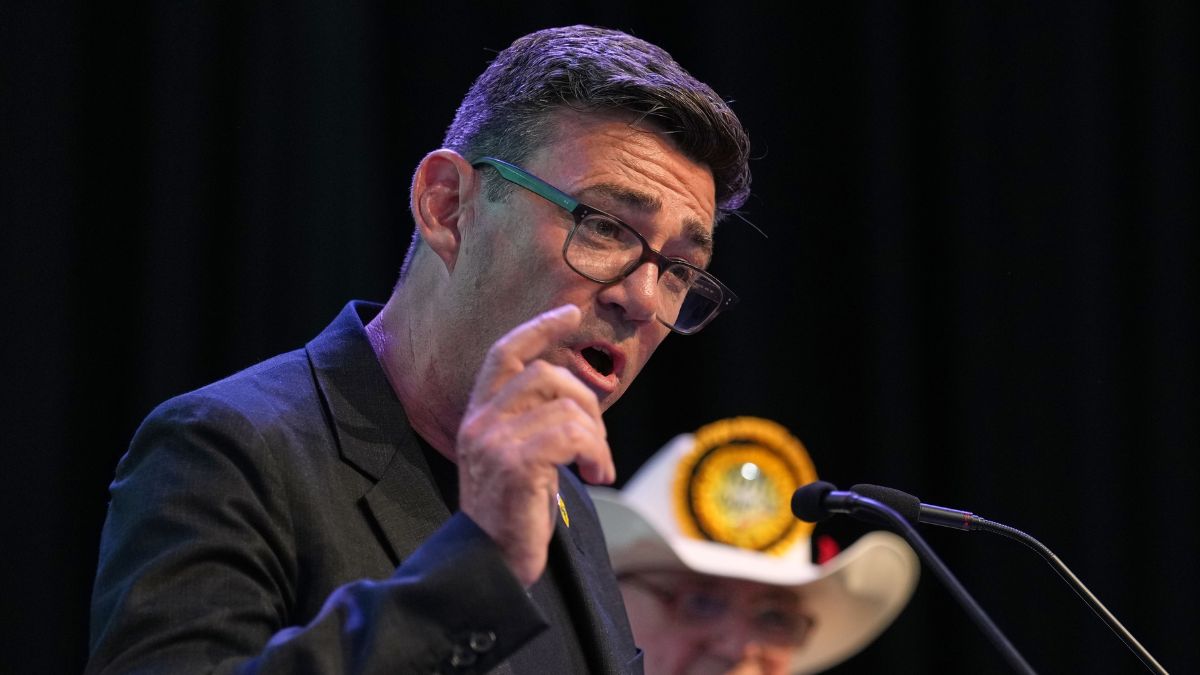
Manchester mayor Andy Burnham won a key by-election on Thursday, putting him in a position to challenge British Prime Minister Keir Starmer as leader of the Labour Party and ultimately the next Prime Minister. Burnham, often referred to as the "King of the North", returned to Westminster after a nine-year absence with a commanding victory. He secured 54.8 per cent of the vote, comfortably defeating Robert Kenyon of Reform UK, who received 35 per cent. Candidates from the hardline Restore Britain party also failed to gain significant support.
The result was a disappointment for Reform UK, which had hoped to build on its recent local election successes. Its campaign was damaged after social media posts resurfaced in which Kenyon described himself as "sexist", creating an unwelcome distraction during the contest.
The by-election itself was highly unusual, engineered to bring Burnham back into Parliament. Labour MP Josh Simons resigned from the safe Labour seat of Makerfield, a working-class constituency of former coal-mining communities around 300km north-west of London, specifically to provide Burnham with a parliamentary base from which to launch a leadership challenge.
Burnham's campaign combined local concerns with a broader political message. He focused heavily on issues such as local services, waste collection and community investment, while presenting himself as a champion of economic fairness. Throughout the campaign, he criticised what he described as Westminster's detachment from ordinary voters and attacked decades of London-centric policymaking. He also rejected the neoliberal economic model that has dominated British politics for much of the past four decades.
In his victory speech, Burnham portrayed the result as more than a local success. He described it as the beginning of a wider movement to "put power where it should be", signalling his intention to challenge the party leadership and reshape Labour's direction.
His victory comes at a moment of profound weakness for Starmer. In less than two years after leading Labour back to power, Starmer has become hugely unpopular within the party and among the public. His government has struggled to generate economic momentum in post-Brexit Britain and has been damaged by a series of controversies, policy reversals and internal disputes.
The electoral consequences have been severe. In May, Labour lost control of the Welsh Senedd and suffered heavy losses in local government, losing more than 1,200 council seats. At Westminster, tensions have continued to rise. More than 20 ministers have quit the Starmer cabinet since he took charge, mostly over policy disagreements or expressing a lack of confidence about the PM’s leadership.
What made Starmer even more unpopular was the controversial decision to appoint ex-Jeffrey Epstein associate Peter Mandelson as British ambassador to the United States. The appointment angered sections of the party and reinforced concerns about the government's direction.
As Labour's difficulties have mounted, calls for a change of leadership have become increasingly public. Many MPs fear that if Starmer remains leader, Labour could face a crushing defeat at the next general election, particularly if Nigel Farage's Reform UK continues to gain support among working-class voters.
The scale of dissatisfaction within Labour is becoming increasingly difficult to ignore. Reports suggest that 110 Labour MPs have already signed a letter urging Starmer to resign. Polling also indicates that Burnham enjoys significantly greater public support. An Ipsos survey found that 25 per cent of British adults preferred Burnham as prime minister, compared with only 12 per cent for Starmer.
For Burnham to formally challenge the prime minister, he must first secure the support required under Labour Party rules. A leadership candidate needs nominations from at least 20 per cent of Labour MPs, currently 81 parliamentarians, along with backing from at least 5 per cent of local party branches or support from three affiliated organisations, including two trade unions.
Given the level of unrest within the parliamentary party, many observers believe Burnham would have little difficulty reaching those thresholds.
Starmer, however, has made clear that he has no intention of stepping aside voluntarily. He has argued that a leadership contest would be damaging for both Labour and the country and has vowed to fight any challenge. Under Labour rules, a sitting leader is automatically placed on the ballot if they choose to defend their position.
Adding further uncertainty is former health secretary Wes Streeting, who is reportedly considering launching his own leadership campaign after recently leaving the cabinet.
The timing of any leadership contest remains unclear. If pressure from MPs becomes overwhelming, Starmer could decide to resign quickly. Should Burnham emerge as the only candidate, he could become prime minister within days without the need for a membership vote.
Another possibility is that Starmer negotiates an orderly departure after the July NATO summit in Ankara, allowing a successor to take office before Parliament rises for the summer recess.
If Starmer refuses to stand aside and a full contest takes place involving Burnham, Streeting and other candidates, the process would likely last several weeks. The timetable would be determined by Labour's National Executive Committee.
For Burnham, victory in Makerfield is only the beginning. He has long been viewed as Labour's ideal alternative leader. The challenge now is to convert that reputation into a credible bid for national power. At the same time, his departure creates a new problem for Labour. The party must now defend the Greater Manchester mayoralty in a major by-election involving around two million voters on July 30, with Reform UK expected to mount a serious challenge.
