



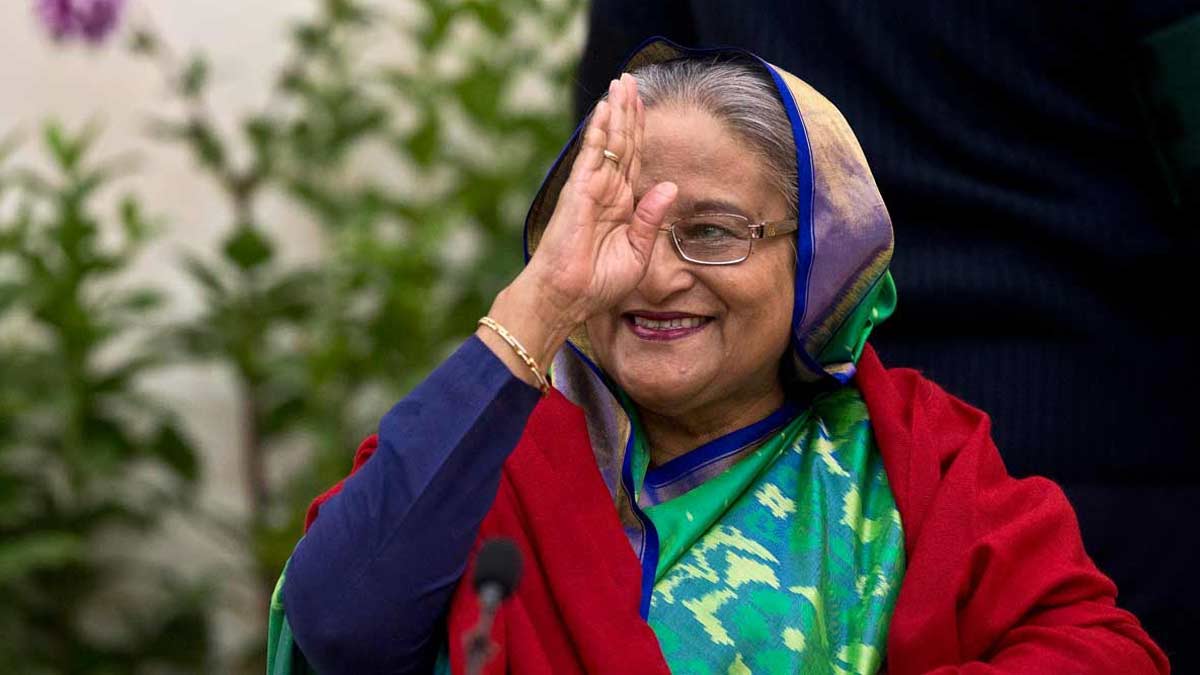
On a rainy Wednesday Delhi evening, former Bangladesh Prime Minister Sheikh Hasina’s press conference on the virtual mode–just audio actually, no video–did ratchet up good numbers. It was her first public address in two years. Midway through the meet, the telecast of the meet crossed a viewership of 3.15 lakh with 13,000 comments on YouTube. One can imagine the range of emotions it will draw out in Bangladesh when she returns home after about two years of self-imposed exile.
In India, she was treated well. As her son, Sajeeb Ahmed Wazed Joy, who advised Hasina on information and communication technology affairs, said at the conference: “India is treating her like a head of state, treating her very well. She is staying here with full security as a head of state. Prime Minister Modi's government has shown her the utmost respect.”
As of now, Hasina remains steadfast on her December return. “I may be sent to prison or be killed, but fear cannot decide my duty to the people. I lost my family in 1975 and spent six years in exile. I am not worried about my own future, but about the future of Bangladesh.”
And defiant. Despite the deadly threats. “There have been 19 assassination attempts on me.”
That Sheikh Hasina will be put in jail when she goes back home is a foregone conclusion. There is already an astounding number of about 600 criminal and murder cases registered against her and her senior party colleagues.
Nor is it difficult to presume that the Islamists, spearheaded by the Jamaat-e-Islami which is the main political opposition in the country at the moment after the February 2026 elections, will be baying for her blood and would demand Hasina’s execution.
But what looks fairly certain is that the homecoming will stir up the politics of the country in a very significant manner and will bring it to a boil.
The fact is the Awami League was a major political party till the clampdown by the Muhammad Yunus-led interim government that was at the helm of power in Dhaka for an 18-month-long period from August 2024 to February 2026. And before that fateful day of August 5, 2024 when she had to flee to India after riotous crowds took to the streets, Hasina had the distinction of being the longest-serving prime minister in the country's history, leading Bangladesh for 21 years across two terms.
While many in the Awami League’s senior leadership have been put behind bars, the organisation has only gone underground and not disappeared completely despite efforts to take down the political and administrative structures identified with her party and its student wing, the Chhatra League.
As Muhibul Hassan Chowdhury Nowfel, who had served as the education minister in Hasina’s cabinet, told THE WEEK: “The head may have been cut off, but the hands and legs are still alive and kicking.”
The development could also add to the predicament of the ruling PM Tarique Rahman-led Bangladesh Nationalist Party (BNP) government in the country.
Putting Hasina in jail will give a figure-head and rallying point for the Awami supporters who could begin with a demand to keep Hasina in house-arrest and not in jail. On the other hand, acceding to the Islamist demands could make the Awami League revive and restore its deep roots in the country in keeping with the adage as “Caesar dead would be more powerful than Caesar alive”.
As far as India is concerned, Hasina’s declared intent to return has freed New Delhi of having to negotiate a difficult diplomatic track with Dhaka. Her willingness to return frees India of the need to begin a process to extradite her and ignite the possibility of bettering relations with the BNP government. India and Bangladesh have an extradition treaty that was signed in 2013 and amended in 2016 to fast-track and simplify the transfer of fugitives.
Currently, the Indian position on Bangladesh is that it supports a “democratic, stable Bangladesh and the will of the Bangladeshi people”.
Notably, on Tuesday, the Indian foreign ministry spokesperson Randhir Jaiswal said that the public address of the former Bangladeshi PM was organised by a private entity and the government had to do nothing with it.
