



The Gujarat health department has undertaken rapid response measures to prevent any further fatalities after the Chandipura virus (CHPV) claimed the lives of 22 children during the ongoing monsoon season.
According to Gujarat Health Minister Praful Panseriya, out of 184 suspected infection cases reported in the state during the monsoon, 35 persons have tested positive and 22 of them have died. All of the victims were under 15 years of age, and some were toddlers, the health minister confirmed.
"Since no antidote has been developed yet for the Chandipura virus, we have ramped up surveillance and rapid response measures, and geared up health services to minimise deaths as much as possible. Our entire system is fully mobilised," Gujarat Health Department's Additional Chief Secretary Rajeev Topno was quoted as saying by news agency PTI.
Gujarat steps up surveillance
According to reports, among the survivors was a nine-month-old infant who received intensive care in the paediatric department and was successfully treated and discharged. As per the government directive, all samples of suspected Chandipura virus cases are being sent to the Gandhinagar-based Gujarat Biotechnology Research Centre (GBRC) for lab examination.
Patients suspected of carrying the Chandipura virus exhibited symptoms such as high fever, headache, and seizures, and remained in a semi-conscious state. As per the authorities, the reported cases originate from various districts rather than being concentrated in a single village.
Health teams are spraying pesticides in areas where animal husbandry is practised to target sandflies, which are responsible for spreading the encephalitis virus, he said.
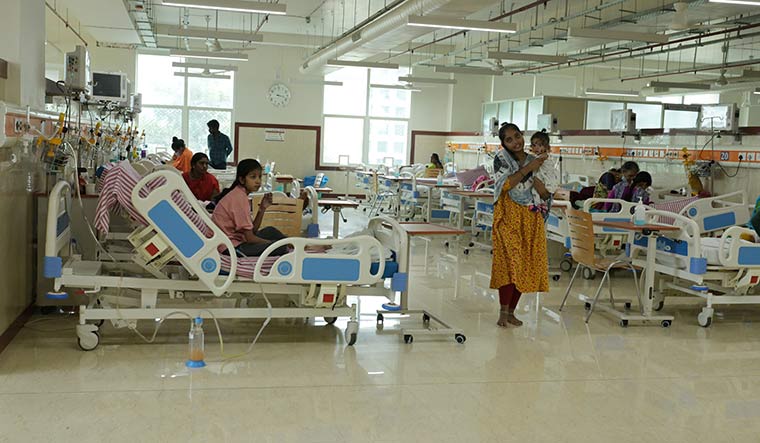
Government and private paediatric facilities have been instructed to admit patients with symptoms of the virus to ICU beds equipped with oxygen and ventilator facilities. They have been urged not to delay treatment, so that serious conditions like multiple organ failure can be prevented, he added.
Why Chandipura outbreaks recur during the monsoon
Chandipura encephalitis is a viral disease that spreads mainly through sandflies (Phlebotomus papatasi) and other insects, causing severe inflammation of the brain. The female Phlebotomine sandfly, the primary vector of CHPV, thrives under warm and humid conditions — especially during the monsoon season — which drives these recurring outbreaks. This is because heavy showers and flooding create an ideal breeding ground for these vectors.
“As climate change potentially expands the habitable zones of these vector populations, the threat of these recurring outbreaks may only increase; consequently, it is important to effect proper sanitation, improved drainage systems, and waste management practices, as sandflies often thrive in decaying organic matter and stagnant water,” the US-based National Library of Medicine noted in an online report.
The virus was first isolated from a patient in Chandipura village in the Nagpur district of Maharashtra in 1965. Fortunately, no cases of human-to-human transmission of CHPV have ever been identified.
What is CHPV?
CHPV, a member of the Rhabdoviridae family, is a single-stranded RNA virus that has the shape of a bullet, measuring about 150–165 nm long and 50–65 nm wide. It can lead to high mortality within 48 to 72 hours of symptom onset. According to the WHO website, it carries high case fatality ratios ranging from 56% to 75%. Primarily affecting children, it is associated with a rapid progression of symptoms, leading to severe neurological damage and death.
"Vector control, and protection against bites of sandflies, mosquitoes, and ticks, are key measures to prevent transmission of CHPV. Poor housing and domestic sanitary conditions (lack of waste management or open sewerage) may increase sandfly breeding and resting sites, as well as vector access to humans," the WHO website states.
"Although there is no specific antiviral treatment and no approved vaccines, early access to care and supportive treatment can improve disease outcomes. It is important to ensure that basic supportive care capacities are in place at primary and district healthcare facilities to manage cases before referral following the protocol (such as standard encephalitis management protocol)," it added.
