



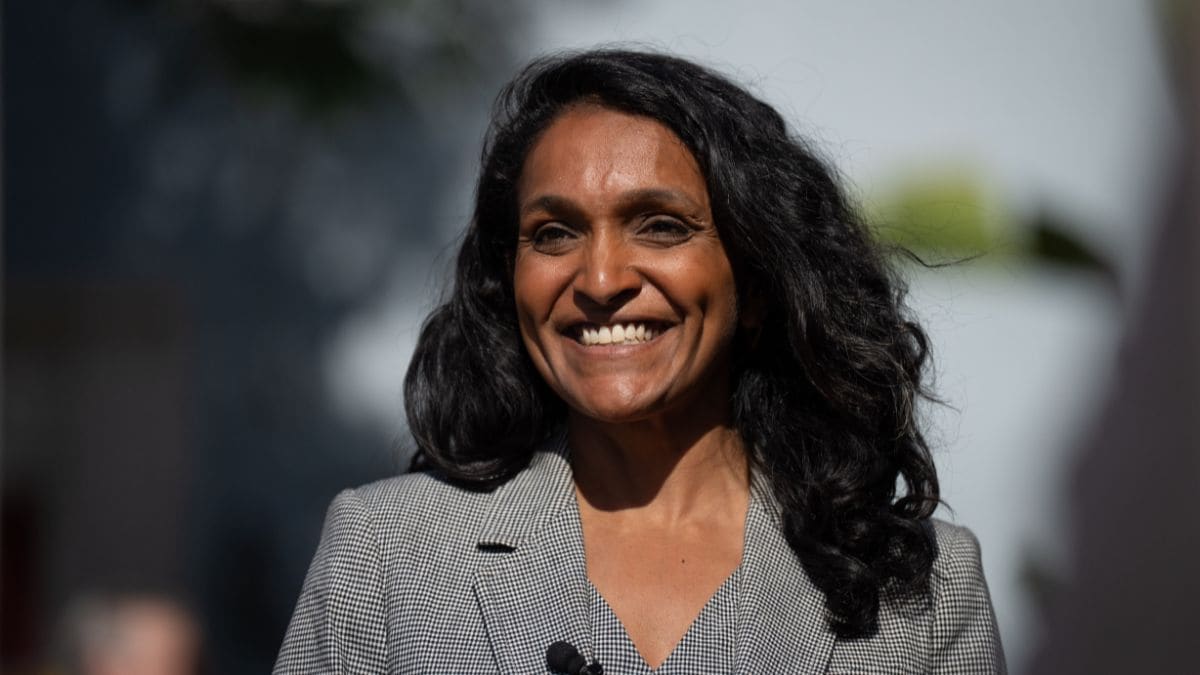
Indian-American politician Nithya Raman has emerged as a serious contender for a spot in the November runoff for the Los Angeles mayor's post. Incumbent Mayor Karen Bass of the Democratic Party led the field comfortably, but Raman's surge has upended the contest, pushing the Republican contender Spencer Pratt into third place and possibly out of the race.
It has raised the prospect of a historic showdown between two Democratic women representing different visions for the future of America's second-largest city. Bass, a 72-year-old former Democratic congresswoman seeking a second term, has consistently led the race and secured her place in the runoff with nearly 35 per cent of the vote. However, since she failed to win an outright majority, the attention shifted to the fierce battle for second place between Raman and Pratt. In recent days, that contest underwent a remarkable reversal.
Raman, 44, is an Indian-American immigrant born in Kerala to Tamil parents. She is an urban planner and progressive Democrat who first entered city politics in 2020 with a stunning victory in the Los Angeles City Council. Educated at Harvard University and the Massachusetts Institute of Technology, she built her political reputation around housing reform and homelessness policy. Over the years, she cultivated a strong following among younger voters, renters, progressive activists and advocates of increased housing construction.
Pratt is a 42-year-old Republican and former reality television personality best known for his appearances on popular American television programmes. A resident of Pacific Palisades, Pratt campaigned as an outsider challenging the political establishment. His message drew support from voters frustrated by local government responses to issues such as public safety, homelessness and wildfire recovery, particularly after he lost his own home in a devastating wildfire.
The contest has also demonstrated a familiar feature of California politics: the so-called "blue shift". On election night, Pratt appeared firmly on course to reach the runoff. Early vote counts gave him a lead of roughly 40,000 votes over Raman, creating the impression that the race was effectively settled.
That assumption proved premature.
As additional mail-in ballots were processed over subsequent days, Raman steadily chipped away at Pratt's advantage. The turning point came when election officials counted another batch of approximately 50,000 ballots. Raman secured about 19,000 of those votes, while Pratt gained only around 9,000. The result was enough to push Raman into second place, giving her 27.1 per cent of the vote compared with Pratt's 26.7 per cent.
Political analysts say this pattern is entirely consistent with voting trends in Los Angeles and across California. Older voters, homeowners and Republicans typically cast their ballots early, which tends to favour conservative candidates in initial counts. Younger voters, progressives and Democrats are more likely to submit mail-in ballots closer to Election Day. Since California accepts ballots postmarked by Election Day and received several days later, late-counted votes often tilt towards Democratic candidates.
The shift has triggered sharply contrasting reactions from the rival campaigns. Raman welcomed the latest results, saying she was encouraged by the updated count and grateful to the thousands of supporters who had powered her campaign.
Pratt responded very differently. After slipping into third place, he used social media to suggest, without evidence, that fraudulent votes may have influenced the outcome. Election officials and political observers quickly dismissed those claims, noting that there is no evidence of wrongdoing and that California's vote-by-mail system, including ballot collection procedures, operates within established legal rules.
Raman's rise has also drawn an immediate response from Bass. Although the two politicians were once regarded as allies within the Democratic Party, Bass's campaign swiftly pivoted to attacking Raman's record. Campaign officials accused her of failing to address encampments near schools, opposing efforts to expand police recruitment and doing too little to protect local jobs or confront federal immigration enforcement policies.
The sharp tone of those attacks reflects a growing recognition that Raman could pose a serious challenge if she advances to November.
The outcome of the primary will shape the entire structure of the general election. A Bass-Pratt runoff would largely resemble a conventional contest between a Democratic incumbent and a Republican challenger. A Bass-Raman runoff, however, would create a very different political dynamic.
Such a race would pit the Democratic establishment against a younger progressive movement seeking deeper reforms on housing, policing and urban development. It would force Bass to defend her record not against a Republican critic but against a challenger appealing to many of the city's most active Democratic voters.
Polling conducted before the primary suggested such a contest could be highly competitive. One survey even showed Raman holding a narrow lead over Bass within the margin of error, although a large proportion of voters remained undecided.
More than 100,000 ballots remain to be counted. Nevertheless, most analysts believe Raman is now in a stronger position to secure second place because the remaining votes are expected to come disproportionately from demographic groups that favour her candidacy.
If that prediction holds, Los Angeles could soon witness not just a historic contest featuring an Indian-American candidate but also a broader debate over the future direction of the city. Many observers believe the result could mark a significant turning point in Los Angeles politics and signal a generational shift in the priorities shaping the city's future.
