



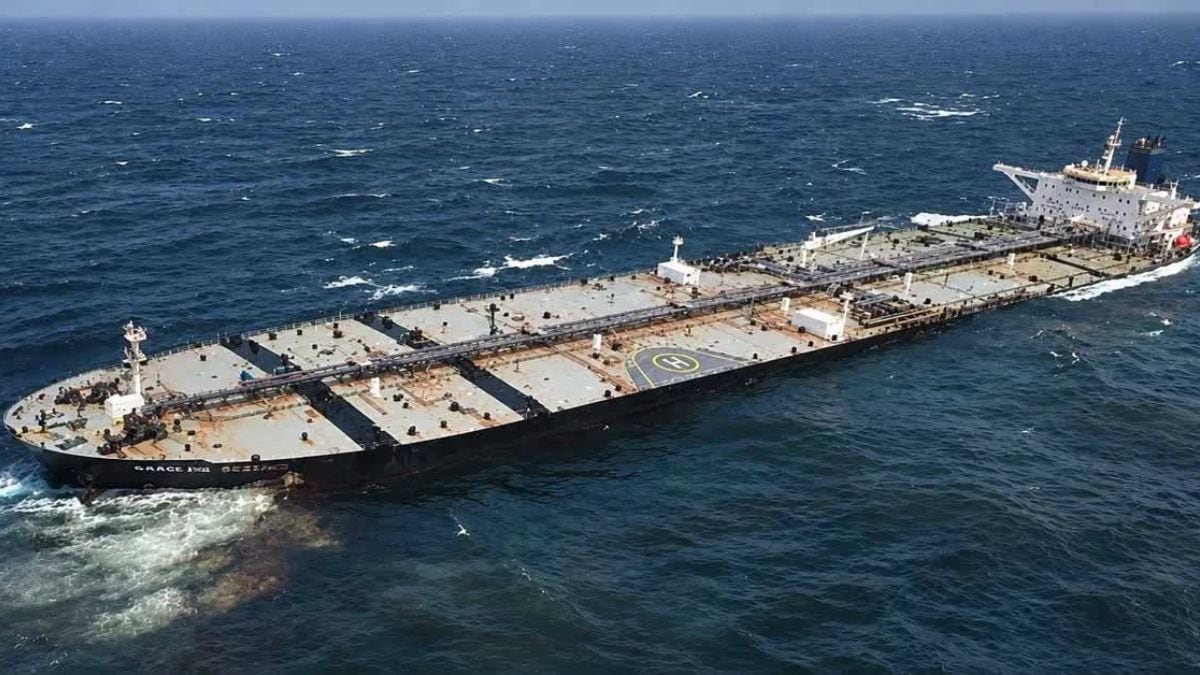
Oman is facing a major maritime crisis after the owners of a stranded India-bound sanctioned crude oil tanker have not yet responded to an ultimatum from Muscat.
A directive from Oman's telecom and IT ministry had demanded that the Cameroon-flagged Suezmax tanker Caroline Bezengi (IMO: 9224439) be removed from its current position—on rocks off Jazirat Al Qibliyyah, one of the Hallaniyat Islands in southwestern Oman—by July 23, a Muscat Daily report said.
What we know about the sanctioned ship
This comes weeks after the sanctioned ship was hit on June 6, allegedly by a Ukrainian limpet mine attack, off the Gulf of Aden.
Measuring 274.48m long, the 2001-built Caroline Bezengi has a capacity of 159,200 dwt, and has been sanctioned by the EU, US, and the UK.
After being loaded with Russian Urals crude at Moscow's Novorossiysk Port on May 11, it had been travelling to the Sikka Port in India's Gujarat when it was attacked.
Multiple explosions reportedly took place onboard the vessel after it was attacked, which caused flooding in the engine room, and left the vessel adrift.
The tanker then drifted towards the coast of Oman, and ran aground at the southwestern tip of Jazirat Al Qibliyyah, where it has remained since, causing an oil spill.
Salvage teams have since visited the ship, which is partially submerged and leaking oil, after which the Oman government issued an ultimatum.
Notably, hull, cargo, and protection & indemnity policies do not cover such losses in war-related cases, as it is war risk insurance that does so. However, the vessel is not likely to have been insured, a Tradewinds report said, citing sources.
The registered owner, Rentoor Shipmanagement, has so far been unreachable, and is likely to face legal action from Oman as Muscat's deadline to remove the ship has passed.
This is likely to make things very difficult for Oman, which is already facing a major ecological crisis with the oil spill on its southern coast.
Notably, Oman is a member of the IOPC Funds, a collective of two intergovernmental organisations—the 1992 Fund and the Supplementary Fund—which compensate countries for oil pollution damage.
However, IOPC Funds does not offer compensation for oil spills caused by “an act of war, hostilities, civil war, or insurrection”, which further adds to Oman's burden, as it works to prevent this ecological disaster from growing in scale.
