



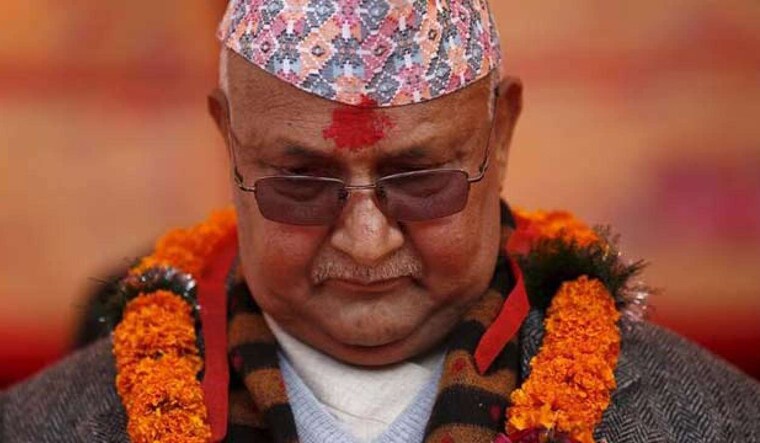
Nepali Prime Minister KP Oli said that Nepal ‘will not cede even an inch of Nepali territory’, talking about the Kalapani area, that has long remained a border issue between India and Nepal.
Indian officials released official maps on October 31 that included parts of Kalapani, an area located on the western edge of Nepal. This is PM Oli's first public response after the map was released. Oli also clarified that the leftist government remains committed to resolving border issues with India through bilateral discussions.
“This patriotic government won’t let anyone take even an inch of Nepali land. The neighbouring country should withdraw its troops from our land,” PM Oli said. Students across Nepal have been taking to the streets protesting ‘Indian occupation of Nepali territory’.
There has been no official response from Delhi. Oli had called for an all-party meeting three days ago, which included former prime ministers and ex-foreign ministers. Leaders and other participants at the meeting asked him to take up the issue with India immediately.
The Kalapani area, that lies near Nepal's Sarda river has long-remained a disputed area between the two nations. According to the Sugauli Treaty signed between Nepal and the then British India in 1815 and following treaties with Independent India acknowledge the Sarda River that is also known as the Mahakali River as the boundary between the two countries.
India however, given the geographic importance of the region, a tri-junction with China, occupied the Nepali territory across the Kali River since the 1960s, claiming a lesser-known stream of the headwaters of the Mahakali river as the origin of the river and borderline.
On November 6, the Nepal Foreign Ministry said, “The government is clear that the Kalapani area lies within Nepalese territory.”
A day later, the Indian Ministry of External Affairs said, “Our map accurately depicts the sovereign territory of India. The new map has in no manner revised our boundary with Nepal… The boundary delineation exercise with Nepal is ongoing under the existing mechanism. We reiterate our commitment to finding a solution through dialogue in the spirit of our close and friendly bilateral relations.”
