



The axe has fallen. Smug F1 drivers look depressed. Rather surprised that driving will now simply mean getting onto the grid, racing, winning or losing and moving onto the next track. The anti-depressant, the F1 grid girls, a fixture of races through the decades are now gone. Vanished in a trice, in a world where the #MeToo movement is fast making us realise that cosmetic additions are sexist, not glamourous.
In what has been a practice since the late 1960s when legend has it that Rosa Ogawa was the first grid girl to stand alongside motor race winners, an essential part of the glamourisation of racing as a sport, irrespective of it being cars or motorcycles, the scream of the engines has been as integral a part as the click of the heels, the 36DDs as much part of the landscape as a howling V8 engine. Sport returns to sport. But that is an argument where opinions vary as much as weather changes in a single day in Melbourne. Yet, this has far-reaching effects. On not only F1 but other sport as well.
Last week, the Professional Darts Corporation's decision to end the long-established practice of women escorting male players to the stage had its fair share of criticism. But sports' biggest managers, the CEOs are worried over the growing row over sexual harassment following accusations levelled at disgraced Hollywood film mogul Harvey Weinstein. If the biggies there could be ostracised, thrown out, humiliated, taken to court, disgraced, insulted in public, then it’s only a matter of time before skeletons start tumbling out of the cupboard of many sport stars in a sport where sexual openness is as brazen as the speed of the cars.
The first salvo directed at F1 was obvious. “The country at the moment is getting a bit prudish,” said octogenarian former supremo Bernie Ecclestone to The Sun. “You should be allowed to have grid girls because the drivers like them, the audience likes them and no one cares. These girls were part of the show, part of the spectacle. I can't see how a good-looking girl standing with a driver and a number in front of a Formula 1 car can be offensive to anybody.”
What Ecclestone forgot or turned a blind-eye to was that ‘part of the spectacle’ is what most are scared about. Whether it’s F1, darts, boxing, cycling or any other sport that uses girls as props is in danger of imploding at any time. Women are coming out and what organisers are afraid is ‘what will they come out with’? But that clean-up is coming because they are scared or genuinely believe that sports is more than just using women as props.
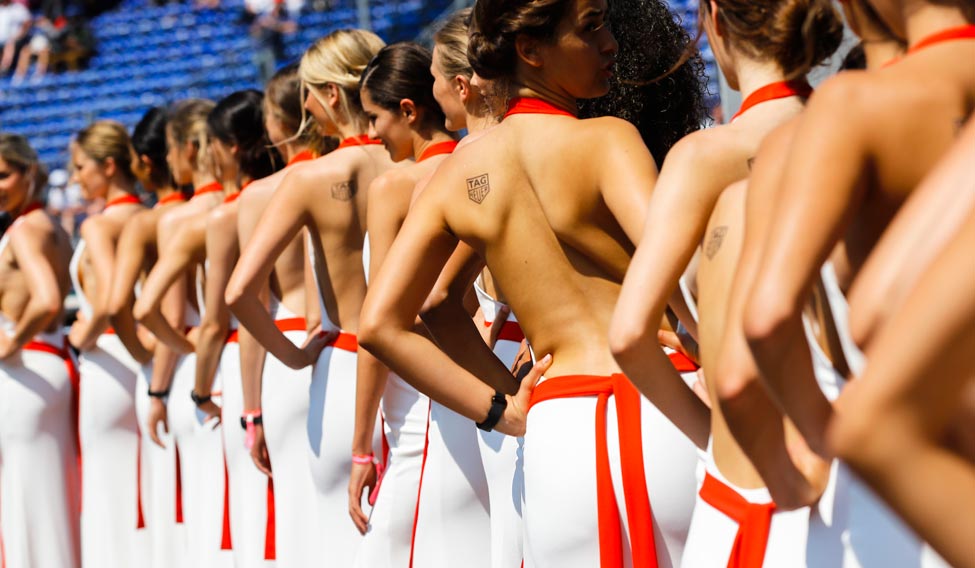 "Grid girls" line up after the qualifying session for the Formula One Grand Prix at the Monaco racetrack in May 2017 | AP
Formula One has decided that the practice is old-fashioned. But will cricket too, especially the IPL, decide that having cheerleaders is no longer relevant in an age where the debate over sexual harassment is gaining ground and, at the moment, is aflame? IPL dives into unabashed Bollywood glamour and flirts with flesh when it comes to cheerleaders, the worshipping masses sitting behind the go-go girls waiting for the boundaries and sixes. IPL also had its own box of stories about late night sorties and cheerleaders complaining about organisers and players making a bee-line for them. If relationships can be a part of the landscape at the NBA where players and cheerleaders enjoy more than just a smile or a handshake, IPL cannot be exempt from it. Before the hangars open up and scandals drown the world’s richest cricket league, it would be good for the IPL chairman to purely concentrate on raising the stock of a T20 match rather than the ‘quite boring’ spectacle of scantily-clad girls dancing robotically to the cheers and music that follows a well-hit sixer.
A few years back, as a one-off move, race organisers at the Monaco GP in 2015, replaced grid girls with ‘grid boys’―men in short jeans―a move laughed at by four-time F1 champion Sebastian Vettel. “Why didn’t we have any grid girls today?” Vettel said at that time. “You get there and park behind George or Dave. What’s the point?”
If somebody would be at the moment turning over in his grave, it would be James Hunt, the British F1 driver known for his cavalier indulgence in alcohol, drugs and sex. Rumour is that he slept with more than 5,000 women, not all of them grid girls, of course. But if someone loved being around grid girls, it was James Hunt.
“Over the last year we have looked at a number of areas which we felt needed updating so as to be more in tune with our vision for this great sport,” Sean Bratches, Managing Director of Commercial Operations at Formula One, said in a statement released to the media. “While the practice of employing grid girls has been a staple of Formula 1 Grands Prix for decades, we feel this custom does not resonate with our brand values and clearly is at odds with modern day societal norms. We don’t believe the practice is appropriate or relevant to Formula 1 and its fans, old and new, across the world.”
The issue of removing the practice of grid girls has been raised before-hand with drivers like Max Verstappen and Nico Hulkenberg, speaking in support of the practice. “The grid girls must stay,” Verstappen said while Hulkenberg, said, “It would be a pity if they took the eye-candy from the grid.”
Whether there are more women in key roles in the paddock or managing engineering skills or going on to become world boxing champions, like our very own Mary Kom, the essential part of a woman in a sporting arena is not to slip into lycra or skimpy silks sashaying and holding a placard with the number of the rounds done but enhancing the very idea of sport embracing women in achievement areas. Grid girls, one way or the other, may have just shown the way.