



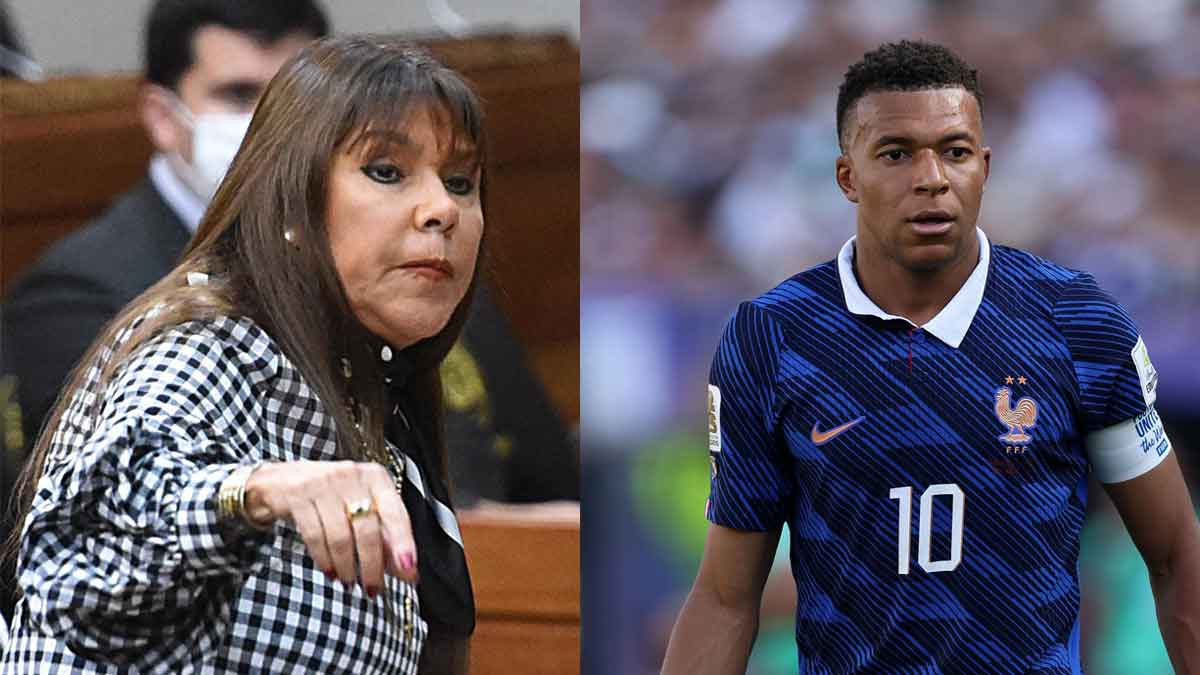
The France-Paraguay clash in the 2026 FIFA World Cup round of 16 ended in a tense 1-0 win for the French, but it also triggered a major international row over racism. After the match in Philadelphia, where captain Kylian Mbappé converted the decisive penalty, Paraguayan senator Celeste Amarilla unleashed a string of racist attacks against the forward across social media.
Amarilla, a 61-year-old lawyer and member of Paraguay's Authentic Radical Liberal Party (PLRA), first targeted Mbappé on Instagram before continuing her tirade on X. She described him as a "colonised Cameroonian, desperately trying to pass himself off as French" and mocked both his appearance and character, calling him "resentful, arrogant and ugly". Her comments soon descended into explicit racist abuse. On X, she referred to Mbappé as a "brute [who] never even learnt to write", claiming that "instead of breast milk, he sucked on coconuts, and the most educated creatures he ever listened to were chimpanzees". She also suggested that Paraguayan players should have given him "an open-handed slap" or "the finger" after the match.
The controversy was not confined to Amarilla's remarks. Even before kick-off, former Paraguay goalkeeper José Luis Chilavert had drawn criticism after claiming Paraguay would be facing "a squad from Africa". French Football Federation (FFF) president Philippe Diallo condemned the remark as "a disgrace", saying it undermined the fundamental values of football.
Mbappé, who is captaining France and shares the tournament's top-scorer honour with seven goals, responded with a forceful statement. Addressing Amarilla directly, he wrote: "Madame Celeste Amarilla, you are a despicable woman and unworthy of your position." He also defended the Paraguayan players, arguing that Amarilla's "brazen racism" and "recklessness" had overshadowed the historic achievements of her own national team. Stressing that she did not represent the passion or dignity of Paraguay, Mbappé vowed that he would "never allow people like her the freedom to spread their hatred and racism across the world".
The French Football Federation threw its full support behind its captain and announced legal action against the senator. Describing Amarilla's comments as "utterly abhorrent and unacceptable", the federation confirmed that it had referred the matter to the public prosecutor's office to pursue criminal proceedings. It added that insulting members of the French national team amounted to insulting the nation itself and said such remarks "bring shame upon those who make them and those who disseminate them".
The political reaction was swift in both countries. In France, several senior leaders rallied behind Mbappé. President Emmanuel Macron called Mbappe’s response as scoring “another goal”, this time against racism. Sports Minister Marina Ferrari described Amarilla's remarks as "abhorrent", adding that they were particularly shocking coming from an elected representative. Paris Mayor Emmanuel Grégoire declared that "the France team looks like France, and Kylian Mbappé is one of the greatest representatives of our country", while European Affairs Minister Benjamin Haddad insisted that hatred disguised as political speech could never be tolerated.
Facing mounting international criticism, the Paraguayan government moved quickly to distance itself from Amarilla's comments. The Foreign Ministry issued a statement saying it "deplores and rejects" her remarks, stressing that they were entirely inconsistent with Paraguay's commitment to peaceful coexistence and human dignity. It emphasised that the senator's views reflected her personal responsibility alone and in no way represented either the government or the Paraguayan people.
The controversy has once again exposed longstanding tensions surrounding race, immigration and national identity in France. For decades, the French national team has symbolised the country's multicultural identity, dating back to the celebrated "Black-Blanc-Beur" World Cup-winning side of 1998. Mbappé himself, born to a Cameroonian father and an Algerian mother, has frequently found himself at the centre of debates over what it means to be "truly" French. While victories are often celebrated as evidence of an inclusive nation, moments of political or social tension routinely revive racist narratives questioning whether non-white players truly belong.
This is not the first time Mbappé has spoken out on political matters. Before the tournament, he criticised France's far-right National Rally, warning voters of the dangers of political extremism. In the spirit of politically engaged French footballers like Zinedine Zidane and Lilian Thuram before him, he has consistently used his platform to speak out against racism and intolerance.
National coach Didier Deschamps has firmly backed him, defending players' right to speak their minds as citizens, even on contentious political issues. Former captain Michel Platini has argued that France's captain ought to stay politically neutral, but Mbappé has carried on regardless. His response to Amarilla's racist abuse only strengthens his standing, not just as one of football's finest players, but as one of the game's strongest voices against prejudice.
