



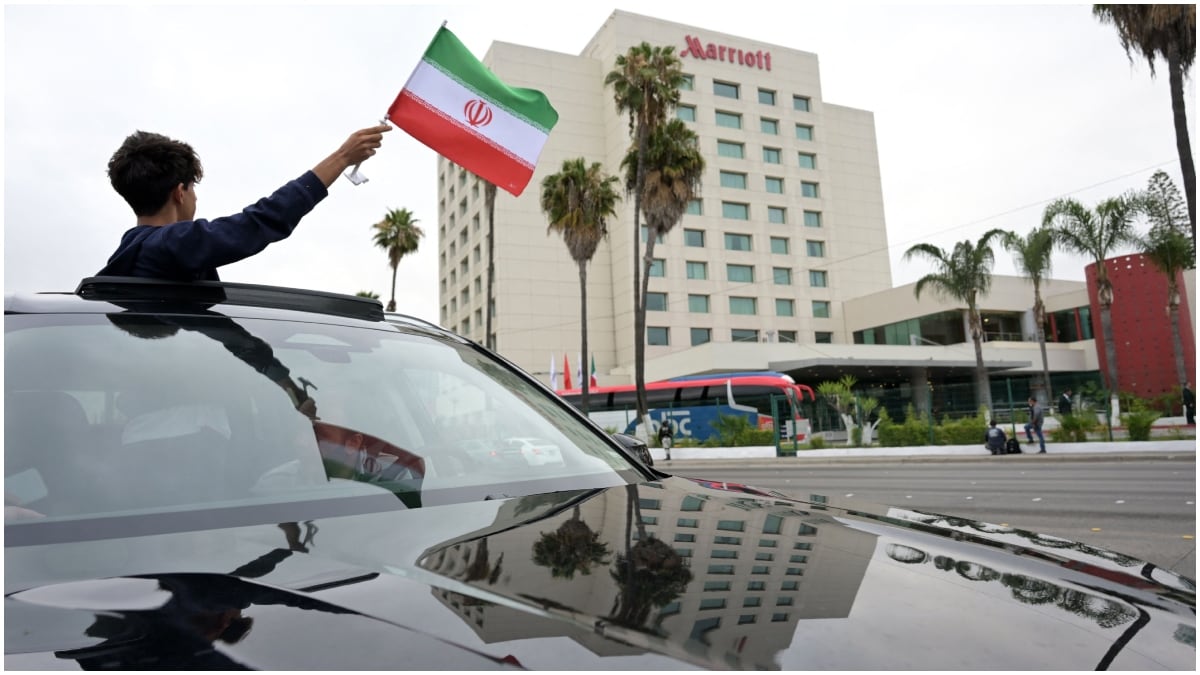
Iran has reportedly threatened to halt its FIFA World Cup 2026 matches if unauthorised flags are displayed by spectators at the stadiums. The Islamic Republic has decided to show no tolerance towards any slogans targeting the squad.
The warning was issued by Sports Minister Ahmad Donyamali, following criticism of the team’s presence at the tournament.
The FIFA World Cup is being hosted by the United States, Mexico, and Canada. Iran, one of the finest teams in Asia, will open their Group G campaign against New Zealand in Los Angeles on June 15. They next face Belgium at the same venue on June 21 before taking on Egypt in Seattle on June 26. The US and Iran are engaged in a conflict that has spread to several Middle Eastern states and claimed thousands of lives.
"We have informed FIFA that if unofficial flags are brought or slogans against the national team are chanted in the stadiums where Iran plays in the World Cup, the team manager will definitely be responsible for stopping the match," Donyamali said on Tuesday, according to Iranian media.
Iran's old flag to become a political symbol at stadiums?
When protests rocked Iran ahead of the conflict, the national flag of the pre-revolution days was widely used by anti-regime campaigners across the world. Following the Islamic Revolution, Iran decided to replace the Lion-and-Sun symbol that had appeared on the country's flags for centuries under the monarchy.
Instead, the regime introduced a symbol made up of four crescents and a central vertical line, which is a stylised calligraphic rendering of the Arabic word “Allah”, meaning God
The sun is an ancient Persian symbol that predates Islam, sometimes even linked to Zoroastrianism. It has many interpretations, including a female face representing "Mother Iran", a zodiac sign, and even divine glory bestowed upon the ruler. The lion, meanwhile, was the symbol of power for the Persian kings. They used the wild animal to represent sovereignty and courage.
However, reports claim that the lion later became associated with Imam Ali, the first Shia Imam, who is often titled "The Lion of God" (Asadullah). This is why, in later versions of the flag, the lion holds a curved sword (the Zulfiqar), representing Ali's legendary blade, which was the tool meant to protect the faith. The sword was also interpreted as the "Sword of Justice" that the kingdom stood for, ensuring that the law and the ruler's authority were upheld.
This ancient design features the very same unauthorised flags that Tehran has warned against being waved during the country's matches.
