



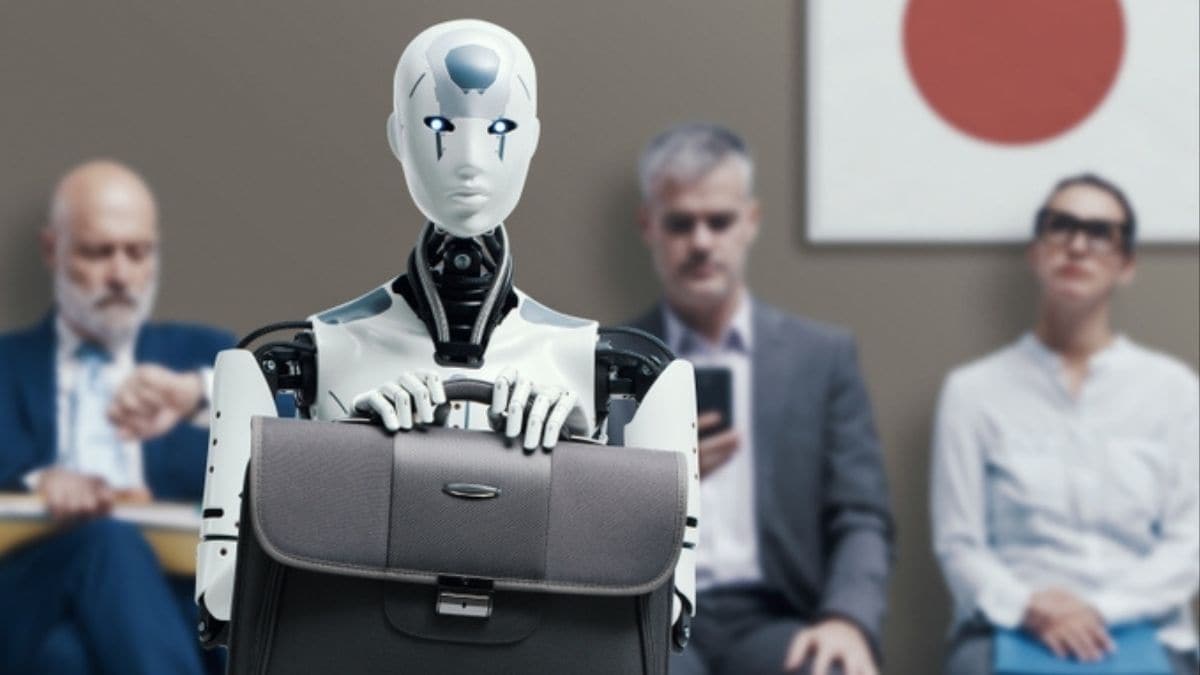
The next battle for India's young workforce may not be about getting a degree, but about proving what they can do with it. As artificial intelligence changes job roles and employers increasingly look for industry-ready skills, professional certifications are beginning to acquire greater weight in hiring.
The scale of the emerging demand is striking. India could need 8.5 million additional project professionals by 2035, according to the Project Management Institute (PMI), as the country takes on more infrastructure, technology, manufacturing and digital projects.
But the talent shortage is not simply about producing more graduates. It is about producing professionals who can take a project from an idea to execution.
That is prompting universities to move closer to industry. PMI has partnered with Amity University Online to bring professional project management certification and industry exposure into higher education, allowing students to pursue a degree alongside globally recognised professional credentials.
“Upskilling is what is important. It is very important to have certified and experienced professionals,” said Amit Goyal, Managing Director, PMI South Asia.
“Technology alone cannot drive transformation. Organisations need professionals who can combine technology with leadership, judgement and strategic thinking. Upskilling is no longer optional,” Goyal said.
The partnership will also bring students into the PMI ecosystem, giving them access to chapters, internships, industry networks, jobs and consultancy opportunities.
The shift comes as AI forces employers and universities to reconsider what makes a candidate employable. Monica Agarwal, Director, Amity University Online, said the question is no longer whether AI will enter the workplace; it already has.
“AI is redesigning every sphere of life. The real question is whether people are willing to adapt at the same pace,” she said. The objective, she argued, is not to train students to compete with AI but to work alongside it.
Amity has already embedded certification pathways across its programmes, and the collaboration with PMI aims to make graduates industry-ready from day one. “We provide degrees, but industry-recognised certifications add another layer of credibility,” she noted.
For companies, meanwhile, the test of employability is becoming more specific. Ajanta Sharma, Associate Director, Portfolio Management, Kyndryl, said organisations are increasingly looking at professional certification while assessing candidates.
That could make the combination of a degree and an industry credential increasingly attractive to young professionals entering a crowded job market.
Jay Kumar, President, PMI North India Chapter, said the pressure to learn does not end with a first job. “We have to keep ourselves updated, and upskilling is the only solution,” he said.
The demand is also spreading beyond technology companies. Goyal said government organisations are showing interest in training their managers in project management, as public programmes become larger and involve multiple agencies and stakeholders.
Project management, he pointed out, is not restricted to corporate projects. Disaster response is one example. During floods in Punjab and Assam, the ability to coordinate people, resources and timelines can determine how quickly assistance reaches affected communities.
“We can't change risk factors, but we can mitigate those risks,” Goyal said.
For PMI, which has been in the field since 1969, the projected demand reflects the increasing number and complexity of projects being undertaken worldwide. The global requirement for project professionals is expected to approach 30 million by 2035.
For India, the number carries another significance. The country is adding millions of young people to its workforce, while AI is simultaneously changing the skills required for many jobs. The challenge, therefore, is no longer simply creating educated workers. It is creating workers who can adapt, get certified, manage projects and keep learning after the degree is over.
