



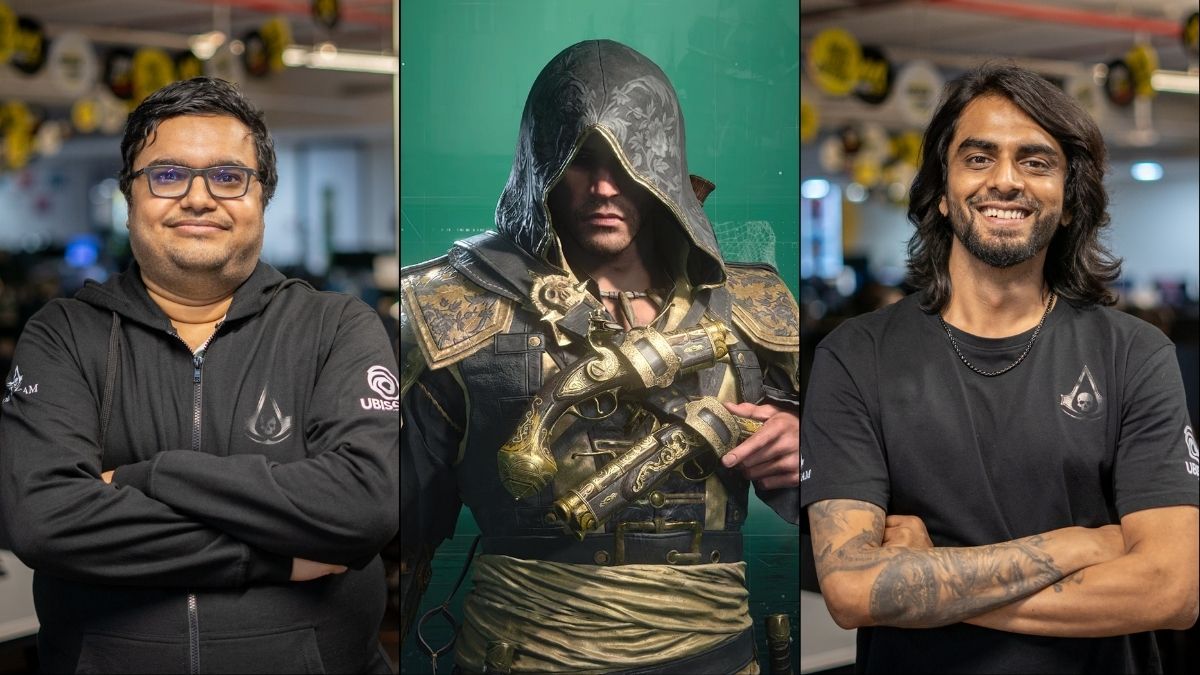
Ubisoft India has taken on its most significant creative and technical role yet on an Assassin's Creed title with Assassin's Creed Black Flag Resynced, marking a milestone in the Pune studio's 18-year journey from a small support team into a full co-development powerhouse for global AAA gaming.
We, at THE WEEK, clocked in over 20 hours of gameplay on Assassin's Creed Black Flag Resynced at launch on the PS5. Check out our detailed review HERE.
Over the past two weeks, those who have experienced the game would tell you it is quite good. And the team sitting in Pune has a major hand in it.
One of the clearest examples of Ubisoft India's expanded creative role lies in how the team reimagined Tulum, the pirate haven where protagonist Edward Kenway first meets the Assassins.
In the original Assassin's Creed IV: Black Flag, which the new game is based on, players reached Tulum through a loading screen, common to games of that era.
Ubisoft India Associate Producer Ganesh Chandrasekaran said the Pune team rethought that entire experience for Assassin's Creed Black Flag Resynced, aiming to make Tulum "feel more organically connected to the larger world around it" rather than a location the player is simply dropped into.
According to Chandrasekaran, the redesign was not about updating an old space but about rethinking what the player should feel upon arrival. "We wanted the consequences of Edward's actions to be much more immediate and visible," he said, explaining that players will now see Assassins-versus-Templar tension play out actively, with soldiers tracking players within the area itself, creating "a stronger sense that the world is reacting to the story, rather than simply waiting for the player to trigger the next mission".
Maritime supremacy from India
Speaking exclusively to THE WEEK, Chandrasekaran and Senior QC Lead Shubhrayu Dey described Ubisoft India's evolution as one of "steadily expanding ownership and capability."

The studio's earliest work involved small, individual assets such as stickers and supporting content for larger Ubisoft projects. Over the years, that grew into character creation, level design, and eventually full ownership of entire workstreams.
As they put it, the studio moved from "contributing individual elements to taking on larger mandates and now owning workstreams end to end across multiple disciplines".
That progression is visible in naval development specifically, they said, where Ubisoft India moved from building individual ship components to owning complete ships and major naval content outright, work reflected in the team's contribution to every enemy vessel and even Kenway's pirate ship, the Jackdaw, in Assassin's Creed Black Flag Resynced.
The studio's first major production mandate on an Assassin's Creed title came with Assassin's Creed Nexus VR. With Resynced, Ubisoft Pune has gone further still, serving as the lead QC studio on an Assassin's Creed title for the first time, alongside handling nine locations, seven main quests, two full sequences of Templar Hunts and five Assassin's Contracts, spanning disciplines from 3D art and level design to gameplay programming and cinematics.
Working across time zones in a new engine
Collaboration between Pune and lead studio Ubisoft Singapore was anchored around four creative pillars agreed early in development, which the team said helped avoid wasted effort on ideas that didn't fit the vision.
The relatively small time-zone gap between the two cities, alongside cultural familiarity across Asia-based studios, made day-to-day coordination smoother than typical cross-continental development, according to Chandrasekaran and Dey.
Working with Ubisoft's latest Anvil engine posed its own challenges, since many of Ubisoft India's content teams were using the pipeline for the first time.
Chandrasekaran, in an earlier media brief, said the team leaned on Ubisoft Singapore's decade-plus of Anvil expertise, though the real learning came through "hands-on iteration, testing, and close collaboration".
Game Director Richard Knight of Ubisoft Singapore recently told media that the team's guiding principle for modernising the beloved 2013 original was simple: ask whether a change fits what Edward Kenway or original creative director Jean Guesdon would do.
"If it feels like something Edward would do, and it fits with the nature of Black Flag? It's probably a good modification," Knight said, adding that the ultimate goal for players is a sense of freedom to explore the Caribbean "in your own way".
India's bigger gaming ambitions
Ubisoft India's growing global involvement comes as India's own domestic game development scene builds momentum, with ambitious homegrown titles such as Raji 2, the sequel to the acclaimed action-adventure Raji: An Ancient Epic, along with Age of Bhaarat and Son of Thanjai, all currently in development and being watched closely as potential signals of India's ability to produce original, story-driven AAA and mid-budget titles rather than only service work for global publishers.
Ubisoft India's growing co-development role and these independent Indian projects point to a maturing ecosystem, one moving from outsourced production support towards genuine creative ownership. It is safe to say that by 2027, India is set to arrive as a key new player in the global gaming industry.
