



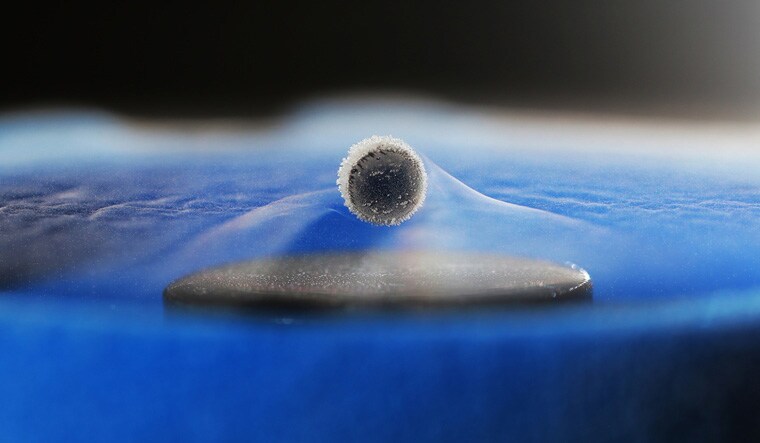
In the state-of-the-art labs worldwide, an exciting quest is underway. Scientists, driven by curiosity and determination, are on a mission to unravel the mysteries of superconductivity, a phenomenon with the potential to reshape our world. In this journey, they're sharing their passion, challenges, and the joy of discovery, all aimed at a breakthrough that could revolutionise our lives.
Within these cutting-edge facilities, researchers are conducting intricate experiments to comprehend the properties of superconductors. They're tinkering with temperature, pressure, and materials, pushing the boundaries of what's possible. Their ultimate goal: achieving room-temperature superconductivity, a game-changer that could transform how we live and work.

Superconductivity research has been ongoing for over a century, closely linked to the development of technologies for cooling materials to extremely low temperatures or applying intense pressures. It's a precise science with little room for error.
Science often surprises us when we least expect it, and superconductivity is no different. This scientific marvel promises a wide range of applications, from ultra-efficient energy transmission to more powerful computers and groundbreaking medical advancements.
Earlier this year, the world buzzed with excitement over LK-99, touted as the world's first room-temperature superconductor, offering boundless possibilities. Two Korean scientists, Sukbae Lee and Ji-Hoon Kim, along with their colleagues, claimed to have discovered this game-changing material. However, doubts have arisen since attempts to replicate the results have been unsuccessful, raising questions about potential impurities in the sample.
LK-99 is a compound composed of oxygen, phosphorus, lead, and copper. Initially, very little was known about its properties. The race to understand and replicate the results triggered a global effort. While it's still early days and the findings have not undergone peer review, it appears that LK-99 may not be the superconductor it was believed to be.
