



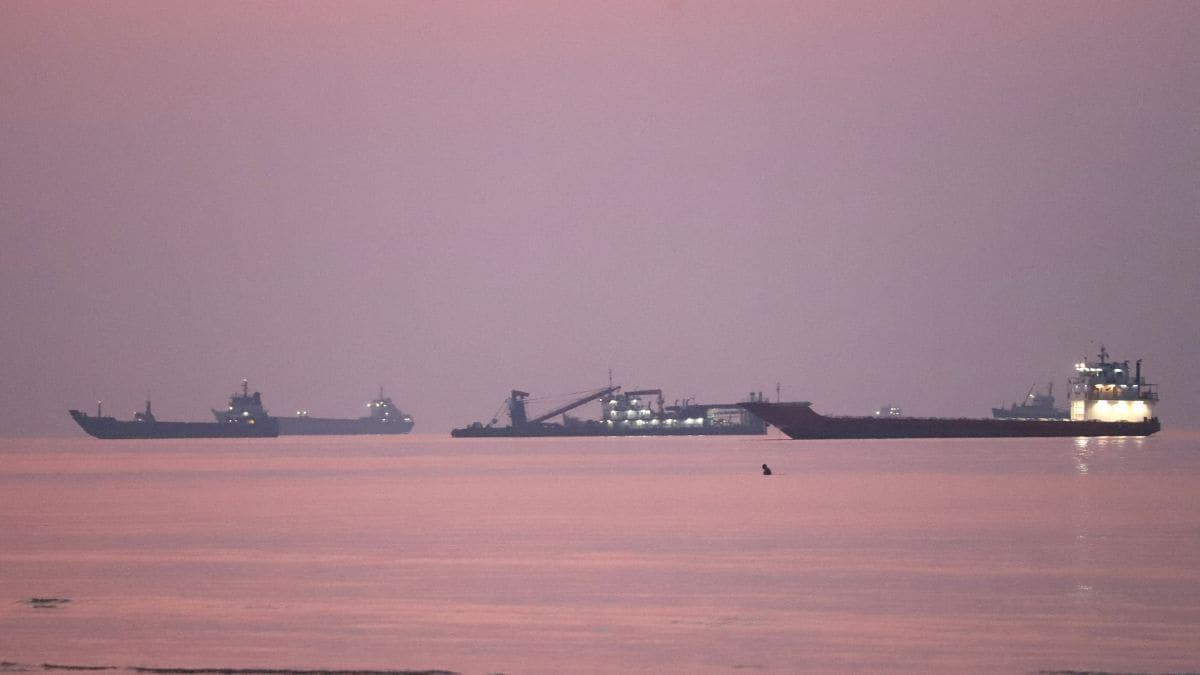
A Dubai-owned Panama-flagged vessel, MT Louise 1, which had 27 Indian sailors aboard, was on Thursday struck by limpet mines, causing fire in the engine room.
A small craft approached the tanker and people aboard attached two limpet mines to the vessel's hull before it sailed away. The crew, who are confirmed to be safe, put out the fire, following which the tanker resumed its journey. The incident occurred 25 nautical miles northeast of Khasab, Oman.
Tehran was behind the attack, according to The Financial Times. It was the first time that limpet mines have been successfully used in the US-Iran war, reported Reuters. In September, a limpet mine attack was thwarted after the device failed to detonate.
What is a limpet mine?
A limpet mine is a naval explosive device that attaches directly to the hull of a ship using powerful magnets. These mines are named after limpets, small sea snails that clamp tightly onto rocks.
Unlike regular mines, limpet mines are designed to immobilize a ship rather than sink it. Once detonated, limpet mines damage the engine room or hit critical parts like rudders and propellers.
"The apparent ability of a small craft to approach a transiting tanker, deploy explosive devices and withdraw presents a significant security concern, particularly in the Strait's congested shipping lanes," Greece-based maritime risk management group Marisks stated on Friday.
"The methodology of a small craft attaching these mines on the hulls of vessels in transit is cheap, low tech and very efficient," it added.
