



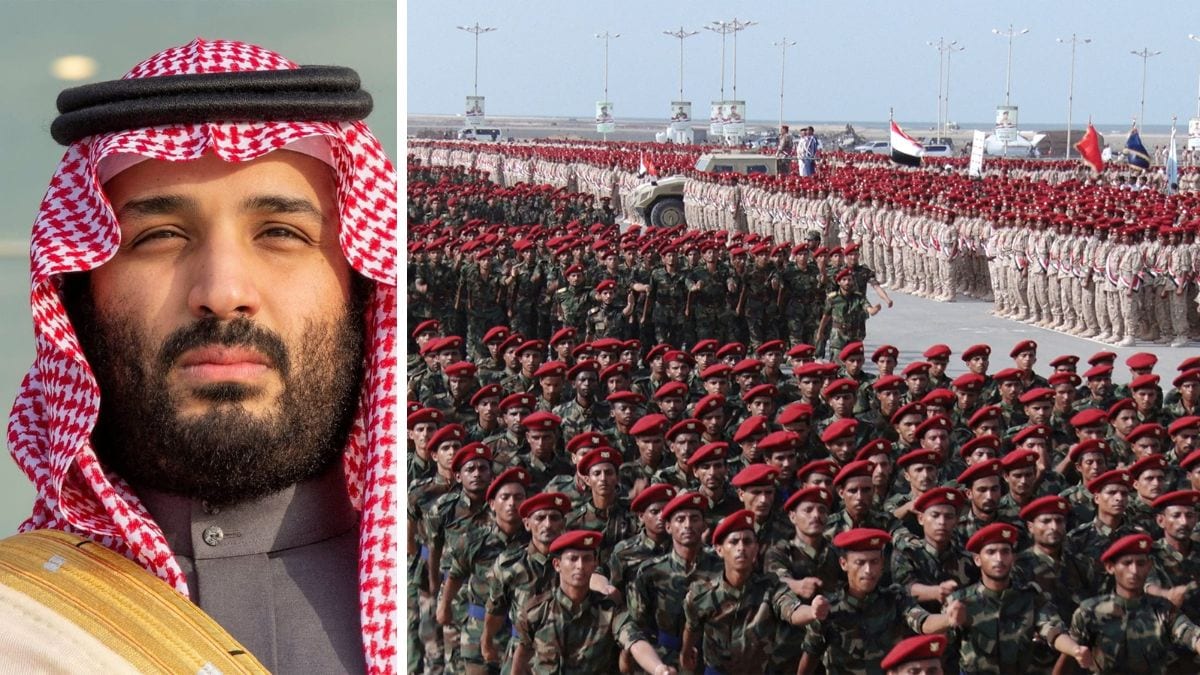
Houthi forces have started pushing towards Marib and Taiz, exposing how little Saudi Arabia can now count on Washington to help hold the line. Marib, roughly 120km east of Sanaa, is the government's last significant stronghold in the north and sits atop Yemen's main oil and gas fields; its loss would gut what remains of government finances and bring Houthi forces to the edge of Saudi territory. At Taiz, the aim has been to encircle the city and cut the highway that connects it to Aden. Government forces, already facing a rout, have struggled to hold either front.
The latest push follows a rapid coastal campaign earlier this month that gave the offensive its momentum. Houthi units took the Hays and Al-Khawkhah districts on September 9, seized the port of Mocha the next day, and by September 11 had entered Dhubab and taken Perim Island in the Bab al-Mandeb Strait, planting the group at the threshold of one of the world's busiest shipping lanes. The advance inlands towards Marib and Taiz shows a group testing whether it can convert coastal gains into control of the interior. The Houthis have also demonstrated they can contest the skies: they apparently downed a Saudi Air Force F-15 over Marib with a locally built surface-to-air missile, and followed that with drone and missile strikes on the Yanbu refinery, the Khamis Mushait airbase and targets near Mecca.
Riyadh's answer was to ask Washington to step in. Crown Prince Mohammed bin Salman called President Trump twice seeking direct American air strikes on Houthi positions. Trump said no. Instead of bombing runs, the American response has been diplomatic statements backing Yemen's recognised government, coordination through Central Command, and a proposed sale of 48 F-35 jets to Saudi Arabia worth $24.3 billion, a deal that still needs congressional sign-off. Notably, US officials also opened direct and unannounced talks with the Houthis themselves, meeting senior negotiator Mohammad Abdulsalam at the embassy in Muscat.
Washington's reluctance rests on four calculations rather than one. The first is a private understanding reached in Oman: Houthi leaders indicated they would keep to their 2025 ceasefire with the United States and confine attacks to Saudi-linked shipping, sparing American and international vessels. The second is capacity. The war with Iran has already stretched American naval assets and run down stocks of interceptor missiles, leaving little appetite for a second front. The third is priority. Hormuz and the campaign against Iran sit above Yemen in Washington's priorities, and officials tend to view Bab al-Mandeb traffic as serving Chinese and Asian markets rather than American ones. The fourth is domestic. Committing to another Middle Eastern conflict ahead of the midterms sits awkwardly with Trump's promise to avoid exactly that.
The consequence for Saudi Arabia has been severe. What was once an implicit security-for-oil arrangement with Washington now looks conditional, and Riyadh has had to manage the fallout largely on its own. Crude exports to Asia collapsed from 3.4 million barrels a day in June to just 1.28 lakh in August, recovering only partially to around seven lakh barrels since. Drone strikes forced the closure of the East-West pipeline. With its own interceptor stocks depleted, Saudi Arabia has turned to Britain, France, Egypt and Pakistan for help, assembled a 14-nation maritime alliance that includes Turkey and Egypt, and begun exploring intelligence cooperation with Israel, an option that would have seemed unlikely a few years ago.
The wider picture is of two chokepoints under strain at once. Hormuz remains constrained by the war with Iran, and Bab al-Mandeb is now effectively under Houthi watch, together putting roughly a quarter of global oil supply at risk and pushing crude above $107 a barrel. The proposed F-35 sale faces its own resistance in Congress, where lawmakers worry about Saudi-Chinese ties giving Beijing a back door to sensitive American technology, complicating a deal Riyadh sees as compensation for the security it is not getting. Displacement around Marib, Taiz and the coast has also grown, enough that Djibouti has begun appealing for international aid to cope with the refugees arriving on its shores.
