



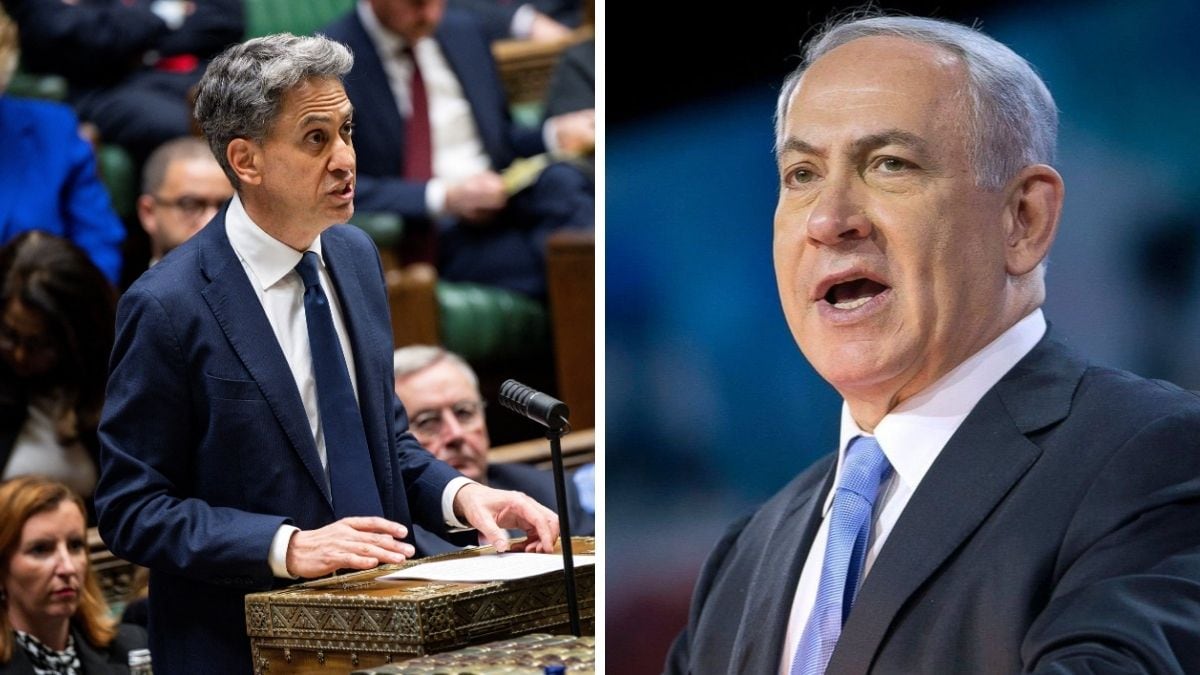
The United Kingdom, France and Canada on Tuesday announced a coordinated diplomatic push against Israeli settlement expansion in the West Bank, in what amounts to the sharpest signal yet of Israel's deepening isolation among its traditional allies.
The shift is most pronounced in London. Foreign Secretary Ed Miliband accused extremist settlers of carrying out ethnic cleansing against Palestinians, and said the Israeli government had either looked away or actively enabled it. The move draws on a 2024 International Court of Justice advisory opinion that found Israel's presence and settlement expansion in occupied Palestinian territory unlawful. Twelve other countries, among them Spain, Denmark, Ireland, Poland, Portugal, Norway, Sweden, Finland and Iceland, have since issued similar declarations backing national trade restrictions.
Britain's framework draws a careful line between commerce with Israel proper, within the 1949 armistice boundary, and economic activity tied to the occupied territories. Settlement goods, worth an estimated £38 million in annual imports, face an outright ban. Companies, banks and individuals that finance or build settlement infrastructure will be sanctioned, a measure that could choke off funding from major Israeli commercial lenders for government-backed construction. London has also moved to block tenders for around 1,200 housing units in the E1 corridor near Jerusalem, a project Miliband has called a red line that would cut Palestinian territory in two and finish off any prospect of a two-state solution. New arms export licences covering equipment judged to support the occupation materially have been refused, extending suspensions already in place, and advertising of settlement property within Britain is now banned outright.
Israel's response has been furious. Netanyahu's government has accused Labour of peddling outrageous lies and meddling in Israel's coming election. Foreign Minister Gideon Sa'ar, backed by Netanyahu, unveiled four retaliatory measures. The British consulate in Jerusalem, a diplomatic presence dating to 1839, will close. British staff are being expelled from the International Gaza Support Centre in Kiryat Gat. Britain's training of Palestinian Authority security forces under the Ramallah programme will end. And 12 British politicians and public figures, including former Labour leader Jeremy Corbyn and several Green Party MPs, face entry bans over what Israel calls anti-Israel activity.
The cabinet's far right wanted more. Finance Minister Bezalel Smotrich pressed for expelling the British ambassador outright, while National Security Minister Itamar Ben-Gvir floated recognising Argentine sovereignty over the Falkland Islands, a jab clearly aimed at London rather than any genuine policy shift. Israeli opinion on the sanctions is split along familiar lines. Opposition leader Yair Lapid called the British move a grave mistake that hands ammunition to the right ahead of elections, while former prime ministers Naftali Bennett and Ehud Olmert argued that Netanyahu's own policies had invited the isolation now closing in.
Washington has kept its distance. US Ambassador to Israel Mike Huckabee condemned the British decision and warned it could provoke retaliatory legislation from individual states, Florida among them, against British firms. Secretary of State Marco Rubio said the administration would not follow London's lead, arguing that trade restrictions of this kind risked destabilising the wider peace effort.
Palestinian Ambassador to the UK Husam Zomlot called the sanctions a turning point, the moment condemnation finally acquired teeth. Chief Rabbi Ephraim Mirvis took the opposite view, describing the announcement as a dark day for British Jews and warning it could stoke antisemitism, even as groups such as Yachad welcomed the distinction drawn between Israel proper and the settlements.
The timing is not incidental. Netanyahu is under mounting domestic pressure over intelligence failures that preceded October 7. Reports suggest UAE President Mohammed bin Zayed Al Nahyan warned him ten days before the attack that Hamas leader Yahya Sinwar was preparing a major operation, and that Egyptian intelligence chief Abbas Kamel issued a similar alert. Netanyahu is said to have dismissed both and never passed the warnings on to Shin Bet or the military. Former defence chiefs turned politicians Gadi Eisenkot and Bennett have confirmed the warnings existed and argue that Netanyahu ignored them while pressing ahead with a West Bank policy that has now brought Israel to its most isolated diplomatic moment in years.
