



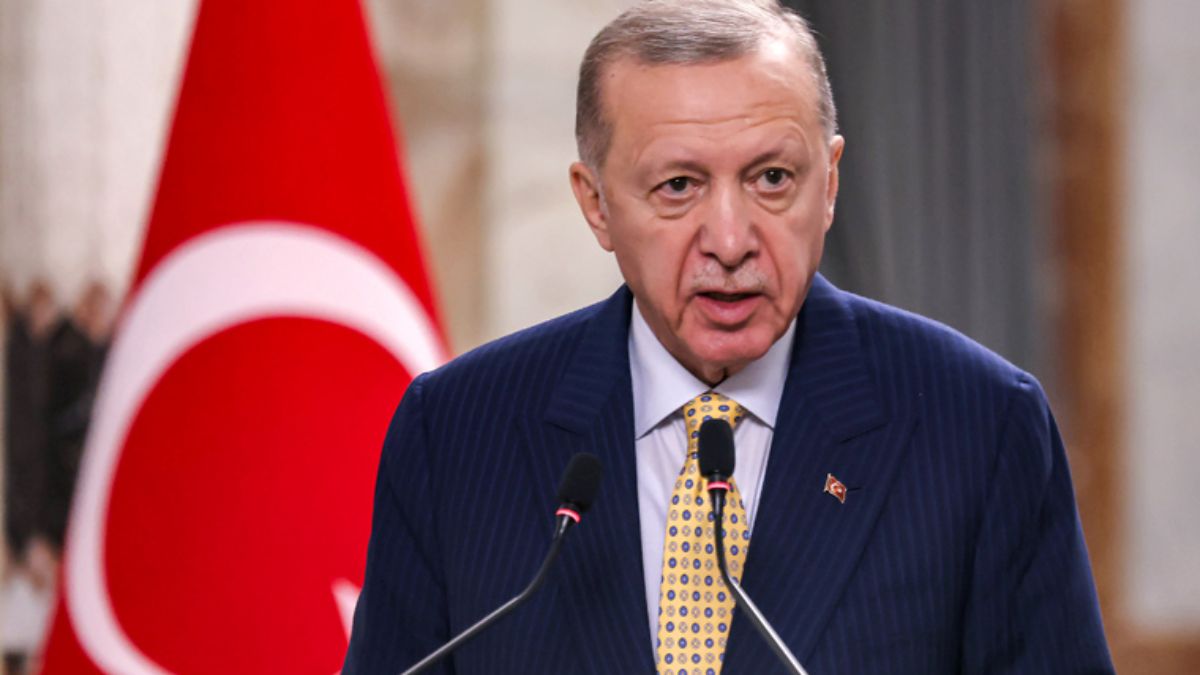
Turkey's ruling Justice and Development Party (AKP) marked its 25th anniversary on 14 August with a rally in Ankara's Başkent Nation's Garden, which organisers say drew nearly 100,000 people. President Recep Tayyip Erdoğan told the crowd that the party's biggest achievements still lie ahead, declaring the movement was "just getting started." It was a triumphant note. It also came just three months after a court removed the leadership of Turkey's main opposition party, and riot police cleared its headquarters with tear gas. That juxtaposition is the real story of AKP's anniversary, not the scale of the celebration. Twenty-five years later, AKP is the establishment its founders once ran against.
AKP was born on 14 August 2001, when 74 politicians split from Turkey's Islamist old guard and filed founding papers with the interior ministry. Erdoğan, a former Istanbul mayor, framed the break as the start of something new, not a rebranding of the old religious right. The coalition that carried the party to power in 2002 was broader than its roots suggested. It included business-friendly reformers, EU-accession advocates, Kurdish voters tired of being ignored, and religious conservatives who felt shut out of public life by a rigidly secular establishment. What united them was not ideology so much as grievance, i.e., a shared sense that unelected institutions, not voters, were deciding who governed Turkey.
After gaining power, the coalition implemented a series of reforms that seemed to confirm that first impression. It abolished the death penalty in 2004, opened formal negotiations for EU accession in 2005, and brought runaway inflation from the 1990s under control through years of IMF-backed stabilisation. For some time, the labels of outsider and reformer were the same, and AKP wore both well.

In 2007, the military issued an online memorandum warning against electing Abdullah Gül, an AKP presidential candidate, widely interpreted as asserting the military's role as guardian of Turkey's secular order. In 2008, lawyers sought to ban the party, arguing that it had become the centre of anti-secular activity. Although the court did not ban the party, ten of the 11 judges agreed that the AKP was indeed a focal point for anti-secular activity. What changed over the next decade was not simply the party's political orientation but the institutional environment in which it exercised power.
AKP supporters presented the 2010 constitutional referendum as a democratic effort to curb the military's influence, whereas critics warned that changes to judicial appointments would increase executive influence. After the 2016 coup attempt, emergency rule and mass dismissals further altered the state’s institutional composition. The 2017 constitutional referendum completed the transition from parliamentary government to an executive presidency, concentrating administrative authority and reshaping institutional checks and balances. The institutional mechanisms established during this period, which critics call “consolidation,” formed the backdrop for future electoral challenges.
AKP lost a string of major cities, including Istanbul and Ankara, to the opposition Republican People's Party (CHP) in the 2024 local elections. This marked the party's worst electoral result in over two decades. Following the elections, extensive litigation ensued against opposition figures. Istanbul Mayor Ekrem Imamoğlu was detained in March 2025 on corruption and terror-related charges. Authorities then arrested many more CHP officials and mayors. In May this year, Turkish courts annulled the leadership election of CHP Chairman Özgür Özel due to alleged internal voting irregularities. Critics call this a politically motivated "judicial coup" to weaken the opposition.
None of this makes the AKP's rise or its record as a governing party irrelevant. This is especially true of its infrastructure spending, the growth of defence industries, and the party's electoral dominance. However, a gap remains between rhetoric and daily life. Erdoğan's anniversary remarks dwelledon defense and infrastructure gains but skipped inflation, which has stayed high enough that Türkiye's central bank recently revised its end-2026 inflation forecast from 26 percent to 28 percent. That revision is a reminder that the celebratory framing and the cost of living most Turks are absorbing are not quite telling the same story. Above all, the opposition and critics of the AKP in the country and beyond continue to question how a movement that once opposed concentrated institutional power has, over two decades, come to hold and exercise that same power.
The unresolved question hanging over the celebration is what happens next. AKP has never undergone a durable leadership transition away from Erdoğan. With the 72-year-old president's health and the absence of any tested succession mechanism, names like his son-in-law, Selçuk Bayraktar, and Foreign Minister Hakan Fidan are already being discussed as possible successors. That transition, whenever it comes, will be the party's next real test of whether the system it built survives without the man who built it.
Mohammed Shoaib Raza is a doctoral candidate at the Centre for West Asian Studies, Jawaharlal Nehru University, New Delhi.
