



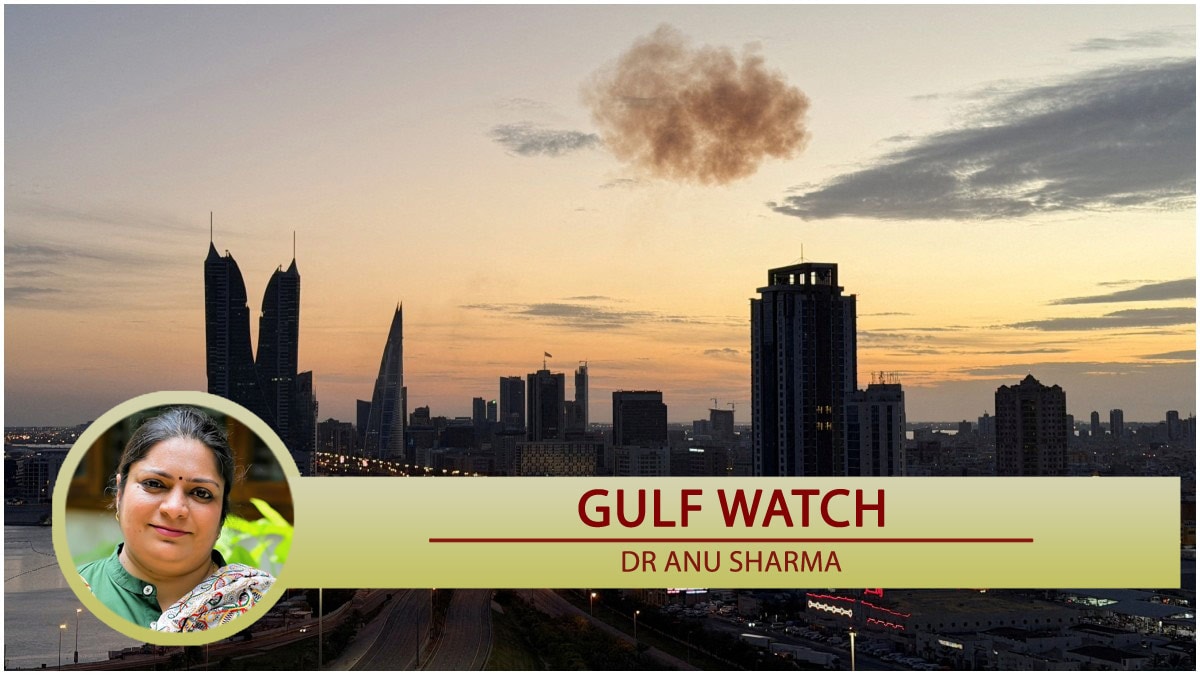
The conflict in 2026 in the Middle East has fundamentally altered the strategic landscape of the Gulf region. More than a temporary military confrontation, the conflict exposed the vulnerabilities of the existing regional security architecture, challenged age-old assumptions about deterrence, and accelerated the pace of Gulf states’ pursuit of strategic autonomy.
For decades, the Gulf monarchies relied on the security guarantees provided by the United States, along with diplomatic balancing with Iran and expanding economic diversification to preserve stability. The current conflict has shown that none of these factors alone can protect the region from the consequences of great-power rivalry and regional confrontation. The Gulf has entered a new strategic era in which security, diplomacy, and economic resilience are being recalibrated simultaneously.
One of the most striking lessons of this ongoing Middle Eastern conflict was that neutrality offers only restricted protection. Despite carefully avoiding direct involvement in the confrontation, several Gulf states have been facing Iranian missile strikes and drone attacks, disruptions to critical infrastructure, and threats to maritime commerce. Tehran’s targeting of the Gulf states has blurred the distinction between active belligerents and reluctant partners. This is a clear message wherein geography and strategic infrastructure make the Gulf region an unavoidable theatre in any future confrontation involving Iran, Israel, or the United States. This realisation has profoundly reshaped the Gulf region’s security thinking.
The conflict also highlighted the limitations of the United States being the security provider. Even though the United States remained militarily engaged and retained unparalleled military capabilities, Washington’s strategic priorities were increasingly influenced by domestic political considerations, alliance management, and escalation risks rather than the security concerns of regional partners. The apprehension of becoming deeply involved in prolonged Middle Eastern conflict has reinforced doubts that have existed in US policymaking circles since the attacks on Saudi oil facilities in 2019. Gulf capitals increasingly recognise that while the United States remains indispensable, exclusive dependence on external security providers carries significant strategic risks. As a result, the Gulf states are accelerating efforts to develop more autonomous defence capabilities. However, this does not imply replacing the American security umbrella but rather complementing it through stronger indigenous military industries, integrated air and missile defence networks, cyber capabilities, and intelligence-sharing mechanisms. The 2026 conflict laid bare the limitations of expensive missile defence systems against large-scale drone and missile barrages, clearly indicating that future conflicts will require layered defence architectures capable of countering diverse and relatively inexpensive threats.
Equally significant is the changing perception of Iran itself. Iran has demonstrated considerable resilience despite suffering substantial military and economic costs. Still, Tehran has retained the capacity to disrupt regional energy markets, threaten maritime commerce through the Strait of Hormuz, and impose high economic costs on its adversaries. In various aspects, this conflict has confirmed that Iran’s greatest strategic leverage lies less in conventional military superiority than in its ability to generate regional instability at relatively low cost. This is paradoxical for Gulf states. A weakened Iran may appear desirable from a security perspective, but a destabilised or collapsing Iran could generate even greater uncertainty through internal fragmentation, refugee movements, uncontrolled proxy activity, and intensified competition among external powers. So, most Gulf states are likely to continue pursuing a dual-track strategy i.e., strengthening deterrence while maintaining diplomatic channels with Tehran. This reflects a broader recognition that long-term regional stability cannot be achieved solely through military pressure.
The conflict has also transformed the regional diplomatic landscape. Over the past several years, Gulf states have increasingly adopted pragmatic foreign policies characterised by diversified partnerships with major powers including China, India, Japan, South Korea, Europe and Russia. The conflict has reinforced this trend. Rather than viewing international relationships through exclusive alliance structures, Gulf governments increasingly seek strategic flexibility. China remains an indispensable economic partner and energy customer, while the United States continues to serve as the principal security guarantor. Simultaneously, expanding relations with emerging powers provides additional diplomatic options and reduces excessive dependence on any single external actor. Also, economic security has become inseparable from national security. The temporary disruption of shipping through the Strait of Hormuz reminded Gulf governments that even small interruptions to maritime trade can generate global economic repercussions while threatening domestic diversification agendas. Countries such as Saudi Arabia, the UAE, and Qatar have invested heavily in transforming themselves into global investment, logistics, tourism, and financial hubs. These ambitions depend fundamentally on perceptions of regional stability. Future security planning will therefore place greater emphasis on protecting critical infrastructure, securing energy exports, strengthening supply chain resilience, and developing alternative transportation corridors that reduce vulnerability to maritime chokepoints.
Another important consequence is related to Israel’s evolving relationship with the Gulf states. The Abraham Accords (2020) had created opportunities for expanding economic and technological cooperation between Israel and several Arab states. However, the conflict has complicated this trajectory. While Gulf governments continue to recognise the strategic benefits of limited cooperation with Israel, they must also navigate domestic public opinion, regional political sensitivities, and the broader consequences of continued instability. Security cooperation is therefore likely to become more discreet, pragmatic, and narrowly focused rather than highly visible or politically symbolic.
The conflict also demonstrated the growing importance of emerging military technologies. Unmanned aerial systems, precision-guided missiles, electronic warfare, cyber operations, and AI are increasingly defining contemporary warfare. Traditional military superiority based solely on advanced aircraft or conventional force structure proved insufficient against persistent, multi-domain attacks. Gulf defence modernisation is prioritising technological integration, domestic innovation, and partnerships with global defence industries capable of supporting indigenous production and rapid adaptation.
The conflict also carries broader implications for the international system. It illustrated the gradual transition from a unipolar Middle East dominated by American strategic leadership towards a more complex, multipolar regional order. External powers increasingly compete economically, technologically, and diplomatically rather than exercising uncontested political influence. Gulf states have emerged not merely as passive recipients of external security but as increasingly influential diplomatic actors capable of shaping regional outcomes through mediation, investment, and strategic partnerships. Ultimately, the greatest change may be psychological rather than military. For decades, Gulf security planning rested upon assumptions regarding deterrence, alliance reliability, and geographical insulation from major conflict. This conflict has shattered many of these assumptions. Regional leaders now understand that future conflicts will likely be faster, technologically sophisticated, economically disruptive, and geographically expansive. Security can no longer be viewed solely through military alliances; it must encompass economic resilience, technological competitiveness, diplomatic flexibility, and institutional preparedness.
The Gulf region, therefore, emerges from this conflict not necessarily more secure, but certainly more strategically aware. Gulf states are unlikely to abandon their partnerships with Washington, nor are they likely to normalise confrontation with Tehran. Instead, they appear poised to pursue a more balanced strategy that combines stronger indigenous capabilities, diversified international partnerships, sustained diplomatic engagement, and greater regional cooperation. In this context, the Iran-Israel war has not merely changed the balance of power in the Gulf, but it has transformed the strategic mindset through which Gulf states understand their own security, sovereignty, and place within an increasingly uncertain international order.
Dr Anu Sharma is an Assistant Professor at Amity Institute of Defence and Strategic Studies (AIDSS) Amity University in Noida. The opinions expressed in this article are those of the author and do not purport to reflect the opinions or views of THE WEEK.
