



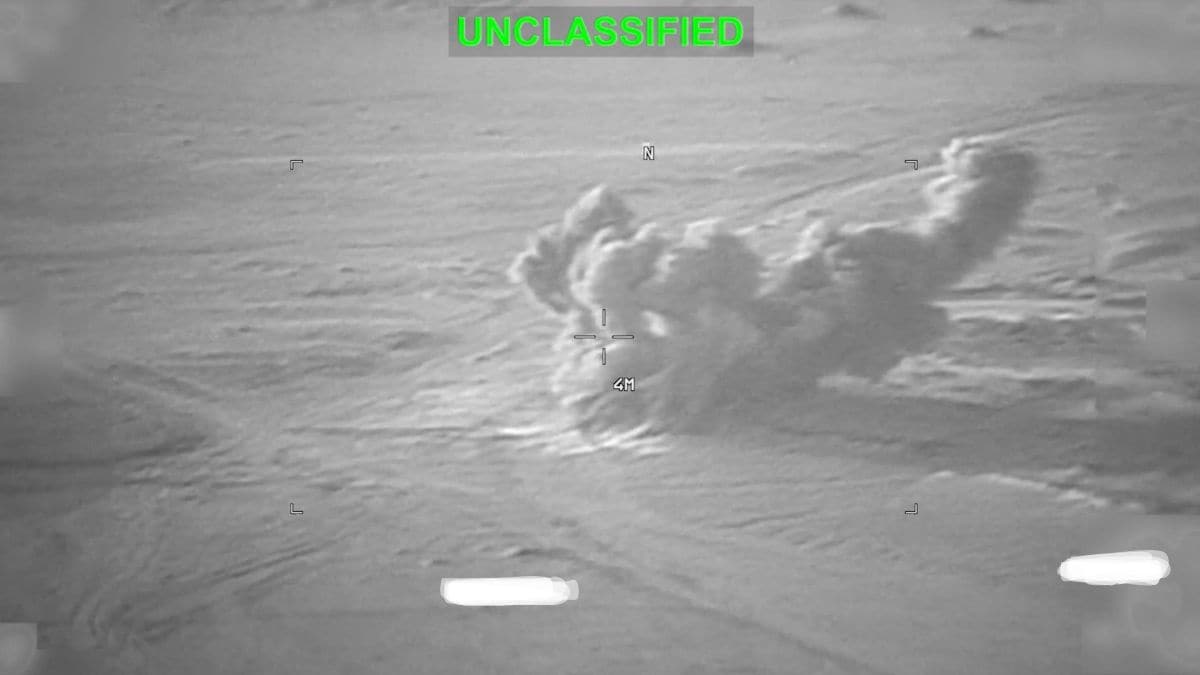
The human cost of the war against Iran continues to rise for the United States, with the Pentagon now confirming 17 American military fatalities. Three service members died over a single weekend: two soldiers were killed by an Iranian missile barrage in Jordan, and a third lost his life in northern Iraq while trying to defuse a downed Iranian attack drone. President Trump described the fallen as patriots who died ensuring Iran never acquires a nuclear weapon. Washington has responded by sending additional warplanes to the region and pressing on with a ninth consecutive night of strikes against Iranian targets, hitting coastal surveillance posts, air defence installations and facilities belonging to the Islamic Revolutionary Guard Corps. Trump has been characteristically blunt about the results, insisting Iran has been "very, very badly damaged" and has "lost almost everything militarily."
Tehran, for its part, shows no sign of backing down. Foreign Minister Abbas Araghchi has made clear that Iran will only agree to end the war once it holds "the upper hand in the field," and that talks are worth having only after real strategic gains have been secured. Despite its losses, he argues, Iran has proven itself a "decisive international player" that has demonstrated the resilience of its system. That defiance has been backed by action, with Iranian forces striking across the region and hitting countries that host a significant American military presence, among them Kuwait, Bahrain and Jordan. The IRGC says it targeted US aircraft at King Hussein International Airport in Aqaba using ballistic missiles, and footage verified from the scene shows smoke pouring from the site.
Perhaps the most troubling shift in this war is the growing willingness on both sides to strike infrastructure civilians rely on. The Americans have widened their bombing campaign to include Iranian bridges and other critical infrastructure. Iran, meanwhile, has badly damaged an oil facility, power plants and water desalination works in Kuwait. Deliberately targeting the systems people depend on for water and electricity sits uneasily with the laws of war, and strikes of this kind risk being classed as war crimes rather than legitimate military action.
Nowhere is the fallout more visible than in the Strait of Hormuz. The IRGC has warned it will let nothing through, not "a single drop of oil and gas," for as long as what it calls American aggression continues. It has already made good on that threat. Two oil tankers were reportedly disabled by explosions after taking the strait's southern route, a path Iran claims the US military had encouraged them to use. A separate vessel was seen ablaze roughly eight nautical miles off the coast of Oman, prompting the UK Maritime Trade Operations to urge extreme caution for any ships passing through. Shipping traffic through the strait has fallen sharply as a result.
The knock-on effects on global energy markets have been immediate. Brent crude, the international benchmark, jumped by around 3 per cent after the weekend's violence to top $90 a barrel, while West Texas Intermediate climbed to roughly $84. The timing could hardly be worse, since oil stockpiles are already lower than they were when the US and Israeli strikes on Iran first began in late February. Adding further strain, Ukrainian attacks have inflicted serious damage on Russian refineries, tightening supplies of diesel and other transport fuels worldwide. Analysts say the coming weeks will hinge on two things above all, how much shipping dares to move through Hormuz, and how China, one of the world's largest oil buyers, chooses to respond.
