



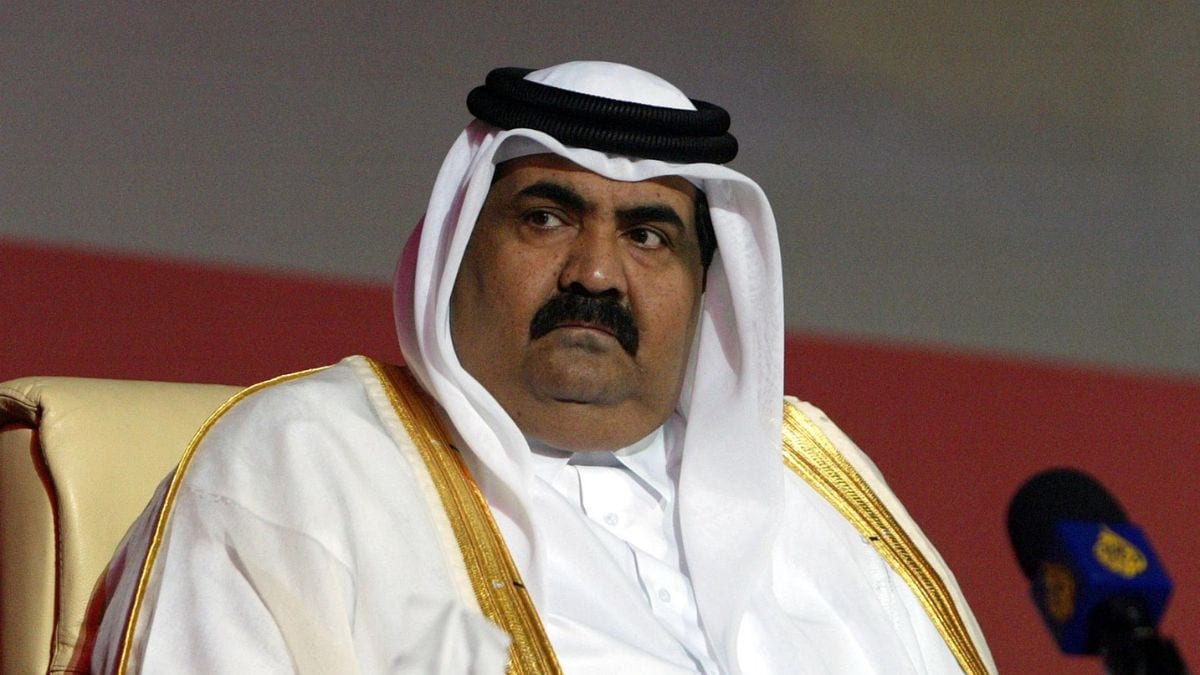
Qatar has announced the passing of the former Emir, Sheikh Hamad bin Khalifa Al Thani, on Sunday. Sheikh Hamad died at the age of 74, according to the country’s top government body, Amiri Diwan, which did not provide a cause of death.
Sheikh Hamad is credited with transforming Qatar from a Bedouin land to one of the richest countries in the world. He ruled the nation for 18 years before abdicating the crown to his son, Sheikh Tamim bin Hamad Al Thani, in 2013.
He ascended to power in 1995 after overthrowing his father in a bloodless coup, marking the rise of Qatar to global prominence. The former Emir, affectionately known as "the one who buries poverty" by Qataris, transformed the country into a regionally and internationally influential power in the fields of energy, diplomacy, media, and sports. He established an active foreign policy, a strong economy, and influential educational and media institutions, making Qatar a prominent player on the international stage.
Born on January 1, 1952, in Doha, Sheikh Hamad grew up in the royal family and received his primary education in Qatar before attending the Royal Military Academy Sandhurst in Britain. Upon his return, he joined the Qatari Armed Forces, rising through the ranks to become Commander-in-Chief with the rank of Major General. In 1977, he was appointed Crown Prince. In the 1980s, he chaired the Supreme Planning Council, which sets Qatar's basic economic and social policies. By 1992, he had assumed responsibility for managing the day-to-day affairs of the country, including the development of Qatar's oil and natural gas resources.
It was during his reign that Qatar’s GDP increased more than 24-fold, thanks to his efforts to develop its liquefied natural gas (LNG) infrastructure. Under his reign, Qatar turned into the world’s largest LNG exporter. By 2006, the production from the North Field turned the country into the world’s largest exporter of LNG. Within a few years, Qatar’s LNG production capacity reached 77 million tons per annum.
He also took steps to bring in democratisation in his country by establishing the first permanent constitution of the State of Qatar in 2004, following a historic popular referendum on April 29, 2003.
He also brought in media liberalisation by launching Al Jazeera in 1996, which became one of the world's leading media networks.
His ambitious and unconventional investments also made Qatar the first Arab and Islamic country to win the bid to host the 2022 FIFA World Cup.
