



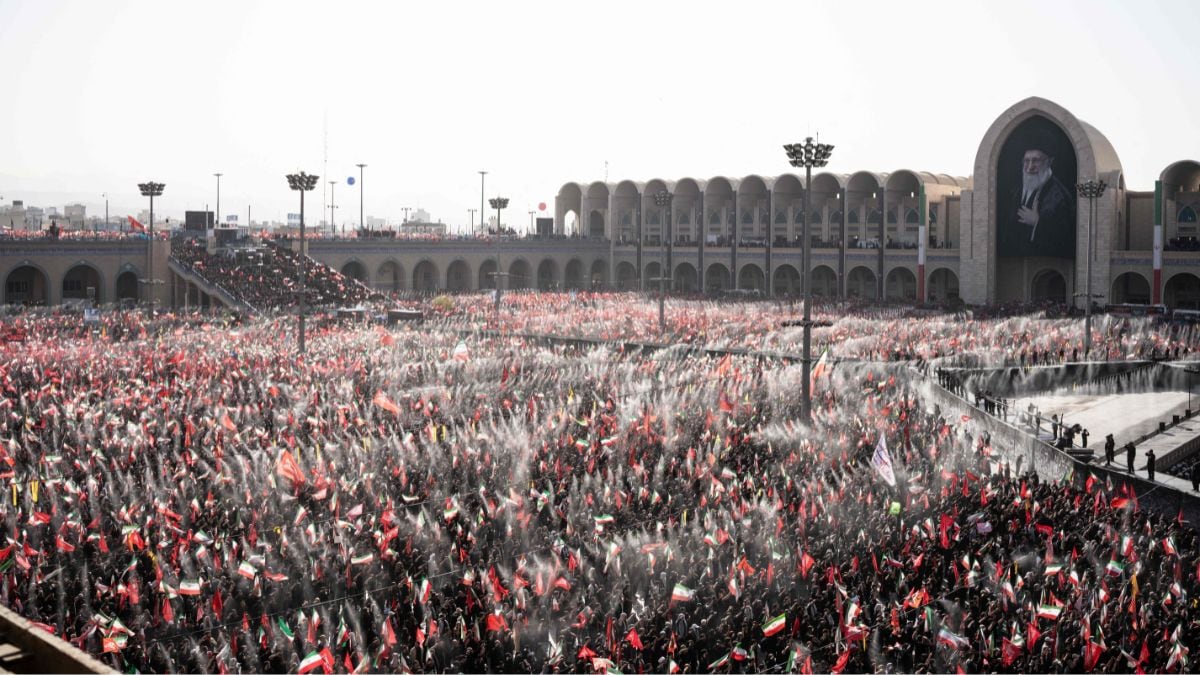
Iranian authorities have prepared for the possibility that at least 1,500 to 3000 people could die during the week-long funeral ceremony of Ali Khamenei
According to a reporter for WELT, a letter from the Iranian Red Crescent and the national Disaster Management Agency to the First Vice President reportedly estimated the number of deaths that are possible.
A special task force for the dead and missing has reportedly been established. There are also reportedly thousands of graves at the Behesht-e Zahra cemetery.
A member of the district offices of the Tehran city administration, who spoke under anonymity, said that the graves were prepared. "I heard it myself from colleagues in the city administration's crisis management team," she said. "The prepared graves are indeed there. Those in charge were told that up to 3,000 deaths would be acceptable. With such a large crowd and this extreme heat, nobody knows what will happen,” she added.
The claims have not been verified independently.
Khamenei’s funeral began in Tehran and is expected to continue through Qom, Iraq’s Najaf, Karbala and will finally conclude in his home city, Mashhad, on Thursday.
The authorities have reportedly prepared a sweeping security and logistical operation in Tehran. There are movement restrictions, possible disruption in air travel, buses, kitchens, schools and mosques, which are being used to house participants.
Journalists cited by WELT said that the budget for the funeral for just Tehran alone stood at 15 million euros.
The large-scale preparations could reportedly be due to past incidents.
In 2020, 56 people were trampled to death, and 214 were injured in a crush at the funeral of General Qassem Soleimani.
During the funeral of Ruhollah Khomeini, the first leader of the revolution, eight people died, and 500 were left with injuries.
Authorities are apparently anticipating a catastrophe of greater proportions this time as the number of participants in the funeral is expected to be much larger.
